

Published on: 06/08/2026
This news was posted by Oregon Today News


Description
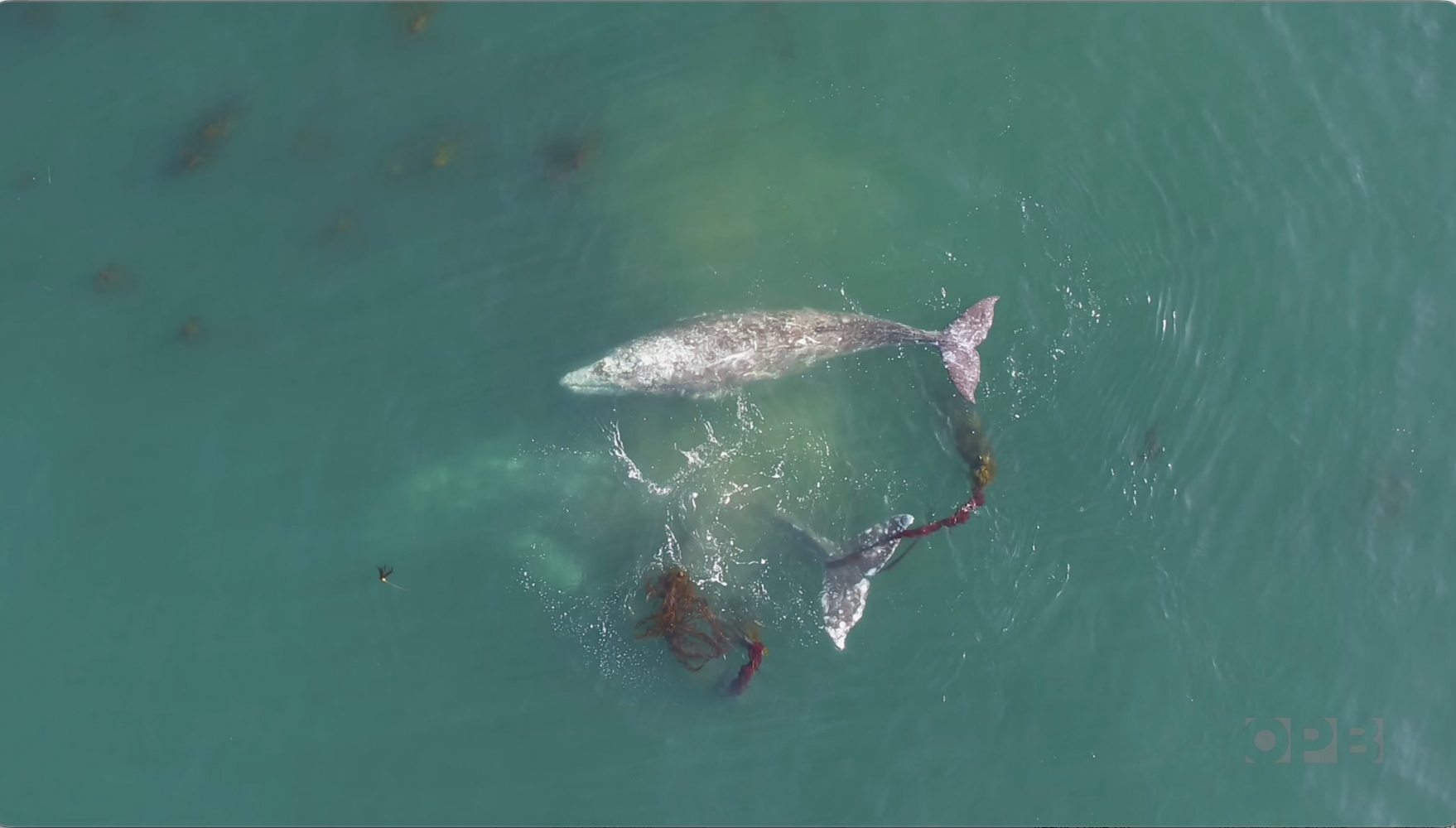
Every year, thousands of gray whales swim along the Oregon Coast as they migrate north to feed in the cold Arctic waters in the summer and then back south to breed and calve in Baja in the winter. But a small number do not make the long journey north.
They stick around and feed off the shallow waters of the Oregon Coast all summer — where they do surprisingly acrobatic headstands and rolls — leading researchers to ask: Why?
Whale scientists call this subgroup the Pacific Coast Feeding Group, and twelve years ago, Leigh Torres, a marine ecologist who leads the Geospatial Ecology of Marine Mammals Lab at Oregon State University’s Marine Mammal Institute, set out to understand what sets the feeding group apart.
I see them as risk takers. They’re willing to try something new and see if it works. And sometimes it works out for them, and they find a new niche to feed in and live in.
Marine Ecologist Leigh Torres
Gray whales are having a hard year, capping off several very challenging years. Ship strikes are high, calf counts are low, and a record-breaking number of beached whales show indications of being extremely malnourished.
“There has been a lot of press lately on dying gray whales,” Torres said. “Through this project we are doing long-term monitoring of gray whale behavior, health, habitat to help us understand how whales cope with changes in habitat and prey, which could help us understand and anticipate their resilience.”
Torres and her team are finding that these Oregon whales have different body shapes, different foraging styles, and are doing something that might be harder than heading to the giant buffet up in Alaska, but it might just give them a way to survive this lean time.
“I see them as risk takers,” said Torres. “They’re willing to try something new and see if it works. And sometimes it works out for them, and they find a new niche to feed in and live in.”

Studying whales is often difficult and expensive, Torres explained, with ship time and offshore boat work. But this project is different. ”It’s because grey whales feed so close to shore that allows us to study them" on the Oregon Coast, she said, using relatively cheap tools.
Every morning, half the team gets up before dawn and sets off in a tandem kayak into the bay at Port Orford to collect data on dissolved oxygen, temperature, depth, kelp cover and zooplankton abundance. Gray whales sometimes surface right behind the kayak while the researchers are lowering instruments and cameras into the water.
At the same time, the other half of the team spends the day on top of a nearby cliff, where they use a theodolite to precisely map the position of whale blows.
It’s not without its challenges. Some days the fog rolls in, and it’s notoriously windy on this part of the coast. It’s salty, wet work, with early mornings and long days.

Their data set goes back more than ten years, and in that time, Torres has discovered some fascinating patterns. These whales seem to be distinct from the majority of the population, trekking back and forth to the Arctic to feed. For one thing, they are smaller in overall length, closer to 40 feet on average than the usual 45-50 feet. And they have some unusual foraging styles.
“They swim upside down and do rolls—they’re often doing headstands where they’re literally head down, fluke up,” explained Torres. “We also have learned that the animals will shift foraging strategies as they age, so when they’re younger, they feed more in a forward-moving strategy. But as they get older, they feed more stationary like a head-standing strategy.”
Another intriguing pattern is that the whales on the Oregon coast often feed right in the thick patches of kelp. It turns out that zooplankton concentrations, especially the high-calorie kind, are denser near the kelp. But like gray whales, kelp has had a hard few years, declining an estimated 60% along Oregon’s coasts, which presents a challenge for the hungry whales.

“Basically, they’re eating gobs and gobs of mini-shrimp all summer long, as well as some other things when they can find them,” Torres said. “Dungeness crab larva is also a really calorically rich prey for whales when they can find it. So when the kelp started having a hard time, it got harder for the whales, too.”
Gray whales only eat six months a year, and that determines their capacity to have young. “It takes a lot of energy to raise a calf,” said Torres. “That’s all energy that they basically take out of the blubber that they manage to build up during the feeding season. So when they’re here off our Oregon coast, it’s super important that they feed well and they’re able to gain that energy.”

The research project utilizes a small team of college and high school students, providing mentoring and real-world STEM experience in marine research.
“With six weeks every day waking up at 6:30 in the morning, that’s not really the norm, especially for high schoolers and undergraduates,” said Celest Sorrentino, field project lead and grad student with the GEMM Lab. “It can be taxing, but I also feel like it inspires them so much to understand what kind of question you can ask in the real world…especially with how these two prey and predator interactions actually come together.”

Sorrentino has seen the experience have a real impact on the students, almost all of whom pursue degrees and careers in STEM fields. “I love to give students the opportunity to see and engage with things that they never even thought about before,” she explained. “And I love that sparkle in students’ eyes when they really get something.”
News Source : https://www.opb.org/article/2026/06/08/gray-whales-oregon-coast-connection-migration-kelp/
Other Related News

06/08/2026
The parents of a 13-year-old Oregon girl have filed a 17 million lawsuit against Oregon He...

06/08/2026
I had the opportunity to ride in a small plane over an Alaskan wilderness I saw spectacula...

06/08/2026
Frank Lloyd Wright Americas most famous architect was born 159 years ago June 8 in Wiscons...
06/08/2026
Federal officials are preparing a response after New World screwworm was found in southern...
06/08/2026
Oceansides tunnel history vibes even weird stuff and odd sounds

Follow

Download Our App


Copyright 2022 © EPUERTO. All Rights Reserved