

Published on: 05/18/2026
This news was posted by Oregon Today News


Description

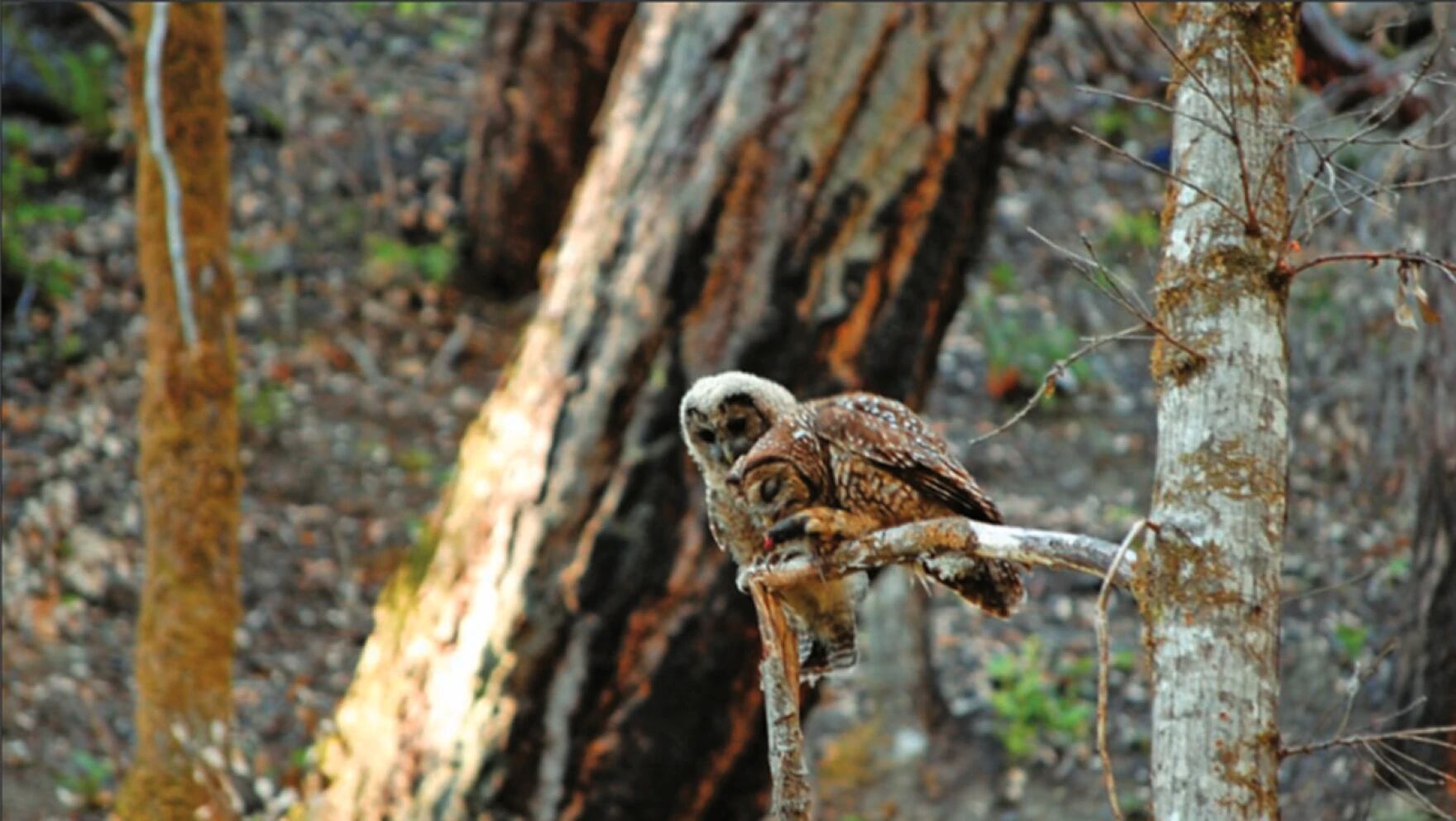
Oregon researchers say forest thinning practices don’t have to clash with efforts to protect the northern spotted owl.
For decades, the northern spotted owl has been either heralded or scorned, depending on your view of timber clearing and forest management.
Timber advocates have singled out the owl for diminished harvests, while conservationists have championed protecting it, a debate that peaked in the 1980s and was—more or less— settled in 1994, with President Clinton’s Pacific Northwest Forest Plan that preserved old-growth forest areas.
But Jeremy Rockweit, a postdoctoral student at Oregon State University, says controlled fire doesn’t need to burn efforts to preserve wildlife, including the famed bird.
“What this study suggests is that the patterns of persistence of that nesting and roosting forest seem to align pretty well with what we think these historical landscapes looked like pre-European colonization,” Rockweit told KLCC. “And they also seem to look a lot like what we think high-quality habitat for spotted owls looks like.”
In a study conducted between OSU and the U.S. Forest Service, researchers merged long-term spotted owl monitoring data beginning in the 1980s and data mapping fires from 1985 to 2022 to identify “fire refugia” for spotted owls.
An OSU release defines fire refugia as locations within a burned landscape that burn less frequently or severely than the surrounding area because of their position in the landscape.
The research focused on the eastern Cascades in Washington and the Klamath in southwestern Oregon and northwestern California.
The researchers modeled past fires that occurred under what researchers called “moderate and extreme fire weather conditions, with the different levels determined by temperatures and wind speeds at the time of the fires.
Rockweit’s team has created maps that show forest areas used by northern spotted owls that are more likely or less likely to endure fire.
The maps can help land managers determine where to practice forest restoration.
The study is in the journal, Forest Ecology & Management.
Brian Bull is a reporter with KLCC.
This story comes to you from the Northwest News Network, a collaboration between public media organizations in Oregon and Washington.
It is part of OPB’s broader effort to ensure that everyone in our region has access to quality journalism that informs, entertains, and enriches their lives. To learn more, visit our journalism partnerships page.
News Source : https://www.opb.org/article/2026/05/18/spotted-owl-protection-and-forest-management-dont-have-to-be-in-conflict/
Other Related News

05/18/2026
A woman who survived both World Trade Center attacks is now battling a disorder she descri...
05/18/2026
The deal will create the worlds largest regulated electric utility business according to t...
05/18/2026
As wildfires grow larger and more destructive across the West state governments are having...

05/18/2026
It turns out there are companies that make fake moon dirtAnd there are different kinds of ...

05/18/2026
When Aiden Wolf learned he had the chance to attend Whitman College on a new scholarship f...

Follow

Download Our App


Copyright 2022 © EPUERTO. All Rights Reserved