

Published on: 05/27/2026
This news was posted by Oregon Today News


Description

Oregon’s job landscape may seem grim. The state’s 5.2% unemployment rate is among the highest in the country, and well above the 4.3% national average. But Oregon employers still have plenty of jobs open for skilled workers. Jobs in healthcare, technology, and construction are all expected to grow in the coming years — a trend forecast by the state employment department at the end of last year.
But the pathway to some of these careers is not as clear as it could be. And to help Oregonians fill these jobs, state agencies, industries, and educational institutions need to better coordinate their workforce-development strategies with one another.
That charge to align and coordinate is a key recommendation from a new report, called the 2026 Oregon Talent Assessment, released by the state’s Higher Education Coordinating Commission and the Oregon Workforce and Talent Development Board.
Lawmakers take up bill to allow big changes to Oregon’s university system
“What we see in the [workforce] system today is a lack of alignment, a fair amount of redundancy and duplication of efforts,” said Andrew Dyke, senior economist at ECOnorthwest. The Portland-based policy and economic consultancy group compiled the biennial report.
“We’re continuously experimenting. We’re sort of wheel-spinning and not taking advantage of the things we’re learning,” he said. “We’re recommending a real emphasis on standardization — not centralized command and control — but standardization across the system.”
This year’s talent assessment is a departure from those in the past. The 2026 assessment pushes past a summary of Oregon’s critical industries and employment trends and outlines options for the state to streamline its workforce development strategies.
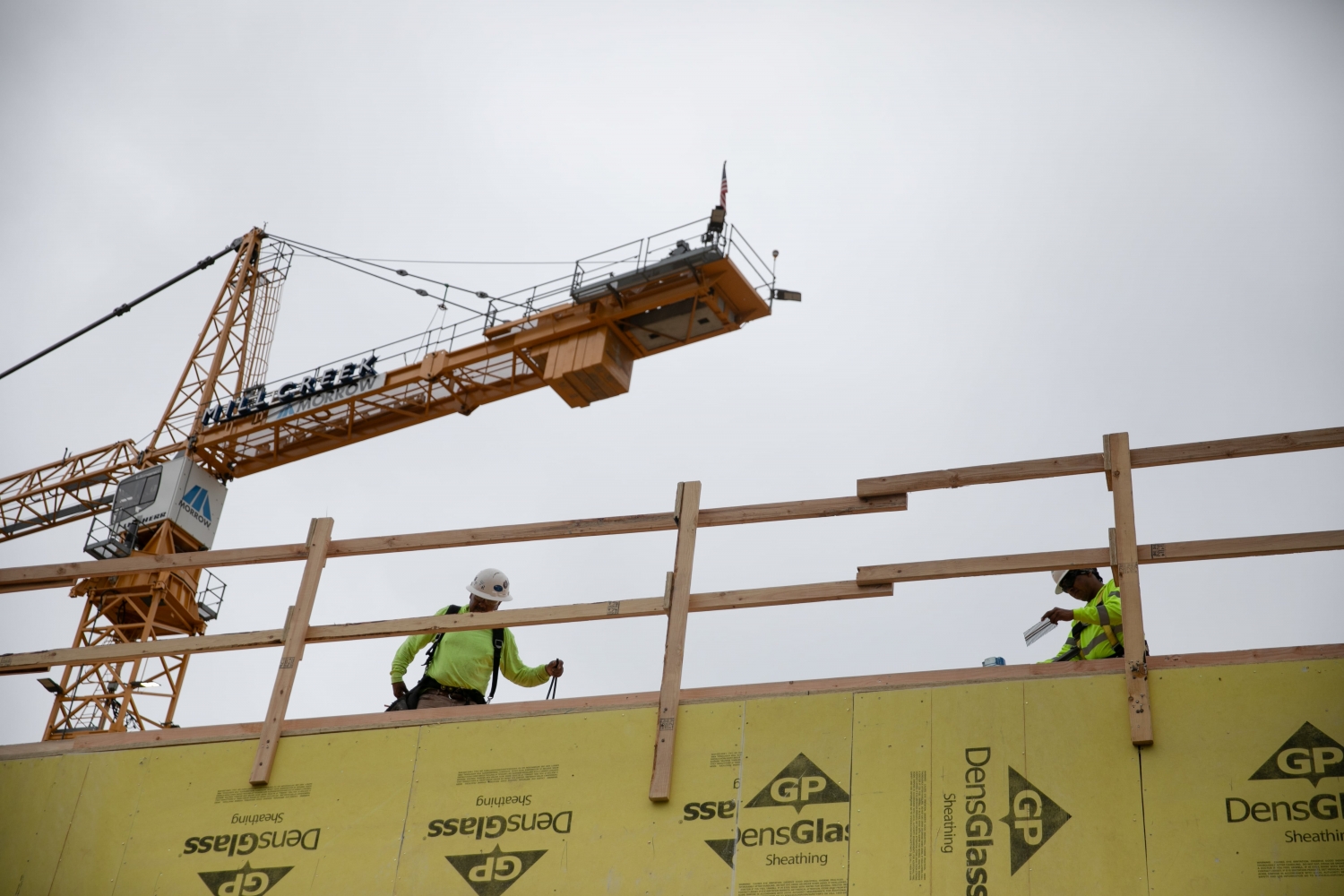
The report still identified key employment sectors as well as high-wage and high-demand jobs in the state. Oregon’s top job creation industries include healthcare, social services, technology and software, and construction.
The assessment comes at a critical time for the state. Job seekers are navigating an uncertain economic future, emerging technologies like artificial intelligence are altering the workplace and the Oregon Employment Department is projecting job growth overall to slow into 2035.
The OED slow growth forecast is due to Oregon’s decreasing population growth and fewer people moving into the state, according to the report.
“This is a time to understand how we can change the system to become more nimble, to respond to the rapidly evolving conditions and to deliver better services,” Dyke said.
Rather than drawing a fixed workforce roadmap, the report authors provide a set of various pathways the state can take to eventually build a stronger, diverse, and more resilient workforce.
One path is to develop a coordinated workforce data collection system intended to help align industry and state workforce needs with education, training, and apprenticeship opportunities.
In addition to its potential use to guide state workforce policies and investments, such a data collection system is needed if Oregon’s higher education institutions want to take advantage of the new Workforce Pell grant program, which is set to launch later this year. The program expands eligibility for the federal grant program for low-income students to include short-term certificate programs, many of which are focused on construction trades and healthcare jobs.
But even with this push towards specific job-related skills, the report highlights employer needs for “human skills” like problem solving, effective communication, timeliness, and reliability.
“In some sectors, there is an interest in hiring people with a humanities degree because the liberal arts education teaches people how to think more broadly about the world,” Dyke said. “That’s a skill that is in demand now.”
Is a liberal arts education worth it?
The report authors hope that the assessment will provide a foundational base for the state to build upon. They say that without an aligned plan, Oregon employers can’t hire the people they need, and Oregonians can’t get the job training they need.
And that means the state will miss out on economic prosperity, said Dyke.
“That affects the state economy, and we’re all worse off when we’re missing those opportunities,” he said. “We’re leaving money on the table, in essence.”
News Source : https://www.opb.org/article/2026/05/27/workforce-system-alignment-can-help-oregonians-weather-coming-economic/
Other Related News

05/27/2026
Officials say several first responders were injured by the fire and residents may have bee...
05/27/2026
Hours after a deadly chemical implosion in Longview Washington killed at least one person ...
05/27/2026
Set on a sloping lawn framed by tall trees McMenamins Edgefield campus in Troutdale remain...
05/27/2026
While it may not be quite as absurd as the idea of Earth losing its gravity theres a new o...
05/27/2026
A bicyclist died after a collision with a car in Northeast Portland on Tuesday police said...

Follow

Download Our App


Copyright 2022 © EPUERTO. All Rights Reserved