

Published on: 09/24/2026
This news was posted by Oregon Today News


Description

Younger voters and voters of color in Washington state see their ballots challenged for signature issues more often than their older and white counterparts.
That’s according to an analysis of state election data by University of Washington researchers presented to state lawmakers Wednesday. Meanwhile, thousands more votes than usual went uncounted in last month’s primary due to delivery lags from the U.S. Postal Service.
Ballot signature challenges have declined in recent years, based on data from the general elections between 2020 and 2025.
“We hope that that will be a continued trend,” said Scott Allard, co-director of the UW Elections Database Project. “And it certainly was in the primary election in 2026.”
But while white voters have seen 1.5% of their votes scrutinized for signature discrepancies, it’s 1.9% for Black voters, 2% for Asian voters and 2.2% for Hispanic voters, according to the UW research.
Washington doesn’t collect race and ethnicity data from voters upon their registration, so researchers used an algorithm to identify their most likely race.
The disparity is more stark among age groups. Signature challenges decrease with age, from 5.3% among voters 18 to 25, to 0.7% for those 66 and older.
There isn’t much of a difference in ballot challenges between urban and rural voters, Allard noted.
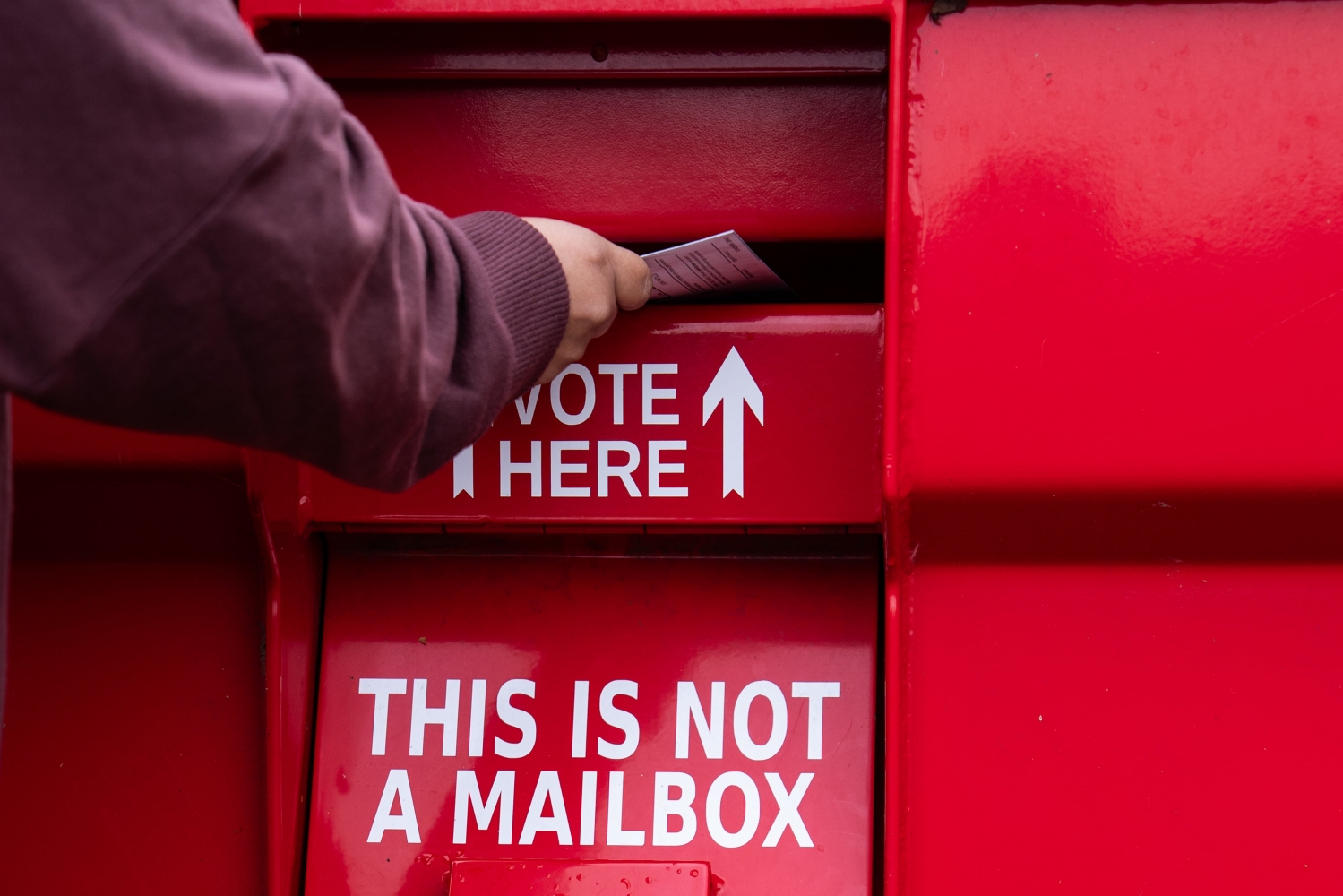
Voters returning their ballots in Washington’s vote-by-mail system must sign the return envelope they place in a mailbox or dropbox.
But their votes won’t be accepted if their signature doesn’t match what the local election office has on file, or if it’s missing altogether. Those whose signatures are challenged can fix the issue, known as curing, to ensure their vote is counted. This can be done by filling out a form and returning it to the county election office.
If not cured, election officials won’t count the ballot. In the 2025 general election, 58.5% of challenged voters cured their ballots, according to the researchers.
“We actually do a really good job of curing our ballots in the state,” Allard said, while noting the percentage has slightly decreased in the past couple years. “Any efforts we can do to help improve those rates, I think, matter.”
The same disparities remain for those who cure their ballot.
White voters reportedly fixed the issues on more than 59% of their challenged ballots, while Black, Hispanic and Asian voters corrected less than half.
And the youngest voters also cure their ballots less than half of the time, compared to 72% for elderly voters. This means that white and older voters are less likely to have their votes rejected, according to the research.
Addressing this “is work that remains for us as a state,” Allard told lawmakers.
Part of the issue, Allard said, is that letters to voters telling them they need to fix their ballot might not be translated into the language they speak.
The researchers also suggested adding more electronic forms of communication to reach younger voters telling them they need to cure their ballots.
“It’s really important that we meet voters where they’re at, and when we’re talking about 18- to 34-year-olds, that’s going to be on your cell phone,” said Julie Wise, director of King County Elections.
Between 2020 and 2025, about 1% of ballots cast have been rejected in general elections in Washington. Half are due to mismatched signatures, one-third because they arrived late, and a small percentage from being unsigned.
This has a downstream effect. Voters who see their ballots rejected are less likely to cast votes in the future, said Jake Grumbach, a colleague of Allard’s who is now an associate professor at the University of California, Berkeley.
“They feel a bit excluded from the process, but efforts at curing can signal that the state cares about the ballot and about the individual, and really can make up for some of that,” Grumbach said.
Another problem has cropped up this election cycle that led to more ballots rejected for last month’s primary. More than 20,000 ballots weren’t counted because they came in too late, thousands more than in 2024, amid alarm over U.S. Postal Service delays. Officials have been encouraging Washington voters to return ballots via dropbox or mail them back long before Election Day.
Ballots are set to be mailed out to voters for the November election in less than a month.
Washington State Standard is part of States Newsroom, a network of news bureaus supported by grants and a coalition of donors as a 501(c)(3) public charity.
This republished story is part of OPB’s broader effort to ensure that everyone in our region has access to quality journalism that informs, entertains and enriches their lives. To learn more, visit opb.org/partnerships.
News Source : https://www.opb.org/article/2026/09/24/ballot-challenge-signature-voter-demographics-washington/
Other Related News

09/24/2026
A Miami couple was pepper-sprayed and beaten by two women who drove up yelling at them and...
09/24/2026
We have just over a month left before the November general election Portland is barreling ...
09/24/2026
Oregon DMV is relocating an express kiosk from a Fred Meyer store in Oak Grove to its Gran...
09/24/2026
See where Washington County stands in education child care income and more The Ford Family...
09/24/2026
Official Website of the Mens Collegiate Lacrosse Association MCLA

Follow

Download Our App


Copyright 2022 © EPUERTO. All Rights Reserved