

Published on: 10/12/2026
This news was posted by Oregon Today News


Description

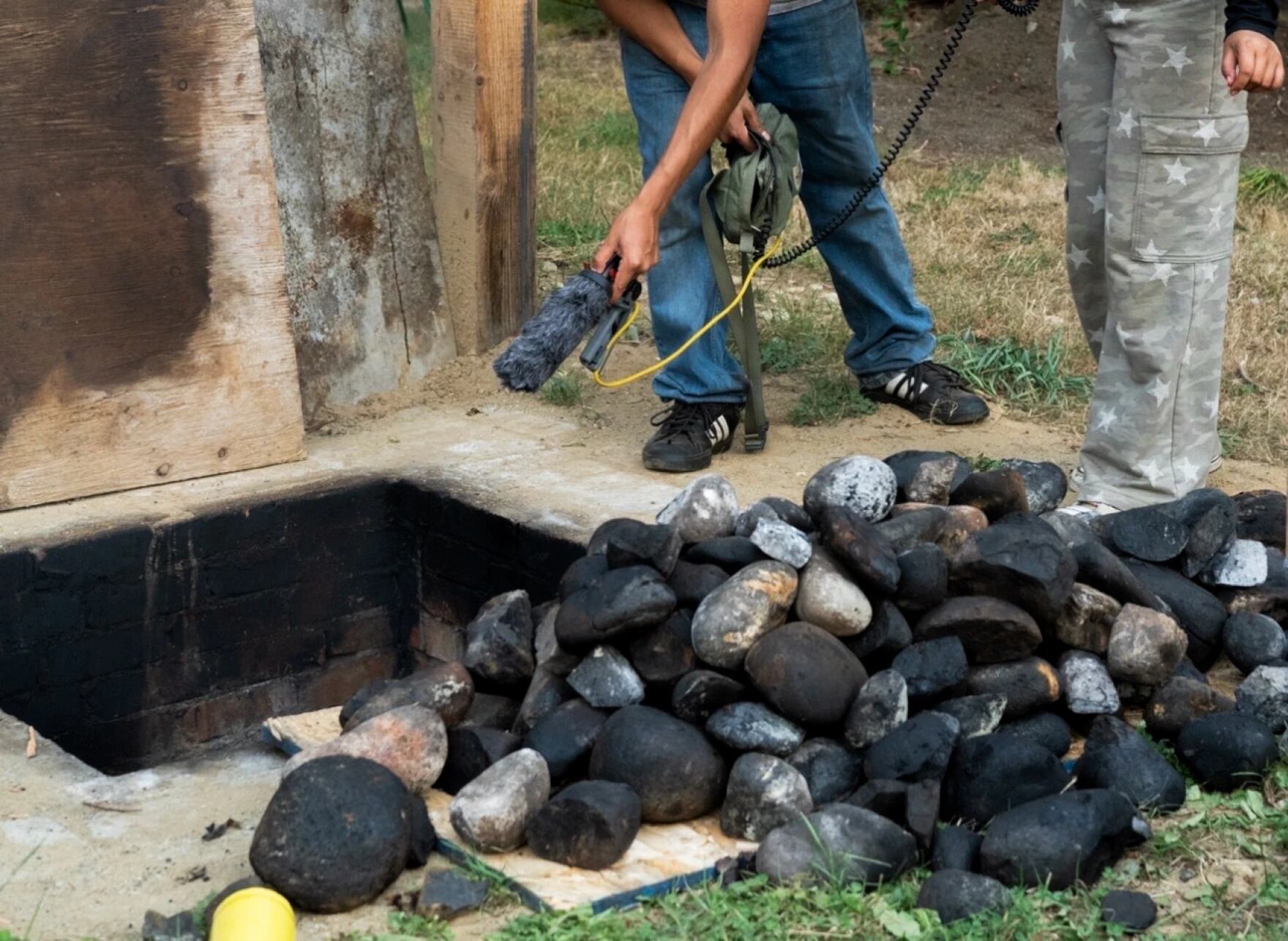
On a recent Saturday on a stretch of land off Highway 2, a small fire came to life in a 4-foot pit at dusk. A dad had just finished butchering two goats and a sheep. He sat with his wife, kids, and friends on park benches. They were taking a rest from the day’s efforts.
The smell of iron-rich meat, beer, and burning cherrywood lingered in the air. The family waited for the fire to bloom, to add more logs.
“It’s a lot of work, and it needs to all burn completely, only leaving behind the pure heat with the stones of the oven and with that is what we’ll cook the meat,” the dad said in Spanish.
They still had a shoulder’s height pile of wood to move. The kids took turns pushing wheelbarrows of logs closer to the pit.
Across Washington, on any given weekend, these pits of stones are waiting to be filled. It’s a crucial step for one of the oldest forms of barbecue, called Barbacoa. This dad, and pitmasters around Washington and beyond, men and women, are part of a generation of immigrants from Mexico in mixed immigration status families and communities, many of whom are in crisis as a result of President Donald Trump’s immigration enforcement crackdown.
Historians say these families and communities rejuvenate traditions that may fade away the longer they stay in the U.S. That goes for just about any immigrant community from Europe, Africa, Asia, or Latin America. Many of the people in mixed immigration status families from Mexico arrived in the 90s. Some have legal status; others are still waiting.
KUOW is not sharing names or a more specific location because of the family’s concern about immigration enforcement. The dad, for example, has been in the U.S. without legal status since he was a teenager, arriving around the same age his kids are now.
A lot of what makes a good Barbacoa is a well-seasoned and practiced hand, the dad said. It helps that you’ve had a lot of good Barbacoa, too.
“My dad, since I remember when I was a kid, well, he did this until the day he died,” he said.
His dad died when he was a teenager. He spent the following birthdays, Christmases, and New Years learning from his older brothers.
In a few years, his kids will be able to petition for his legal status.
This year, after decades of cooking for his family, dad — the pit master — started selling to others, mostly to his neighbors. He earns some money from it, but the cash is only a side benefit, he said.
“I do it because I like it,” he said. “Not everyone has the patience to do it.”
The days he slaughters the animals are a cumulation of months of effort, raising them, feeding them grasses and grain.
After the slaughter and butchering, the family will be up until around 1 a.m. when the rocks are finally hot enough. Then they’ll lower a pot full of garbanzos, veggies, and water. The seasoned and sauced meat wrapped in banana leaves is lowered onto a grill grate on top of the pot next, and then finally a metal cover and a pile of dirt seal off this low-and-slow cook.

“For the flavor we add avocado leaf, and a plant that’s called Pitiona, it’s a plant from Oaxaca,” he said.
We’re at the halfway point for this family as they prepare for a long night.
“ This is the kind of practice that can’t be really done on your own,” said Yesnia Hunter, a historian who teaches at Heritage University on the Yakama Indian Reservation in Toppenish, Washington. The only way these practices survive is when they’re shared with others, she said.
“It’s really done in community,” she said. “That’s who validates the flavor, the right recipe, or the change in the recipe.”
Along with the meat, the family also prepares other things alongside the Barbacoa that aren’t found on traditional restaurant menus — spiced and seasoned blood sausage, cooked in the goat’s stomach, a warm consomme that has pieces of liver, heart, and other offal meat.
“Even though Barbacoa might be offered at one of the Mexican restaurants, it still often has this other way of presentation that is palatable to the American eye and the American tongue,” Hunter said. “But when you go to a traditional fiesta or party, celebration, quinceañera, you’re gonna have those traditional flavors.”
All of this work is done by the family, and a few friends who stop by to keep them company, but the pace isn’t the same as a restaurant. Efficiency, which is typically the credo of a restaurant, only exists here in how efficiently a slaughtered animal could be used. After all the meat is divided up, all that’s left will be bones, which will be sent to a lady who makes mole amarillo and other stock, said the pitmaster.
“ It creates these rhythms of belonging. It creates these opportunities for us to feel connected to each other, to those community members, to our neighbors. And that sense of connection transforms the spaces that we’re in,” Hunter said.
It’s Sunday morning. Normally there’s a crowd, but not today.
The wife of the pitmaster asked a regular why he didn’t bring his wife.
“Once things control themselves, we’ll see,” the man responded. “She didn’t want to come out.”
There have been a lot of ICE arrests recently accompanied by a surge of reports online. The Department of Homeland Security also announced a surge in immigration enforcement operations in “sanctuary” jurisdictions like Washington state over this past weekend. People are trying to lay low, but still come to grab a pound or so of Barbacoa.
Many of the faces of immigration enforcement officers reported online to social media are a lot like theirs. Many of them either recently gained legal status or are descendants of immigrants to the U.S., making up a third, or even half, of the immigration enforcement workforce depending on the agency, according to some estimates. That was before the influx of cash to hire more officers.
Their reasons for joining immigration enforcement are varied, but at the center some would argue, is a sense of safety, duty and belonging, but also a good-paying job. Additionally, many Latinos, either here for generations or recently naturalized, voted for President Trump, according to nationwide polls after he won his 2024 election. Many believed in the economic promise of his platform — that ramped up immigration enforcement would only target the “worst of the worst.”
That was a shift from Trump’s inaugural speech launching his run for presidency in 2015, targeting Mexican immigrants, saying they’re “bringing drugs. They’re bringing crime. They’re rapists, and some I assume are good people.”
Since taking office in 2025, President Trump has taken steps to slow immigration to the U.S., deport hundreds of thousands of immigrants, and make it harder for others to get legal status while in the country.
Hunter said Latino, or any immigrant community labeled as outsiders, often get caught up in racist rhetoric, even if they are the ones being targeted.
Hunter calls this a time of crisis for Latinos — and an opportunity for a vision of what it means to be from Latin America to be determined by the politics currently found in the White House, or what Hunter calls “white supremacy.”
“ Every generation, from what I’ve seen, that settles and makes place, oftentimes gets swept up into white supremacy in many ways. And we approximate ourselves to whiteness in some ways through education, through the kind of careers or work that we can get through our documented status or undocumented status,” Hunter said.
While families are being separated by immigration enforcement, being closest to the politics of white supremacy is the safest place to be, she said, and new-immigrant families like the pitmasters are living with their heads on a swivel.
“This approximation towards white supremacy sometimes holds us back from creating places for the next generations or, or establishing pathways for other people to transition into American life while maintaining our sense of self, our sense of historical self, our sense of tradition and, and culture,” she said.
Hunter said there’s an antidote to what previous generations have forgotten. Making Barbacoa like this is one step.
“Even if you don’t know who your historical self is, your historical self is informing who you are today, and it’s even complicating who you are today. But it’s also helping to reshape future generations and the way that people are connected to each other through food,” she said.
As the family worked through packaging the list of pre-orders, the daughter rolled balls of masa for her mom to press into tortillas to sell with the heaps of steaming meat.
These weekends are hectic, she said.
“Even though, like, sometimes we might be panicking, it’s like it’s a really fun thing to do with them ‘cause, I get to help them out,” she said.
The son also helped — counting cash, distributing food, and checking orders. He had just spent the day before helping with the butchering, too.
“ I know how to clean the poop out of the guts. I know how to skin the goats now. I just need a little bit more practice with that,” he said.
The son sees himself wanting to be a police officer someday. This isn’t something he wanted to learn.
“But like it’s something good either way ‘cause it’s helping all of us in a way,” he said.
He said he’ll keep learning and practicing Barbacoa, as long as his dad is here to lead the way.
Gustavo Sagrero Álvarez is a reporter with KUOW. This story comes to you from the Northwest News Network, a collaboration between public media organizations in Oregon and Washington.
It is part of OPB’s broader effort to ensure that everyone in our region has access to quality journalism that informs, entertains and enriches their lives. To learn more, visit our journalism partnerships page.
News Source : https://www.opb.org/article/2026/10/12/washington-immigrants-barbacoa-cooking-immigration-enforcement/
Other Related News

10/12/2026
WASHINGTON US President Donald Trump said Sunday that Russia and Ukraine had agreed to an...
10/12/2026
Pope Leo XIV is scheduled to have an operation this week to remove a localized nodule in h...
10/12/2026
Federal agents searched Democratic US Rep Ilhan Omars home Monday morning as part of a cri...
10/12/2026
The Vatican press office said Pope Leos surgery will require a weeklong recovery in the ho...
10/12/2026
The OregonianOregonLive asked candidates for Portland City Council about their experience ...

Follow

Download Our App


Copyright 2022 © EPUERTO. All Rights Reserved