

Published on: 03/31/2026
This news was posted by Oregon Today News


Description
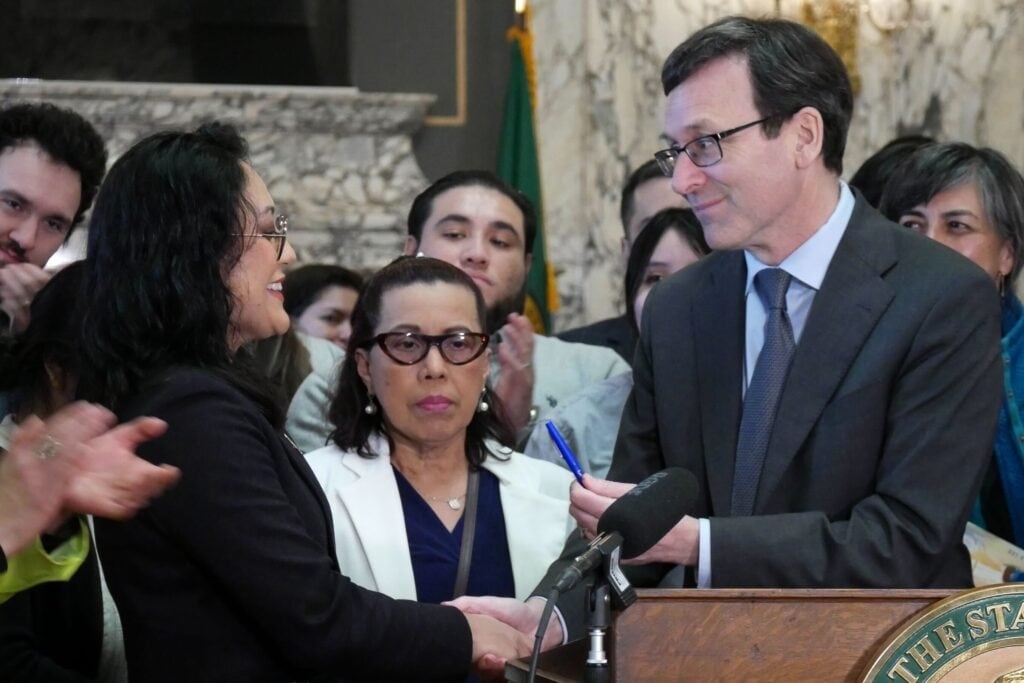
Washington Gov. Bob Ferguson on Monday signed into law new guardrails for the use of automated license plate readers, amid concerns federal immigration authorities are tapping them to aid in their searches.
Under Senate Bill 6002, police can only use the readers when investigating felonies or gross misdemeanors, looking for stolen vehicles or those registered to people with arrest warrants and searching for missing or endangered people, with some exceptions. The data can’t be shared except in court proceedings, and will need to be deleted after 21 days, unless it’s needed for police evidence.

The law won bipartisan approval in the Legislature, but some advocates say the final version is too watered down.
Ferguson, a Democrat, said the bill he signed “strikes a balance.”
“This is obviously a huge issue in our state,” he said.
Cities across Washington have increasingly started to use the cameras, usually from the company Flock, as an added tool to solve crimes. The readers are mounted everywhere from street poles to police patrol cars. They take pictures of vehicles and use artificial intelligence to analyze the data. Police can use the information, stored in a database, to track vehicles that could be tied to criminal investigations.
The legislation responds to a report out of the University of Washington that local police departments have authorized U.S. Border Patrol to use their license plate reader databases. In other cases, Border Patrol had backdoor access without express permission. In some instances, police conducted searches on behalf of the federal agency.
There are also concerns about states that have banned abortion combing through data from the license plate readers looking for women who’ve undergone the procedure. For example, authorities in Texas this year searched thousands of the cameras, as far as Washington state and Illinois, in their search for a woman believed to have had a self-administered abortion.
Under the new law, the cameras can’t be used for immigration enforcement or tracking protected activities like free speech. They also can’t collect data near protected health care or immigration facilities. Their use is also prohibited around schools, courts, food banks and places of worship.
Agencies now also have to keep a record for two years of when their reader data was accessed.
Local governments have had anxiety about the data being considered public records that people could use to harass or stalk. These concerns have led some local leaders to pull back on their deployment of the cameras.
The new law exempts reader data from public disclosure except for research purposes.
Numerous other states regulate the readers, but Washington wasn’t one of them, until Monday.
Washington’s chapter of the American Civil Liberties Union had spearheaded the effort for the regulations. But by the end of the legislative process, the ACLU was disappointed in the final product.
Tee Sannon, the organization’s technology policy program director, has called the 21-day retention period an “unacceptable provision that allows agencies to hold onto drivers’ data for far too long.” The original legislation envisioned a 72-hour window. It also started by only allowing the cameras’ use for investigating felonies, but that was expanded to add gross misdemeanors.
“Washingtonians deserve policies that prioritize community concerns and needs, but this bill does not provide meaningful protections for peoples’ privacy,” Sannon said in a statement earlier this month.
The bill’s sponsor, Sen. Yasmin Trudeau, D-Tacoma, called the law “the strongest bill in the country.” But she added that “this is the floor, not the ceiling,” potentially leaving more work to be done on the issue in future years.
The law takes effect immediately. By July 1, 2027, the attorney general’s office needs to develop model policies on the use of automated license plate readers.
In a statement, Flock said it’s already begun implementing provisions from Washington’s law, including the 21-day retention period.
“We’re working directly with agencies across the state to help them stay compliant and ensure they can continue using this technology effectively under the new law,” the company said. “We remain committed to being a constructive partner in ongoing conversations while supporting both public safety and privacy protections.”
Other new laws
Ferguson also signed legislation to give Washington workers advance notice if federal immigration authorities are inspecting company records.
House Bill 2105 requires employers to let their employees know of a planned inspection of employment eligibility paperwork within 72 hours of being notified about it by U.S. Immigration and Customs Enforcement or another federal agency.
The law takes effect in October. It passed the Legislature along mostly party lines, with Democratic support. In the Senate, two Democrats were opposed: Sens. Claudia Kauffman, of Kent, and Lisa Wellman, of Mercer Island.
The legislation’s signing is a win for Attorney General Nick Brown, who first pitched the idea last year.
Another new law allows state employees to share paid time off with coworkers who are the victim of a hate crime, or if the worker or a family member face immigration enforcement action.
Washington State Standard is part of States Newsroom, a network of news bureaus supported by grants and a coalition of donors as a 501(c)(3) public charity.
This republished story is part of OPB’s broader effort to ensure that everyone in our region has access to quality journalism that informs, entertains and enriches their lives. To learn more, visit opb.org/partnerships.
News Source : https://www.opb.org/article/2026/03/31/washington-adds-safeguards-flock-cameras/
Other Related News

03/31/2026
Monarch Gardens Memory Care would like to extend our sincere appreciation to Davids Chair ...
03/31/2026
A federal judge on Tuesday agreed to permanently block the Trump administration from imple...
03/31/2026
The Public Utility Commission on Tuesday approved rate increases for the two monopoly util...
03/31/2026
KMTR NBC Eugene provides news sports and weather coverage to surrounding communities inclu...
03/31/2026
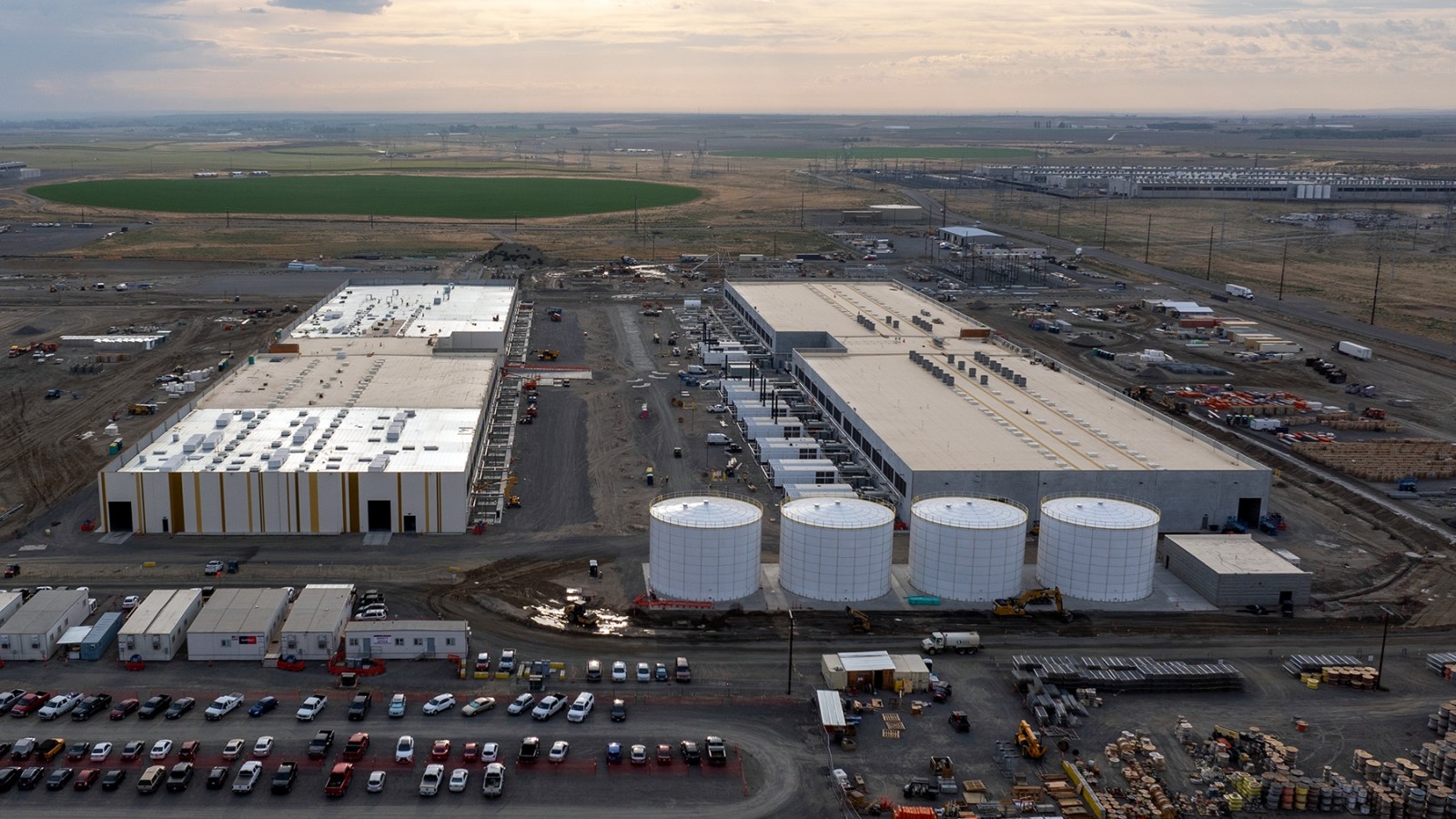
Amazon has reached a settlement agreement in a class action suit over how its data centers...

Follow

Download Our App


Copyright 2022 © EPUERTO. All Rights Reserved