

Published on: 04/13/2026
This news was posted by Oregon Today News


Description

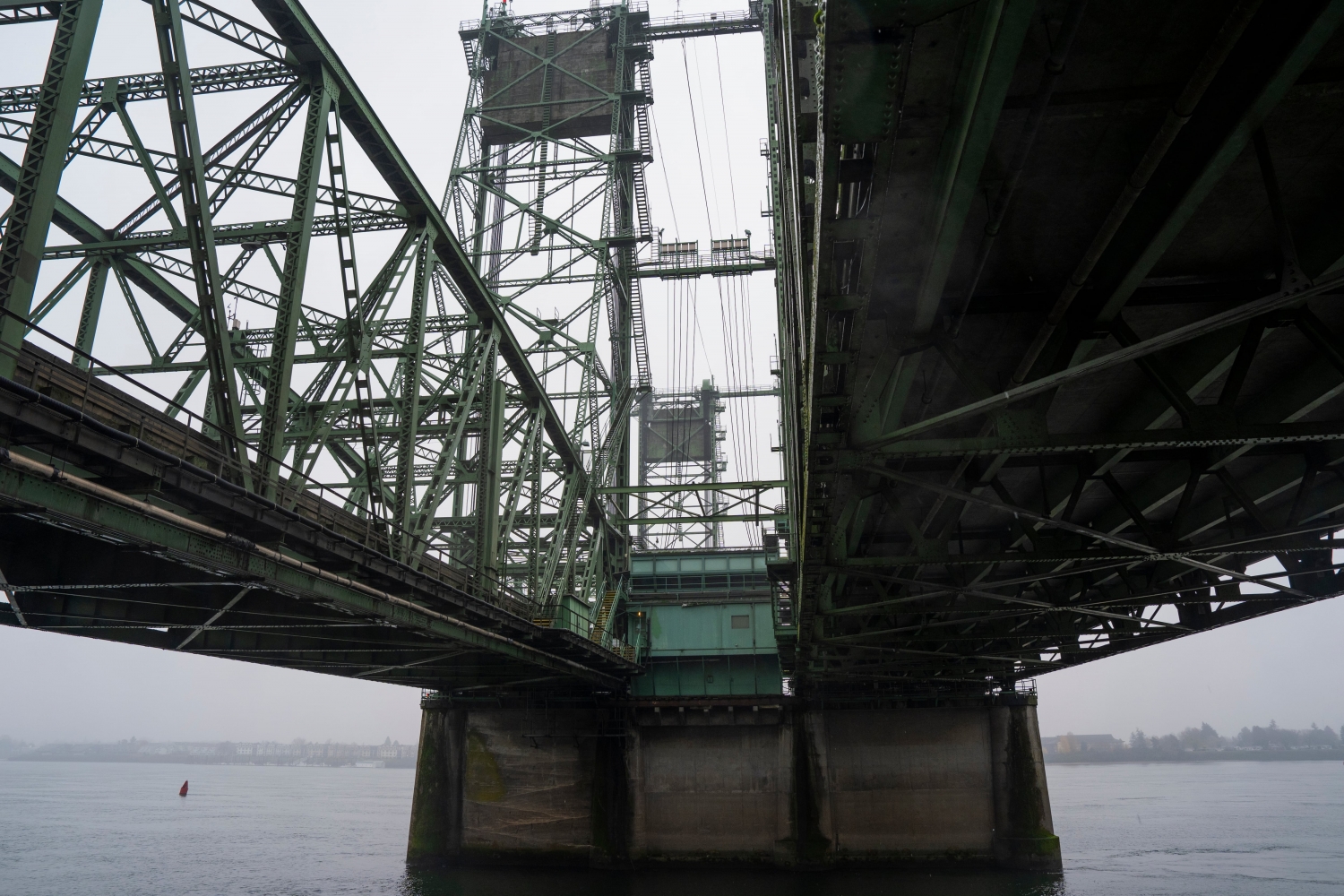
Plans to bring light rail to the heart of Vancouver and reconnect two neighborhoods separated by Interstate 5 in the city’s downtown core are in danger because of heightened costs for the Interstate Bridge.
Now, city leaders are expressing concern about the change that could terminate light rail service with a stop 90 feet above the Vancouver waterfront.
The Vancouver City Council will vote Monday night on a resolution opposing this new plan for the bridge replacement.
Changes to the planned design were shared with the program’s executive steering committee on March 17, according to city meeting documents.
Light rail service would now terminate where the new bridge reaches the Vancouver waterfront, rather than traveling approximately half a mile into the city, where it was expected to join a planned transit center near the downtown library.
That original plan was part of a broader design to connect light rail with local and regional rapid transit bus service. It also included a related $30 million project to cap a section of I-5 between downtown Vancouver and the historic Fort Vancouver. The two regions of the city are separated by six lanes of I-5, though the now separate neighborhoods can be accessed via East Evergreen Boulevard.
The city and Washington State Department of Transportation were awarded a $30 million grant from the U.S. Department of Transportation for the “Community Connector Lid” project in 2025.
The new proposal would have light rail service terminate at an elevator at the end of the Interstate Bridge, 90 feet above the city’s waterfront, according to Vancouver City Councilor Erik Paulsen.
“It is effectively hovering over the waterfront of downtown Vancouver. That is not an effective place to connect three Vine lines and all of our other transit lines,” Paulsen said, referring to the city’s bus rapid transit lines. “So, no, that does not work for the City of Vancouver.”
The Interstate Bridge Replacement Program change comes after a March 17 press conference when state officials announced the cost of the new bridge would jump from an estimated $6 billion to $14.4 billion for the full five-mile corridor of the project.
During the meeting, Washington Gov. Bob Ferguson pledged to complete the bridge with light rail but said it would be done in a phased approach, moving forward with a “core set of projects” first, given that $5.5 billion in funding has so far been secured.
“The Program estimates that replacing the northbound and southbound spans of the bridge, connecting the new bridges to I-5, and extending light rail service to Vancouver will cost $7.65 billion,” reads a March 17 press release.
IBR officials did not directly explain the plan to shorten light rail service during the public announcement.
“Programs of this size and complexity are typically constructed in phases,” IBR Program Administrator Carley Francis said in the announcement. “Starting construction on a new span across the Columbia is the first step toward delivering the full program.”
The leading bridge replacement plan, known as the Modified Locally Preferred Alternative, was developed with extensive public input over the course of years and collaboration between a group of stakeholders from different transit agencies, states and cities. Though its forecast cost far exceeds how much funding is available, it’s unclear how it could be quickly scaled back to meet the smaller budget goals without violating those agreements.
Officials from the Interstate Bridge Replacement Program could not be reached for comment.
“C-TRAN and other project partners previously approved the project’s Modified Locally Preferred Alternative, which includes a light rail transit component with two stations in Vancouver,” C-TRAN spokesperson Eric Florip said in a written statement. “Any further direction on the project would come from the C-TRAN Board of Directors at a future meeting.”
The Vancouver City Council plans to use Monday night’s resolution to send a message to IBR staff that their scaled-back light rail plan isn’t sufficient, and they should consider other options, Paulsen said.
“Now at, not the eleventh hour, but at a minute until midnight, to make these changes to the MLPA [Modified Locally Preferred Alternative] in a way that significantly impacts the transit component from the City of Vancouver’s perspective, does seem to go against a very thoughtful and deliberative process that has taken place over many years,” Paulsen said.
This story may be updated.
News Source : https://www.opb.org/article/2026/04/13/vancouver-washington-light-rail-public-transit-i-5/
Other Related News

04/13/2026
If youve been thinking about upgrading your air fryer or buying one for the first time Wal...
04/13/2026
Congratulations to Sunset baseball for being voted The OregonianOregonLives Oregon High Sc...
04/13/2026
Congratulations to Gladstones Ashlynne Franssen for being voted The OregonianOregonLives O...
04/13/2026
Tonights coverage of the 2026 WNBA Draft brings together some of the biggest stars in wome...
04/13/2026
Congratulations to Oregon Citys Connor Lemmon for being voted The OregonianOregonLives Ore...

Follow

Download Our App


Copyright 2022 © EPUERTO. All Rights Reserved