

Published on: 12/15/2025
This news was posted by Oregon Today News


Description
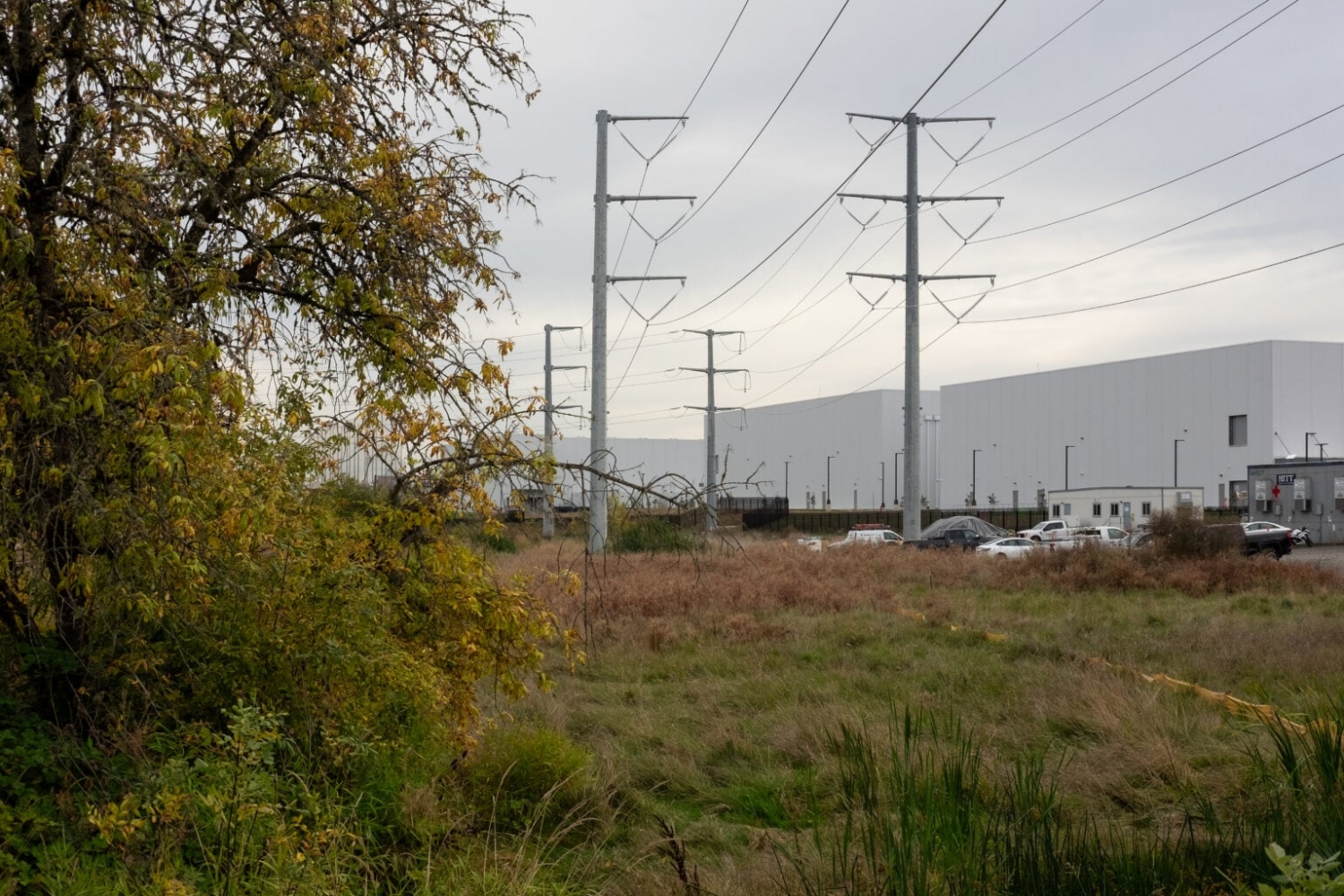
Oregon’s largest electrical utility is proposing to make residential customers pay at least part of the long-term cost of supplying large data centers, despite a new law requiring it to charge the centers’ developers, not other customers.
This summer, Oregon became one of just a few states to pass a law requiring data centers to foot the costs of growing energy and transmission infrastructure that’s needed to power them.

The POWER Act mandated Oregon’s three monopoly electric utilities create a separate rate class for data centers to ensure residential customers and other medium and industrial customers weren’t subsidizing the new costs associated with the data centers’ anomalous growth.
But months after the law passed, a plan to comply with the new law from Oregon’s largest electric utility — Portland General Electric — reveals the company could be trying to find a work-around that would only directly charge data centers for the first three years of costs associated with a typical 50-year infrastructure investment.
Residential customers and other customers would help pay for the rest over the remaining 47 years.
Bob Jenks, executive director of the Citizens’ Utility Board, said PGE’s plan invokes a “twisted logic” to try and skirt the new law. The utilities’ watchdog group was established by Oregon voters in 1984 to represent the interests of the state’s consumers who are captive to the monopoly utilities.
PGE Spokesperson Drew Hanson says it will ensure all customers “pay their fair share of system costs.”
The three-member Oregon Public Utilities Commission is expected to make a decision on PGE’s plan at the end of April.
Data centers drive overall growth
Oregon’s data center market is the fifth largest in the nation, according to Chicago-based commercial real estate group Cushman & Wakefield.
Amazon, Apple, Facebook, Google and X, formerly named Twitter, have massive data centers in eastern Oregon as well as in The Dalles, Hillsboro and Prineville that require enormous amounts of energy to operate.
Between 2013 and 2023, Oregon’s overall electricity consumption rose by more than 20%, the analysis found, according to a Sightline Institute analysis of U.S. Energy Information Administration data.
“Data centers undoubtedly drove a major share, if not almost all, of this growth,” analysts wrote.
PGE serves 930,000 customers, and absorbed the most data center load growth of any private utility in the state during the last decade, according to that analysis.
The company also raised residential rates 50% during the last five years in part to pay for system upgrades and growth.
As a customer class, residential users’ demand on PGE’s system has grown by about 1% a year during that last ten years, or about 10% in the last decade. Demand from the class of industrial power customers that data centers fall into grew nearly 70% during that same period.
The plan
In its plan to comply with the POWER Act, PGE proposes a new tool for figuring out who pays for new infrastructure meant to meet growing demand called the “Peak Growth Modifier.”
For the first three years of a new infrastructure investment — typically spread out over 50 years — the user driving overall system growth necessitating new equipment, would be assigned the bulk of the costs of the new equipment. That means for the first three years, data centers would likely pay.
After three years, the remaining costs would roll back into PGE’s historic pricing method, which spreads those infrastructure costs across all customers based not just on how much they drive overall demand growth on the system, but how much they drive growth in “peak demand.”
Expanding and updating the electric grid and connecting it to new energy resources is meant to make sure customers are reliably served, “at moments when usage is at its highest point,” PGE spokesperson Drew Hanson said in an email.
That is: demand that peaks in moments when it’s really cold or really warm and heat and air conditioners are turned on. Each customer class is charged by the proportion of energy they require during the highest demand hour each month.
Though residential users have contributed to roughly 10% of the total new load growth to the system during the last decade they’ve contributed to 42% of the peak load demand growth during that decade. That’s in part because there are just way more residential customers than there are in any other customer class, Hanson said.
Directly assigning costs
Jenks acknowledged that PGE’s residential customers have caused energy demand to spike during hot summer days due to air conditioning, but winter peaks have declined in recent years due to the growing use of energy efficient heat pumps.
“The increase in air conditioning should not be used to assign investments made to serve data centers to residential customers. We should directly assign data center costs to data centers,” Jenks said.
Jenks used the example of PGE’s recent Hillsboro Reliability Project, a transmission project bringing a lot of power to new data centers. Jenks said the publicly available estimates put the cost at about $210 million.
Demand for the project came mostly from data centers and high-tech facilities such as semiconductor chip manufacturers like Intel, Jenks said. And under the Peak Growth Modifier, those companies would pay most for the first three years of the costs of the project.
But, residential customers would be chipping in a large share of the remaining costs of that project over the next 47 years, since they are considered significant “peak demand” drivers on the entire system.
Hanson said the Hillsboro project was not just meant to meet new demand from data centers, industrial manufacturing and high-tech businesses in the area, but also residential expansion. He did not, however, provide details about which of those energy users drove most of the demand.
“These projects serve the overall electricity needs of Hillsboro and surrounding communities,” he said.
The growth modifier, at the end of the day, will result in data centers paying more for their growing energy needs than they currently do, he said. And the company remains flexible to Peak Growth Modifier tweaks, including charging data centers for more than the first three years of a new large infrastructure project meant to serve them, he added.
Jenks countered that PGE should just do what PUC staff and the Citizens’ Utility Board have asked them to do in previous rate cases when discussions about data center demand have come up.
“Both the PUC Staff and CUB have advocated direct assignment when a cost is incurred primarily to serve data centers,” he said, “and that the direct assignment lasts until there is evidence that the asset is no longer primarily serving data centers.”
This republished story is part of OPB’s broader effort to ensure that everyone in our region has access to quality journalism that informs, entertains and enriches their lives. To learn more, visit opb.org/partnerships.
Other Related News

12/15/2025
Expanded federal work requirements for SNAP are now in place across Oregon impacting an es...

12/15/2025
Mondays jackpot is the sixth-largest prize in the games history

12/15/2025
CARY NC Harrison Bertos scored 154 into overtime after Washington blew a two-goal lead in...

12/15/2025
On Monday at 756 pm an updated wind advisory was issued by the National Weather Service va...

Follow

Download Our App


Copyright 2022 © EPUERTO. All Rights Reserved