

Published on: 10/01/2026
This news was posted by Oregon Today News


Description

Catch up on what you missed with our Education newsletter, sent weekly.
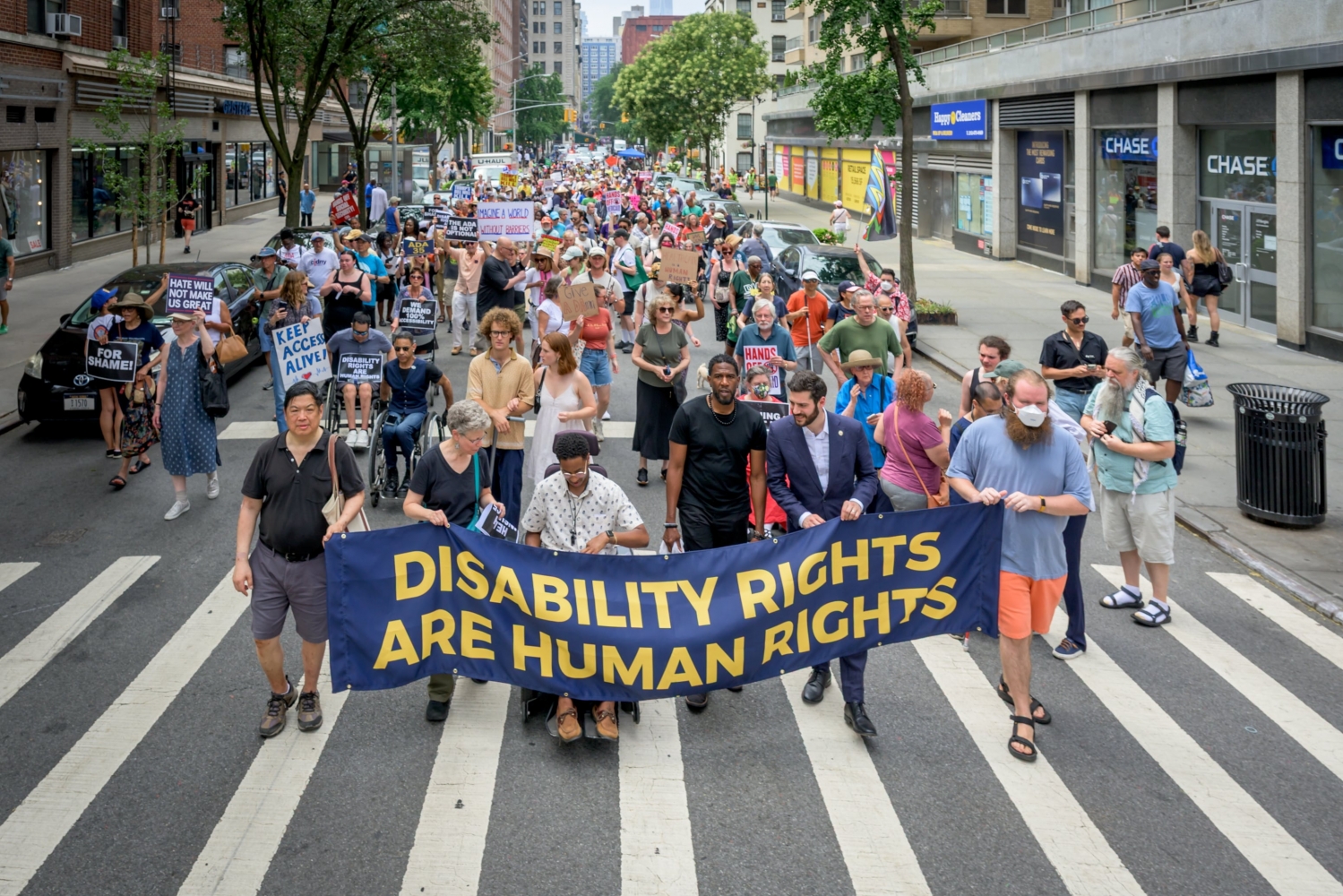
For nearly 50 years, the federal government has said people with disabilities should live, work and learn in the most integrated setting possible rather than be segregated in institutions like nursing homes.
The Trump administration just took its most concrete step yet to reverse that position.
Last week, a federal judge agreed to strip out mentions of “integration” from federal regulations tied to Section 504 of the Rehabilitation Act, a landmark civil rights law that prohibits disability discrimination. The judge did so after the Justice Department declined to defend its own rules in a lawsuit brought by several states challenging the legality of those rules.
Part of what is so striking about Texas v. Kennedy is that the federal government was originally the defendant in that lawsuit, brought by states fighting what’s known as the integration mandate. Then, it switched sides and agreed with the states that the requirement should be undone.
Bruce Darling, president and CEO of the Center for Disability Rights, says when he heard about the ruling, it felt “like a knife in your chest. Because what we’re hearing, what people are hearing, is that the federal government has made a determination that [disabled people] don’t have a right to live in freedom, that they can be locked up against their will.”
The court’s decision removes regulations from Section 504 that explicitly required federally funded programs to provide services in the “most integrated setting.”
“That lack of clarity will impact people’s rights. It will likely impact what states do and how they behave,” says Jennifer Mathis, a disability rights lawyer who helps lead the Bazelon Center for Mental Health Law.
Mathis says it’s important to note that the court’s decision did not undo integration protections tied to the Americans with Disabilities Act (ADA) or those established by decades of case law, including the landmark Supreme Court decision known as Olmstead.
“My concern is that right now, where we’re at is disabled people have a right to integration on paper. It is in the law, but whether it gets practically enforced is a serious question,” Darling says. His organization is putting its energy behind a proposed law that would cement protections around integration, while others are working with states to strengthen their disability laws.
The Justice Department did not respond to multiple requests from NPR asking why it is changing course after decades of legal and bipartisan support for community-based services.
After 50 years, the government changes its position
In 1973, Congress passed the first civil rights law for people with disabilities: Section 504 of the Rehabilitation Act. But it took advocates years of fighting — until 1977 — to get actual regulations that would make that law enforceable.
The Department of Health and Human Services, under President Joe Biden, updated the regulations in 2024 so it would be clearer to states what they had to do to uphold the law. “They thought it was important to do that so those rights would be as clear as possible,” Mathis says.
In recent months, the federal government, under President Donald Trump, began to publicly change its position: First, in June, the Justice Department issued an opinion saying it no longer interpreted disability law to “require states to treat mentally disabled patients in the most integrated setting appropriate to their needs.” The memo even noted its position is “out of step with the common understanding” of the Olmstead decision.
Then in July, the Justice Department announced it would stop relying on its own longstanding guidance explaining how it enforces the integration mandate.
These actions led up to the federal government switching sides in Texas v. Kennedy. Finally, last week, a federal judge agreed to throw out the integration mandate rules under Section 504, including language that was first introduced nearly 50 years ago.

Mathis says this kind of about-face is highly unusual. “It is pretty significant and pretty unprecedented to see the federal government asking a court to vacate its own rules.”
That could leave more of the work of defining and enforcing the right to community living to people with disabilities, private litigators, advocacy organizations and the courts.
All this, says Mathis, comes at a time when states are already under immense pressure from the federal government to cut Medicaid spending, which pays for disabled people to get many of the services they need. “States are looking for things to cut,” she says. Mathis worries that because the government has changed its stance on integration, states would be freer to cut spending on programs for community-based living.
How enforcement is already changing
One of the clearest examples of the effects of the federal government’s changing position involves children with complex medical needs in Florida.
Back in 2013, the Justice Department sued the state of Florida, arguing that it failed to provide adequate services to children who needed in-home care. As a result, some of their families were forced to put their children in nursing facilities. Other children were at risk of the same.
The federal government won its case in 2023, and the state of Florida was required to provide these families the services they needed to keep their children at home. But in August, the government told the federal court to throw out its victory and allow Florida to have the case heard again in district court, citing the Justice Department’s new opinion on the issue.
Mathis calls the reversal shocking. “To do that in a case that involves ripping children away from families, taking them out of the homes where they have families that want to take care of them, and to force those children to grow up in an institution, really is just unthinkable to me and is incredibly heartless.”
The Florida case suggests that coming battles for community integration may increasingly play out not through federal enforcement, but case by case, in the courts.
What disability advocates are doing now
The disability rights community is rallying around a number of actions to try to combat the federal government’s latest actions.
“There’s nothing that is more cherished and hard-won than the right to live, work and participate and be included in your community,” says Alison Barkoff, who worked on disability rights enforcement during the Obama administration and is now a health law and policy professor at George Washington University. She says the disability community is hard at work trying to protect those rights.
Thanks to recent advocacy efforts, Barkoff says some members of Congress have reaffirmed their commitment to the rights of people with disabilities to get services they need in their community. Just this week, a group of bipartisan lawmakers introduced a resolution asserting the federal government’s longstanding interpretation of Olmstead. In July, 100 members of Congress signed a letter asking the Justice Department to rescind its June opinion.
There is also movement at the state level: Delaware already passed a law incorporating the regulations in Section 504 that were stripped from federal law. Barkoff says other states are moving in a similar direction: “I’ve probably gotten calls in the last week from at least a dozen state leaders across the country about how to codify the integration mandate … in state law. I see a lot of momentum,” she says.
Bruce Darling of the Center for Disability Rights helped draft the Latonya Reeves Freedom Act, a bipartisan bill that would codify integration for disabled people into federal law. He says his organization has been working to convince lawmakers to sign onto it.
Although the bill has some bipartisan support, it has failed in the past and would have a difficult road ahead, facing an executive branch now challenging integration. But Darling says he’s hopeful that members of Congress are now more aware of the challenges facing his community.
“I think that the issue has really come to a head now and folks can see that Olmstead is seriously at risk, that we need to do something,” says Darling. “I don’t know, I’m optimistic.”
Edited by Nirvi Shah
Visual design and development by LA Johnson
News Source : https://www.opb.org/article/2026/10/01/disability-rights-upended-by-trump-doj/
Other Related News

10/01/2026
October is Breast Cancer Awareness Month a time to honor survivors remember loved ones and...
10/01/2026
The woman accused of hitting and killing a traffic flagger near a construction site in Gre...

10/01/2026
Legacy Health and UnitedHealthcare reached a new multi-year contract keeping Legacy provid...
10/01/2026
Adults and teens aged 15 are invited to register for a FREE sewing class with Kell Smith o...

Follow

Download Our App


Copyright 2022 © EPUERTO. All Rights Reserved