

Published on: 03/01/2026
This news was posted by Oregon Today News


Description

It is still a month away from Qingming, a traditional festival in early April when many Chinese Americans visit the tombs of their ancestors to honor them with ritual offerings such as food and incense.
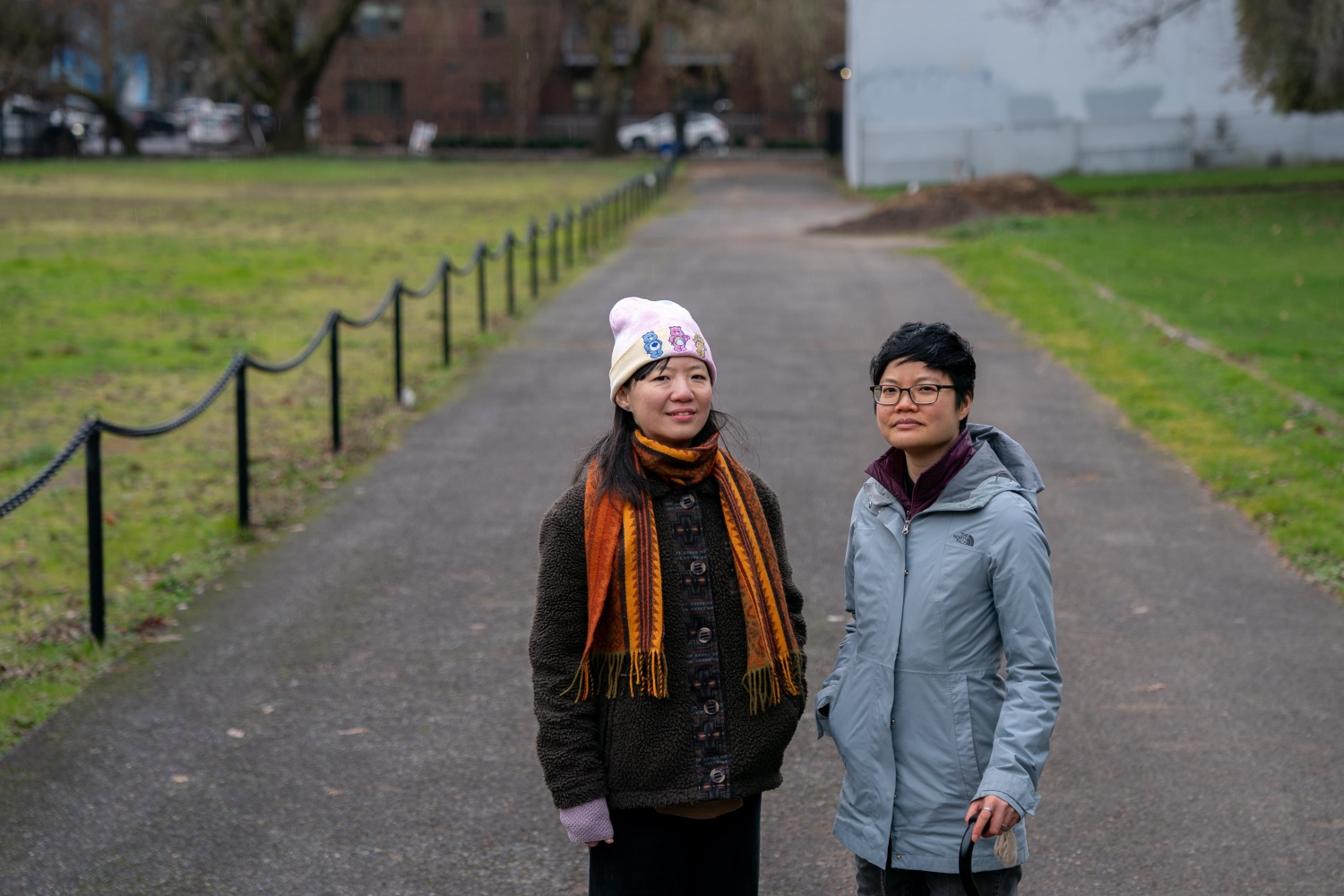
But on a chilly, sleeting afternoon in January, artists Sophia Xiao-fan Austrins and Qi You brought clay offerings to Portland’s Lone Fir Cemetery. Shaped like Chinese foods such as bok choy, lotus roots and dumplings — as well as Western foods like a hot dog — the offerings were meant for deceased elders whom they and other members of the local Chinese community may have never known.
The clay pieces were created during several public engagement sessions led by Austrins and You last year, including one held around the Qingming Festival. These sessions were part of a public art project at the cemetery’s Block 14, an area where Chinese immigrants were once buried without markers.

Funded with $200,000 from the Metro regional government, the project will recreate an altar decorated with 3D-scanned wax versions of the clay offerings. These will be cast in bronze, symbolizing the permanence of traditional Chinese rituals.
Austrins grew up in Bethlehem, Pennsylvania, at a time when there were not many Asians around her. She said the project helps make local Chinese communities visible within the cemetery and in Portland more broadly — something she wishes had been possible where she grew up.
“We want to feel familiarity on this site and see ourselves,” she said. “Almost everything people have made through this project or the stories people have shared I’ve really resonated with, because I’m like, ‘Oh yeah, you are my people, this is my community.’ So there’s a lot of warmth in that.”

Located at the cemetery’s southwest corner at Southeast Morrison Street and 20th Avenue, Block 14 was the burial ground for most of the more than 3,000 people of Chinese ancestry buried at Lone Fir Cemetery between the 1860s and the 1920s, a time of widespread anti-Chinese racism marked by laws that barred Chinese immigrants from entering the country and denied Chinese Americans the right to become U.S. citizens.
According to Metro, which now owns the cemetery, many of these people — mostly men — were exhumed and returned to China in accordance with cultural practices. However, some bodies, likely women and children, remain in unmarked graves at the site today.
In the 1950s, when Multnomah County owned the cemetery, Block 14 was repurposed as a maintenance facility and parking lot. When the county planned to sell the land for development in 2004, community members intervened, citing the likelihood of remaining graves.

The building and parking lot were demolished three years later after Metro assumed ownership of the cemetery and reincorporated Block 14 into the site. In 2019, voters approved Metro’s Parks and Nature Bond, which ultimately allocated more than $4 million for a memorial honoring the Chinese burials. Austrins and You’s public art project is part of that memorial.
Ahead of the memorial’s expected completion next February, Block 14 remains largely bare, without the headstones and trees seen throughout the rest of the cemetery. Three wooden signs — in English, Traditional Chinese and Simplified Chinese — stand on the land, bearing the title: “This is not an empty field.”

You, who was born and raised in Beijing, moved to New York state in 2012 to study fine arts before settling in Portland eight years ago. She said she first learned about Block 14’s history by reading the explanatory text on those signs.

Although the final design of the public art project has not yet been determined, pending further consultation with local communities, You envisions an altar accompanied by a pavilion and walking paths. These paths would be carefully designed to avoid burial areas, out of respect for the human remains still present.
She emphasized that the project’s artistic approach is intended to be subtle rather than monumental, offering gentle reminders of ancestral rituals and histories.
For Austrins, the project — including the clay sculpting sessions — is not about her and You creating something for the community, but creating with the community while honoring lived cultural knowledge.
“Part of that is just recognizing that we might be experts in some things, but the community is actually experts in their experience of their own culture.
“We could do that together — and actually have everyone’s fingerprints in the final work,” Austrins said.
Austrins and You are set to hold their next community engagement session on March 7 to showcase the progress of their art project.
News Source : https://www.opb.org/article/2026/03/01/remembering-lone-fir-cemetery-ancestors/
Other Related News

03/01/2026
The company outlined strict limits banning mass surveillance and autonomous weapons usage

03/01/2026
I appreciate your coverage of criminal case dismissals due to the lack of defense lawyers ...

03/01/2026
Dear Liz My husband and I plan to delay taking Social Security retirement benefits until t...
03/01/2026
Two bills in the Legislature aim to help ski resorts river guides and other recreational b...

Follow

Download Our App


Copyright 2022 © EPUERTO. All Rights Reserved