

Published on: 06/11/2026
This news was posted by Oregon Today News


Description
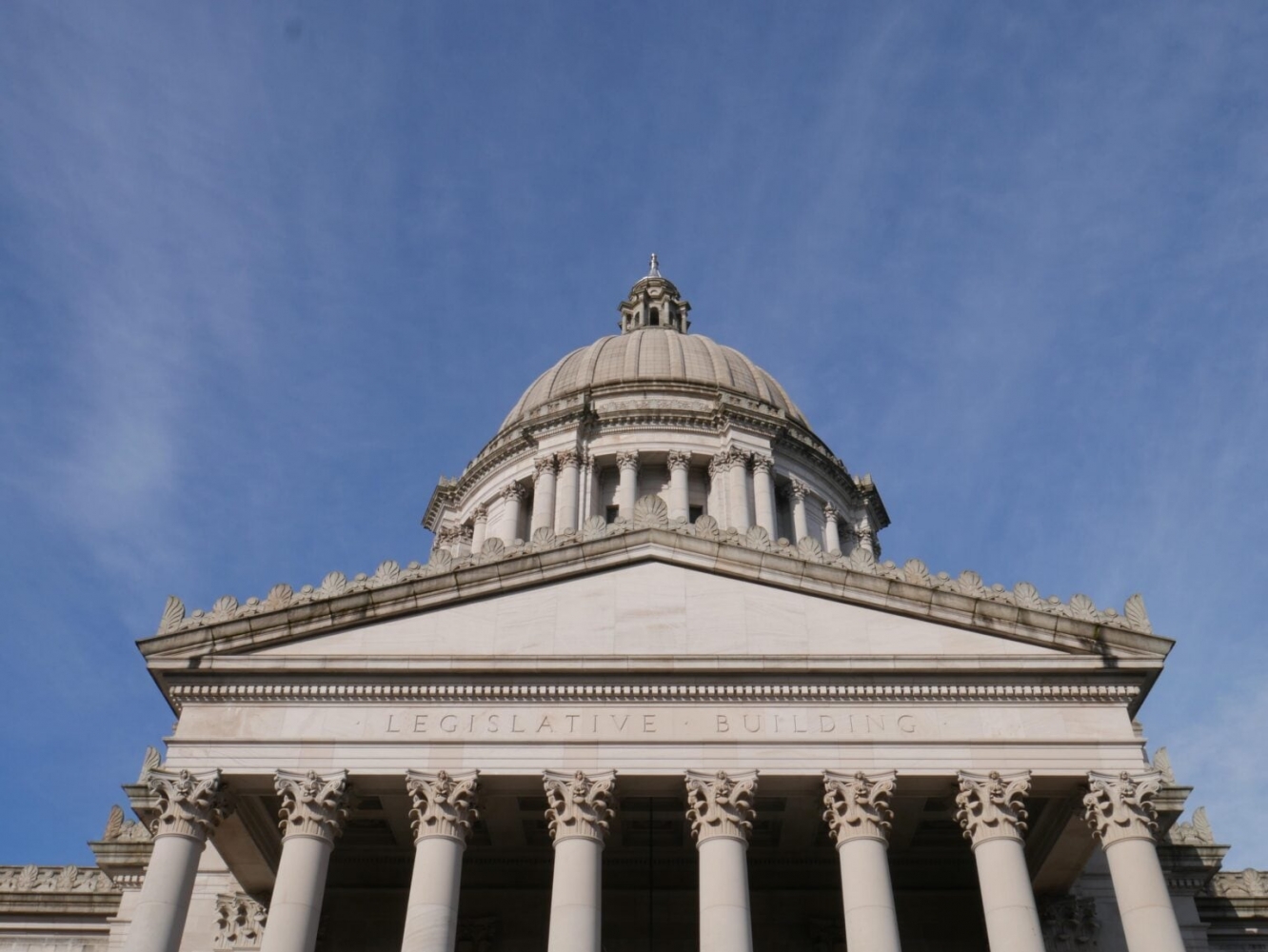
Over 200 new Washington state laws take effect Thursday.
Among them are tax hikes, enhancements to the state’s Voting Rights Act and guidance for retailers on the penny phase-out.
Thursday marks 90 days since the end of the 2026 legislative session. Some laws passed in Olympia this year will take force later, while others are already on the books.
Here’s a sampling of what’s coming Thursday.

Tax for abortion services
Health insurers offering plans on the Washington Health Benefit Exchange will pay a new tax to raise additional abortion funding.
Senate Bill 6182 imposes an assessment of $0.82 per month of coverage for each plan enrollee in the first year, dropping to $0.165 in the following years. The first payment is due next March.
At least 85% of the proceeds will go toward grants administered by the state Department of Health to organizations that provide abortion services.
Under the law, carriers have to bear the costs of the assessment and not pass the burden onto enrollees through premium hikes or other charges. The only exception in the proposal is if it would “create a significant risk of carrier insolvency or consumer harm.”
In the first year, the tax is expected to raise about $10 million and around $2 million each year after that, according to a fiscal analysis.
Republicans uniformly opposed the legislation.
The tax comes as Republicans at the federal level have targeted Medicaid funding for Planned Parenthood. Washington state lawmakers also cut funding for the Abortion Access Project last year, but restored that spending this year.
Pennies
The federal decision to stop producing pennies has left retailers lacking the 1 cent coin in a bind over how to make change.
House Bill 2334 aims to give predictability for buyers and clear guidance for sellers. It allows, but doesn’t require, retailers to round up or down cash purchases to the nearest nickel.
So if the total price ends in 1 cent, 2 cents, 6 cents or 7 cents, it is rounded down to 5 cents or zero. And if the price ends in 3, 4, 8 or 9 cents, it’s rounded up.
For example, if you hand over $10 for a $9.97 purchase, you’d get a nickel in change. If the total is $9.98, expect nothing back.
It doesn’t affect purchases with credit or debit cards. The legislation passed with bipartisan support.
Voting Rights Act
As the U.S. Supreme Court has effectively gutted the federal Voting Rights Act, Washington lawmakers passed two new laws this year to shore up the state’s version.
House Bill 1710 forces jurisdictions with histories of voting discrimination to get approval from the attorney general before making changes to their voting systems. If approval isn’t granted, the jurisdiction could appeal in court. The process, called “preclearance,” was included in the federal Voting Rights Act until a 2013 U.S. Supreme Court ruling.
House Bill 1750 expands the state voting rights law to bar local governments from imposing election policies or practices that could result in a “material disparate burden” on the ability of members of a protected class to vote or otherwise participate in the political process. This could include moves like changing ballot box locations.
Both laws passed along party lines, with Democrats in support.
Voter registration
Another Democrat-backed law tightens rules for challenges to a voter’s registration as conservatives seek to cull ineligible voters from the state’s rolls.
These challenges often hinge on claims that the voter doesn’t live at the address listed on their registration.
Challengers must show steps they took to verify the listed address is wrong. They have to send a letter with return service requested to the voter’s registered address, search county auditor records, local telephone directories and property records, and look at voter registration databases to confirm if the voter is registered elsewhere in Washington or another state.
House Bill 1916 adds steps.
For one, it requires the complaints to be made by someone registered in the voter’s county. The letter seeking return service has to be certified and use a form created by the secretary of state’s office that outlines the reason for the challenge. For each registration, the person is challenging, they have to file a separate form and sign each with ink.
And the law requires county auditors, who oversee elections, to dismiss challenges if they’re filed improperly or if the factual basis doesn’t meet the legal grounds for one. Previously, auditors were only permitted to toss challenges, not mandated to. Auditors would only be able to schedule hearings on the complaint if they are unable to confirm the voter’s eligibility and there is probable cause that the disputed voter isn’t eligible.
Knowingly providing false information to question a registration is also now a gross misdemeanor. And knowingly lodging one without reasonable cause can be charged as a misdemeanor.
Fake police officers
Masquerading as a law enforcement officer is now punishable as a gross misdemeanor. The governor requested the policy, passed in House Bill 2165, after increasing reports of people pretending to be U.S. Immigration and Customs Enforcement agents amid the Trump administration’s immigration crackdown. The Democrat-backed bill passed mostly along party lines.
Microchips
Don’t worry, Washington workers, your employer can’t force you to get a microchip implant.
Injected under the skin, usually between the thumb and index finger, microchip implants can serve as identification or make contactless payments smoother. For example, this could allow them to get into restricted areas more easily, instead of needing a key card. A scant few businesses around the world have offered to chip their employees.
House Bill 2303 makes clear businesses can’t ask or require workers to get chipped.
Gambling
Before Thursday, gamblers in Washington couldn’t wager on college sporting events played by teams from in-state universities. Senate Bill 6137 changes that, permitting the bets at the state’s tribal casinos.
Wagers on individual performance, called prop bets, involving athletes from schools like University of Washington, Washington State University or Gonzaga University would be prohibited.
The legislation also makes it a gross misdemeanor to threaten a referee, coach or player due to a wager. Such a conviction results in a ban from placing future sports bets.
The bill passed the Legislature with bipartisan support.
Supportive housing
A controversial new law forces local governments to allow housing for people experiencing homelessness in residential areas, as some communities across Washington have pushed back on permitting shelters and permanent supportive housing in their neighborhoods.
Backers hope the new law will reduce costly delays.
House Bill 2266 requires cities to allow transitional and permanent supportive housing in residential and hotel development zones in an urban growth area. Indoor emergency shelters and housing must be allowed in places where hotels are allowed.
Local governments subject to the new mandate can’t set conditions for this so-called “STEP housing” that are more restrictive than for other development. They can still impose certain conditions on affordable housing providers, require community notices about projects, and set requirements on shelters near schools.
Legislative Democrats pushed through the measure with no Republican votes.
Other housing-related bills taking effect Thursday include Ferguson’s proposal aiming to turn vacant properties and strip malls into housing, and another requiring landlords to let renters know about flood risks for their unit.
Blue envelopes
Washington is taking a step to reduce anxiety in traffic stops for people with autism.
Under House Bill 2323, the state Department of Licensing will now issue blue envelopes to neurodivergent drivers. The envelopes will include tips for both the officer and the driver for such interactions. Instructions could include avoiding loud noises, touching and bright lights as well as speaking calmly and asking simple questions.
Sensory triggers could make it harder for people with autism to respond to questions quickly, or force them to respond in ways officers could misinterpret. Beyond autism, conditions that meet the definition of neurodivergence in the law include attention deficit hyperactivity disorder, bipolar disorder, dyslexia, obsessive-compulsive disorder and Tourette syndrome.
The blue envelopes will be available to drivers at no cost through licensing offices across the state. The program is voluntary and doesn’t require any medical documentation.
The state Department of Licensing has anticipated issuing as many as 18,000 of the envelopes per year. The law nearly got unanimous approval in the Legislature.
Student restraint
Washington school staff can no longer physically restrain students in ways that restrict breathing or blood flow to the brain. They can also no longer use any mechanical or chemical restraints.
Previously, restraints were allowed if there was an imminent likelihood of serious harm to property. House Bill 1795 also removes that authorization. Schools also can’t build or reconfigure rooms for the purpose of isolating students.
Under the new law, a student’s Individualized Education Program, or IEP, can’t include isolation as a planned behavior intervention. And restraint can only be used if the student’s parent or guardian requests it and consents and a health care provider documents the medical necessity of it in writing.
A 2023 report determined restraint and isolation were being used more often than allowed under state law, and students of color, with disabilities and from low-income families were disproportionately subjected to the practice.
Energy projects
House Bill 2496 seeks to improve consultation with Native American tribes when it comes to new energy facilities that could be sited on sacred lands. Within 90 days of receipt of an application, the Energy Facility Site Evaluation Council must offer government-to-government consultation with the appropriate tribe to address concerns. The goal is to mitigate adverse effects on tribal resources or rights.
Washington State Standard is part of States Newsroom, a network of news bureaus supported by grants and a coalition of donors as a 501(c)(3) public charity.
This republished story is part of OPB’s broader effort to ensure that everyone in our region has access to quality journalism that informs, entertains and enriches their lives. To learn more, visit opb.org/partnerships.
News Source : https://www.opb.org/article/2026/06/11/new-washington-state-laws-take-effect-thursday/
Other Related News

06/11/2026
In a new interview the Jumanji star and WWE legend opened up about his health
06/11/2026
A chemical tank rupture at Nippon Dynawave in Longview killed 11 with 10 dying from alkali...
06/11/2026
Viva Tualatin is one month away Face painting crafts a giant coloring mural lawn games and...
06/11/2026
WASHINGTON President Donald Trump said Thursday that he plans to nominate Jay Clayton the...
06/11/2026
Oregon State pitching coach Rich Dorman is heading to the SEC

Follow

Download Our App


Copyright 2022 © EPUERTO. All Rights Reserved