

Published on: 10/02/2026
This news was posted by Oregon Today News


Description
Looking for the rest of the Superabundant newsletter?
Subscribe now to get original recipes, PNW food news, and ideas for the kitchen and garden!
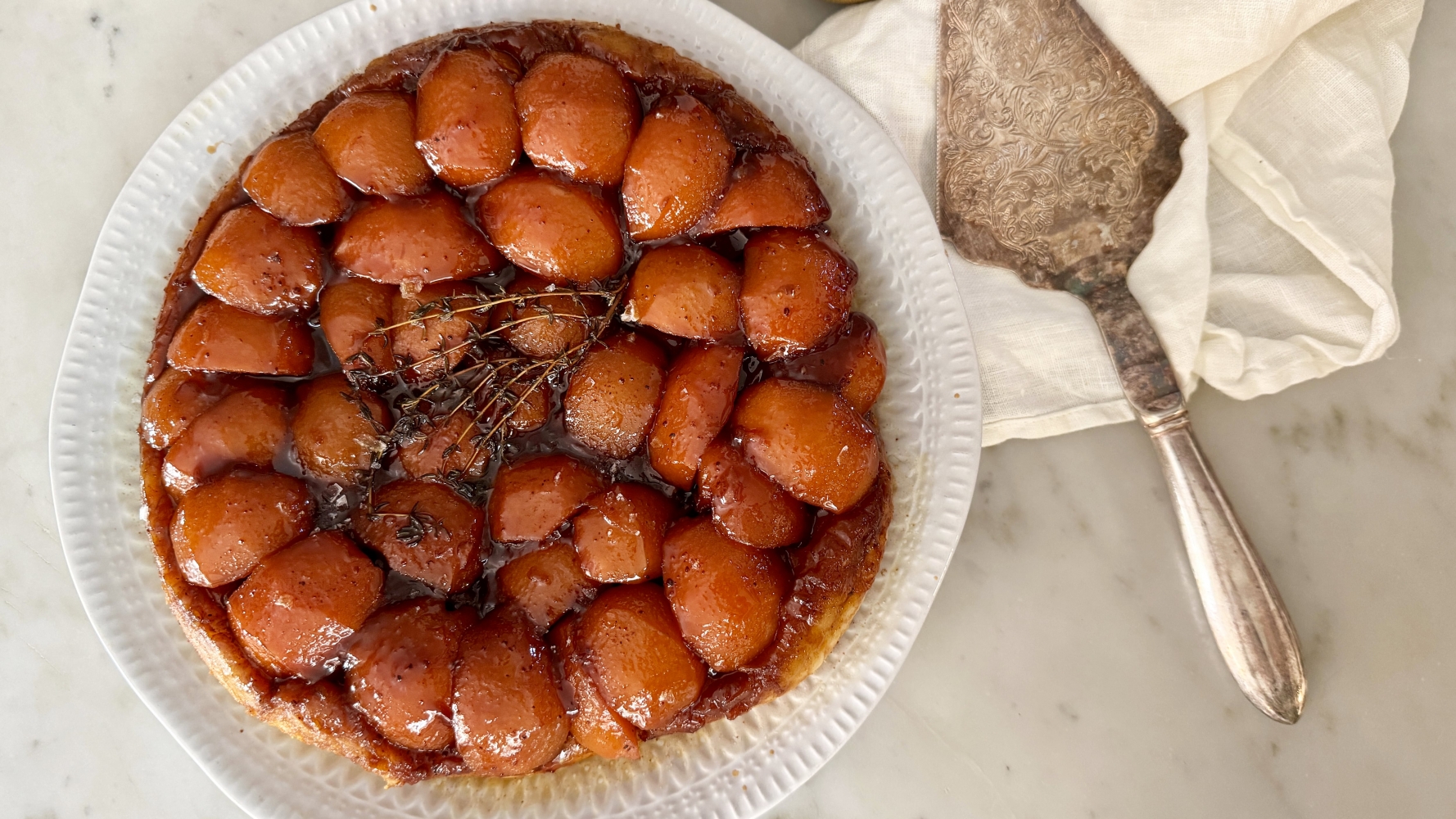
It is the season of cozy autumn bakes that use up a ton of excess fruit, and what better way to celebrate than with a tarte Tatin? It’s an impressive-looking but deceptively easy bakes that I classify in the “Surprise! It is upside-down!” family of exciting stunt desserts. Even without a thrilling open flame (looking at you, bananas Foster), there are many opportunities to seriously burn yourself!
Upside-down desserts were nothing new when the Tatin sisters purportedly discovered the dessert by accident in the 1880s. Forgetting a pan of sugar and apples on the stove until you smell it from three rooms away is very relatable, especially this time of year, when there are always at least two lit burners going under pots of boiling jam.
Tarte Tatin was originally and is still customarily made with apples, but so many different fruits lend themselves to this mode of bake — it’s a gorgeous tribute to plums and persimmons, for instance, but imagine a savory version with shallots or mushrooms. If you’re working with blemished fruit that needs trimming, you can skip the decorative pattern and go with a more organic arrangement (a scoop of vanilla ice cream will hide most sins).
I usually don’t care that much about peeling fruit for baking, but the scaly, golden-brown russeting you see on a Bosc or a Niitaka Asian pear (or a golden russet apple) is a layer of cork cells which are composed of suberin and lignin — two biopolymers usually found in bark. It acts as a waterproof (and therefore caramel-proof!) barrier and is not very pleasant to eat (it also evolved to deter chomping). Fun fact: If you boil the fruit with the skin on, the russet layer sloughs off like a tough, scaly exoskeleton, leaving the thin, chartreuse-green pear skin behind.
I happen to have a lot of butter taking up space in my freezer (brag) so I thought I’d go with a rough puff for the pastry, which sits at the sweet spot between a flaky pie crust and shattery puff pastry. I can only be bothered to laminate a dough so many times — there’s a new season of Bake Off to watch, man! — but you can use store-bought puff pastry or pie dough to save time, and it’ll still be awesome. Serves 8-12
Ingredients
Rough puff pastry
1 ¼ cups all-purpose flour
1 teaspoon granulated sugar
¼ teaspoon fine sea salt
8 tablespoons (1 stick) cold unsalted butter, cut into ¾-inch cubes
3 tablespoons ice-cold water
Topping
3 pounds firm (but ripe) pears, peeled, cored and cut into quarters
½ teaspoon cinnamon
¼ teaspoon nutmeg
1 cup granulated sugar
8 tablespoons (1 stick) unsalted butter, cubed
1 tablespoon apple cider vinegar or lemon juice (or a few pinches of malic acid)
1 teaspoon vanilla
1 teaspoon fine sea salt
3 or 4 whole sprigs of fresh savory or thyme
Flaky sea salt for garnish
Vanilla ice cream for serving
Instructions
- Make the rough puff pastry: Mix the flour, sugar and salt together in a mixing bowl. Add the butter cubes and lightly toss to coat in the flour, then begin the process of smooshing each cube into large, flat ribbons with your fingers. You want the pieces to stay intact and dusted with flour as you work. Continue until the butter is evenly smooshed and distributed through the flour.
- Make a little well in the center of the flour mixture and add the ice water (just the water, not the ice!), mixing with your fingers until the flour starts hydrating and soaking up the water. If you need to add a little more water, just add a sprinkle at a time — you want the dough to be cohesive enough to lightly knead into a wad but still a bit lumpy with butter. Once the dough has come together, form it into a thick disk, tightly wrap it in plastic and refrigerate for at least 30 minutes.
- Unwrap the dough onto a lightly floured work surface and roll it to about ½ an inch thick. Brush off any excess flour, fold the dough in half, then in half again. Rewrap the dough and chuck it back in the fridge for 15 to 30 minutes, then pull it back out, roll, fold twice, and chill. I’ll do this about once more (3 times total) before I run out of patience, but if you can muster 5 or 6 times total, you’ll have better results. Wrap and chill for at least an hour before you’re ready to bake.
- Prepare the fruit: In a mixing bowl, toss the cut pears with the cinnamon and nutmeg, plus a pinch of salt and sugar. Set aside.
- Make the caramel: While the dough is chilling, heat the sugar in a 10-inch oven-proof skillet over medium-high heat, stirring often until the sugar has melted into an amber caramel, about 5 or 6 minutes. Remove from the heat and whisk in the butter, vinegar, vanilla and salt until smooth and fully blended, taking care not to burn yourself on the napalm-hot caramel.
- Make the tarte: Preheat the oven to 400 F. Add the pears and thyme sprigs to the skillet and lightly coat them in the caramel. Arrange the pears in the caramel as artfully as you care to (cut side up and in neat, concentric circles is the norm, but a scattering of roughly cut fruit has its charm).
- Remove the chilled pastry from the fridge and turn it out onto your lightly floured work surface. Roll it into a 12-inch round (it will be thin but do your best), prick it evenly with a fork to ensure the steam can escape, then lay the pastry over the fruit, gently tucking the edges into the pan.
- Bake until the pastry is puffy and golden brown and the filling is bubbly, about 35 to 45 minutes. Check on it periodically while it bakes — if it puffs and browns unevenly, lay a piece of foil over the top until the center is golden. Let the tarte Tatin cool for an hour or two (the pan should still be warm to the touch, or the caramel will stick).
- Run the tip of a knife along the edge of the pan to unstick the pastry, then cover the pan with a large plate, hold the pan and plate firmly with oven mitts and confidently (but standing over the sink, just in case*) turn the tarte upside down and carefully remove the pan from the top. Sprinkle with a couple generous pinches of flaky sea salt, then slice and serve with vanilla ice cream.
- *OK, quick pep talk: The caramel might be weird. It might, I dunno, be so runny from the pears’ juices that it sloshes all over your kitchen during the flip, leaving a sticky (yet somehow also slippery?) mess. This is just a totally random example. If this happens, don’t panic — you still have some options. First, try to catch as much as you can before it ends up dribbled down your cabinets. You can then either brush on some of the Asian pear molasses you coincidentally just made (💅), quickly make more caramel or you can just not be bothered, and it will still be fabulous. (The ice cream also helps.)
Don’t forget to subscribe!
News Source : https://www.opb.org/article/2026/10/02/superabundant-recipe-pear-tarte-tatin-autumn-dessert/
Other Related News

10/02/2026
If youre tired of seeing the same handful of brands recycled in every roundup youve come t...
10/02/2026
A man who was kayaking on the Columbia River near Hood River is missing and presumed dead ...
10/02/2026
Changes in special duty pay for military members have taken effect
10/02/2026
Dear Doctor Roach A former neighbor whos experiencing a gradual cognitive decline from dem...
10/02/2026
What once was a lukewarm race for Washington County chair heated up in September and the t...

Follow

Download Our App


Copyright 2022 © EPUERTO. All Rights Reserved