

Published on: 07/05/2026
This news was posted by Oregon Today News


Description


By 9 a.m. Saturday, the line of cars into St. Paul stretched half a mile long. Residents stood outside their homes with hand-drawn signs advertising parking for $20. Families carried children and camping chairs past the welcome sign heading into town: “St. Paul, Oregon. Population 434.”
They scanned for a spot to sit among thousands of people, as a sea of American flags filled the air and the first horse riders entered to roaring applause.
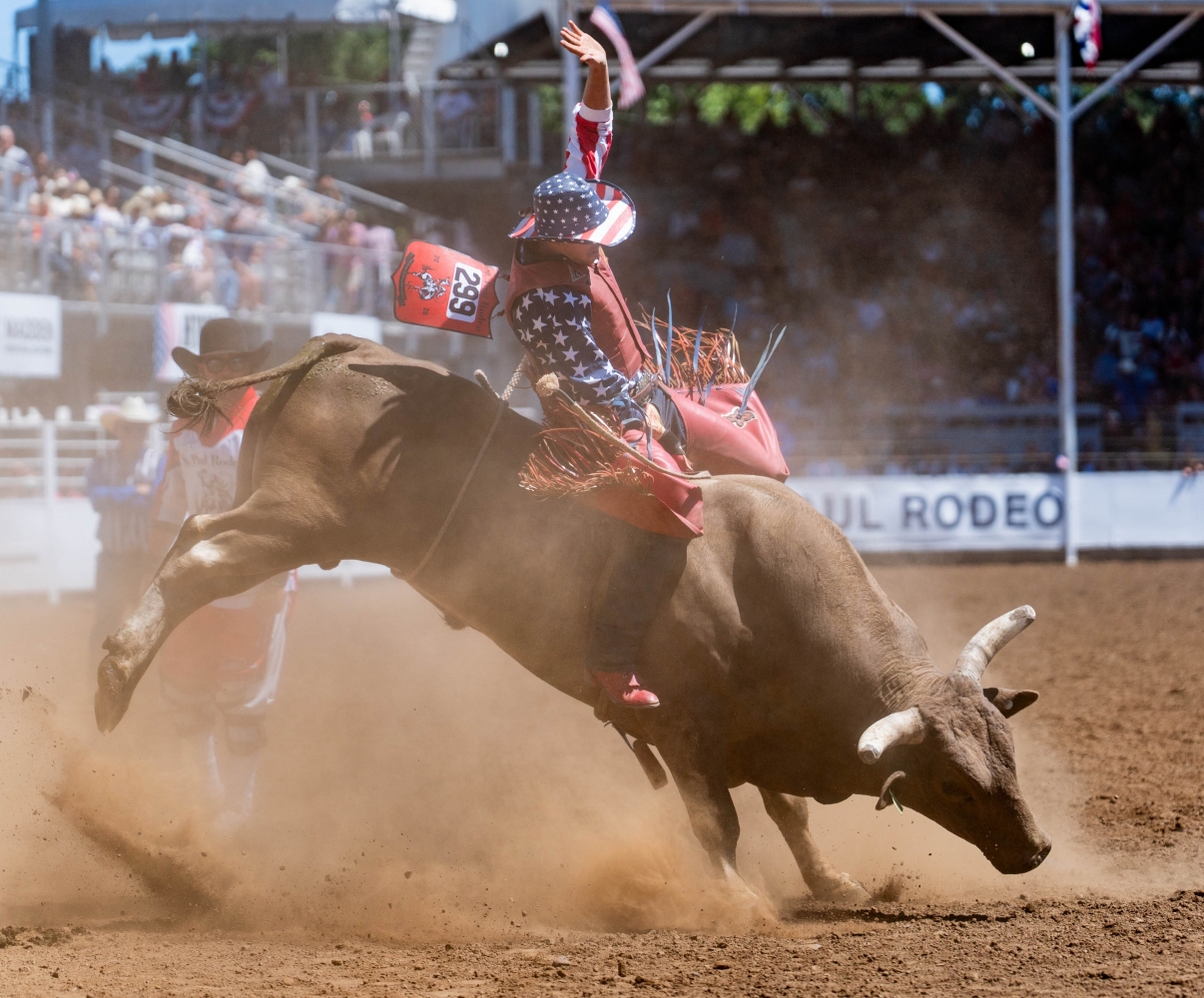
For 90 years, this small city in Marion County has come to life every Fourth of July week for the St. Paul Rodeo. What started as a small event created by eight local businessesmen stands as a hallmark on the national rodeo calendar and a year-round project for the locals who organize it.
Adding to the occasion was the celebration of America’s 250th anniversary. Over its long history, the rodeo has become one of the premier Fourth of July celebrations in Oregon.

The heartbeat of the festivities is the arena: a converted baseball diamond that now holds a quarter-mile rodeo track. After multiple renovations, it typically sells out grandstands that can host more than 10,000 spectators. At the end of each rodeo, grass is planted and the stadium hosts St. Paul High School football games.
Today, it seems everyone in St. Paul has some historical connection to the rodeo. Many had parents or grandparents who volunteered in some capacity. Mary Jane Krier remembered roaming all over the grandstands as a child as her parents volunteered in the ticket office and as ushers.
Krier, who was the St. Paul Rodeo Queen in 1969, is one of five generations in her family who have worked with the rodeo.
“And that’s not unique, that’s very common in our community,” Krier said. “It’s just one of those things that continues through the generations.”
Fort Vancouver celebrates ‘complex and inspired’ history of America
Shannon Ernst, who serves on the rodeo board of directors, said everyone in St. Paul is responsible for making the rodeo happen to some degree, whether they’re serving food, ushering or working as a parking attendant.
“Everybody loves it, it’s not like we’re forcing people to do it,” Ernst said. “People come up everyday and say, ‘How can I volunteer here?’”
Ernst can trace her family’s arrival in St. Paul to the 1860s. The town started as a mission for the St. Paul Catholic Church, now the oldest brick church west of the Mississippi, built in 1846. Many of those original Catholic families still live in the city, surrounded by acres of rolling farmland. Ernst said the area’s beauty appeals to those living in Portland and suburban cities.

“There’s this pocket and this world that they don’t see when they’re surrounded by concrete,” she said. “I think it’s important for us to remind people that there’s a simpler way to get away.”
One of the most anticipated events each year is the Fourth of July Parade. It resembles your typical small town July 4 parade: floats celebrating the military, people dressed as founding fathers, and everything painted red, white and blue. And there were, of course, lots of rodeo floats. St. Paul Rodeo Queens from previous decades are featured and there was no shortage of horseback riders.
Oregon at 250: Indigenous life in the Pacific Northwest in 1776
Bernadette Berrera, 80, sat in her front lawn watching the parade, surrounded by family. The rodeo is a big event on her calendar. She has lived in the same house for 60 years, and many relatives visit for the event. She loves to make them breakfast: potatoes, beans, barbecue and fresh flour tortillas.
“It’s fun, because this town is too quiet,” Berrera said. “This is the only time we have a lot of people from all over.”
By the time the rodeo started Saturday afternoon, the atmosphere inside the arena had reached a fever pitch. Despite the size of the community, the St. Paul Rodeo has some of the largest payouts during the busy Fourth of July rodeo season, and therefore attracts many of the industry’s top talent.
This stretch of the summer is known as “Cowboy Christmas,” when riders attempt to hit as many rodeos as possible to cash in during the busy season. For many, the St. Paul Rodeo is a big part of that circuit.

“You don’t come to one rodeo and hang out and eat funnel cakes and sit around and drink beer,” Public Relations Director Ruth Nicolaus said. “You get on the road to the next one.”
Dozens of riders wait in the wings for the Grand Entry, a true spectacle filled with music, horses and lots of patriotism. F-15 fighter jets flew over the arena with a sonic boom.
One of those riders in the paddock was 14-year-old Georgia Greaves, who waited patiently on her horse. Living just outside St. Paul, she started carrying flags in the Grand Entry five years ago and said it’s a great opportunity for young riders like her to get involved.
But the rodeo itself is an annual opportunity, she said, to showcase St. Paul to the rest of Oregon and the rodeo world.
“It’s a way for us to get recognition,” Greaves said. “It’s our way of saying, ‘Hey, we’re here,’ and letting people experience the love that we have for this town.”
News Source : https://www.opb.org/article/2026/07/05/st-paul-rodeo-90th-anniversary/
Other Related News

07/05/2026
Whether its having access to the massive game library or flashy bonuses Spree has become a...
07/05/2026
Taylor Swift and Travis Kelce were married on Friday at Madison Square Garden and we now k...
07/05/2026
An explosion believed to have been caused by illegal fireworks sent five people to the hos...
07/05/2026
Search and rescue teams from a dozen local and federal agencies rescued a 4-year-old girl ...
07/05/2026
A new vegetation fire was reported Saturday night July 4 in northwest Redmond

Follow

Download Our App


Copyright 2022 © EPUERTO. All Rights Reserved