

Published on: 05/02/2026
This news was posted by Oregon Today News


Description

Oregon’s new WNBA team, the Portland Fire, will play its first game at the Moda Center on Sunday. It’s a preseason game, meaning it doesn’t count towards the team’s official record, but it will be the first opportunity for fans to see them play in Portland.
Oregon loves basketball and women’s sports, and the state has another connection to its new team: Both the WNBA and Oregon have a history of activism.
Women athletes had to challenge established rules and norms decades ago for opportunities to play. In 1972, a landmark piece of legislation in the U.S. called Title IX barred sex-based discrimination in education, paving the way for more women’s sports teams at the high school and college levels.
But the passage of Title IX didn’t magically mean money and resources flowed to women’s sports.
Instead, women, non-binary and transgender athletes — all of whom play in today’s WNBA — have had to consistently advocate for the right to play their sport within social systems that tend to favor men, according to Roc Rochon, assistant professor of sport leadership and management at Pacific University. In addition, Rochon said all pro athletes in the U.S. play under an economic model that prioritizes profit, sometimes over people’s needs.
Still, Rochon suggests WNBA players are using their platforms to push for change despite building careers within systems not built for their success.
“They’re still pushing forward in the ways that they can be who they are and to express who they are in a public manner — and also dominate in the sport,” Rochon said of WNBA players. “It’s exciting. It’s something that I know a lot of people can get behind.”
The first labor union for professional American women athletes
The Women’s National Basketball Association started in 1997. After two seasons, players in the league created the first-ever labor union for professional female athletes in the U.S. The first collective bargaining agreement raised minimum salaries, established off-season health coverage and paid maternity leave, and created retirement plans for the players.

Fast-forward to spring 2026, the players’ union and the WNBA just agreed to another historic collective bargaining agreement that both sides have called “transformational”. It sets up a revenue-sharing model that looks similar to other sports leagues like the NBA. It will ensure a big pay bump for current players and pave the way for future players to get an increasing amount of the revenue they help generate.
Courtney M. Cox is an associate professor in the Department of Indigenous Race and Ethnic Studies at the University of Oregon, and the author of Double Crossover, a book on gender, media and politics in basketball. Cox said there’s more to the agreement than salary increases.
“We can also think about benefits, we can also think about access, we can also think about agency,” Cox said.
Cox says the agreement signifies the emergence of a union that thinks simultaneously of the present and of what’s to come. She said the WNBPA “wasn’t willing to back down, because they were thinking both ahead, the future of this league, its sustainability, the ability to bring fantastic athletes that deserve world-class professional treatment to the court, but then they’re also thinking in a way that a lot of leagues haven’t.”
For example, Cox said the new labor agreement has stronger protections for players who have children.
Activism bubbled over in 2020 season
With the world locked down in 2020 during the COVID-19 pandemic, the WNBA players were isolated together at the IMG Academy campus in Florida for the season. It’s become known as the WNBA bubble season, referring to the bubble of isolation, and sometimes it’s shortened to “wubble" season.
The time together and their shared membership in the players’ union resulted in WNBA athletes organizing around shared causes.
The WNBA is made up mostly of players of color and has strong LGBTQ+ representation. In 2020, the players’ union told league leadership they would only play in 2020 if slogans protesting police killings of Black people were displayed on the basketball court. Players wore “Black Lives Matter” and “Say Her Name” shirts while warming up during nationally televised games.

“We have a league where everyone wears the shirts, we have a league where they move as one,” Cox said. “That doesn’t mean that they all agree all the time. It’s hard enough to get a group chat to agree on a dinner reservation, but the thing about labor organizing is that we’re not always going to agree.”
What’s important, Cox said, is that players have a voice at the table even if they’re not the superstars of their team.
On-court activism stretches to off-court politics
In the summer of 2020, Raphael Warnock was polling at just under 10% for Georgia’s U.S. Senate seat then held by conservative Republican Kelly Loeffler.
At the time, Loeffler was also co-owner of Georgia’s WNBA team, the Atlanta Dream. On the campaign trail, she criticized her own team for bringing activism into sports by wearing Black Lives Matter shirts and speaking out against police brutality.
“When Kelly starts to really come at them,” Cox recalled, the players reacted.
“‘Who’s her opponent?’” Cox said players asked. “So Reverend Raphael Warnock, her opponent in Georgia, they bring him onto a Zoom call. They say, ‘Hey, we want to figure out what you’re about.’”
Instead of denouncing Loeffler, the players learned more about why Warnock, a Democrat, was running and what causes he supports, Cox said. And they liked what they heard.
Players started wearing “Vote Warnock” shirts and used media interviews to explain their position. Many things contributed to Warnock winning the election, but he credits WNBA players for building momentum early in his campaign.
Shortly after Loeffler lost her Senate seat, she also sold her stake in the Atlanta Dream, whose ownership group now includes a former WNBA player.
Portland welcomes the Fire
All the athletes on the Portland Fire’s roster are part of the WNBA players’ union. Two of them, Megan Gustafson and Bridget Carleton, are seven-year veterans who were part of the visible activism during the 2020 season.

Roc Rochon at Pacific University anticipates that — whether it’s Gustafson, Carleton or one of the players new to the league — the Fire will make their views known locally.
“I’m really curious how some of the players, or all of the players, will rally around putting pressure on the local government here in Portland. To try to make it more livable for people,” Rochon said.
Rochon points to issues around housing, food insecurity, and affordability that persistently affect Oregonians. Fans in Portland are eager to learn more about what causes are important to the players, Rochon said, and what they’ll dive into.

Oregon’s senior U.S. Senator, Democrat Ron Wyden, said the state is ready to welcome the Fire. But that’s nothing new for Oregonians, Wyden said, who have consistently supported women athletes and the causes they care about.
“It’s really in our DNA,” Wyden told OPB. “People say this is a really important thing to our community.”
The Portland Fire’s preseason game against the Los Angeles Sparks tips off at 4 p.m. Sunday at the Moda Center. The official season opener against the Chicago Sky is Saturday, May 9, at 6 p.m.
News Source : https://www.opb.org/article/2026/05/02/spark-the-portland-fire-an-activist-league-tips-off-in-a-city-known-for-protest/
Other Related News
05/02/2026
US Department of Transportation Secretary Sean Duffy said the agency has secured options t...

05/02/2026
DEAR MISS MANNERS I have some friends who frequently announce to me how much money they ar...

05/02/2026
Q I started taking Benadryl for allergies and hoped it would help me sleep It did not work...
05/02/2026
The mammoth data halls rising out of the ground all across Oregon are intruding into this ...
05/02/2026
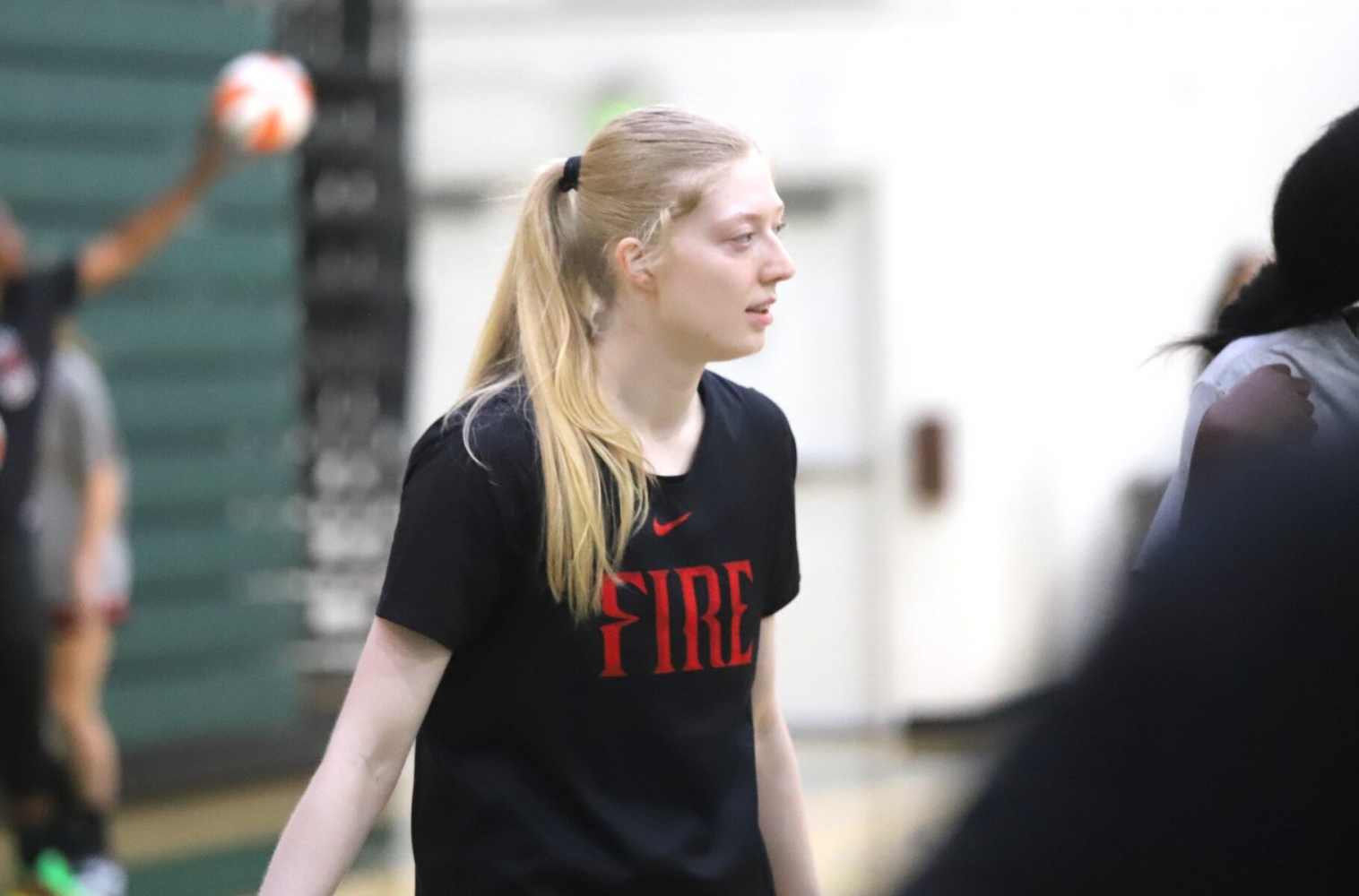
Several new faces joined Portland Fires training camp on Friday including German forward F...

Follow

Download Our App


Copyright 2022 © EPUERTO. All Rights Reserved