

Published on: 01/20/2026
This news was posted by Oregon Today News


Description

“Dangerous.” “Chaotic.” “Terrifying.”
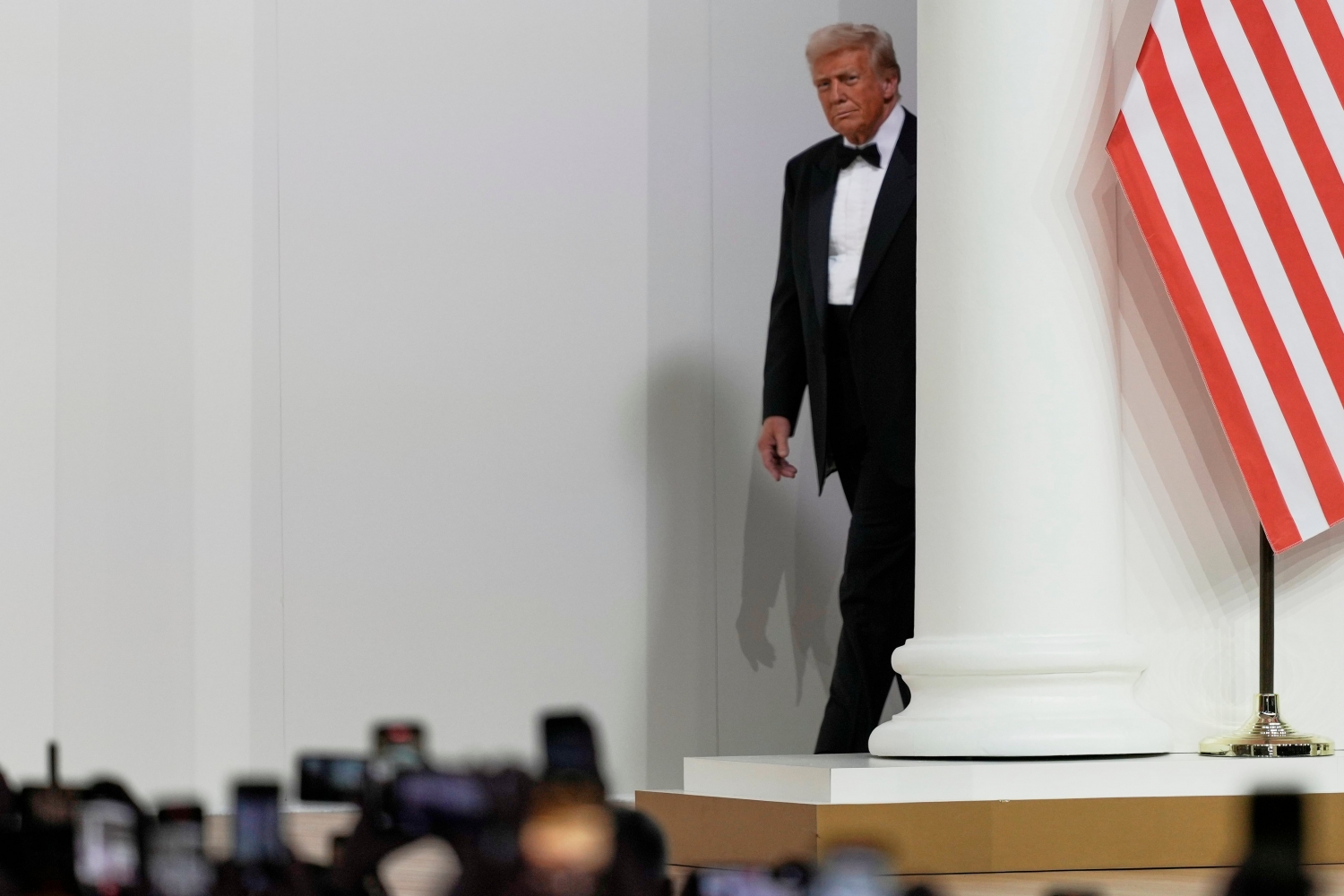
These are the words people who did not vote for President Donald Trump used to describe his leadership as they reflected on the anniversary of his inauguration one year ago Tuesday.
But ask the people who supported the president about the first year of his second term, and the script flips with words like — “Powerful.” “Order.” “Wonderful.”
In the run-up to the inauguration anniversary, OPB reporters gathered perspectives across the political spectrum in two states. We conducted 20 interviews with voters or would-be voters from cities, small towns and rural areas from Klamath County, Oregon to Vancouver, Washington.
Some conversations mirrored the nation’s extreme polarization, but others led to introspection and some nuance as voters tried to make sense of the past year and how it has impacted their lives. A few said they feel threatened or unseen in their communities, while others said they were no longer sure what to believe amid the daily onslaught of political news.
Twelve of those interviewed by OPB didn’t vote for the president, and eight said they did or would have, a cross-section mirroring state voter data.
Under the surface of this fractured political landscape, media expert Joy Mayer cautioned, there are subtler views it can be difficult to access. Mayer, the executive director of Trusting News, a Florida-based nonprofit training organization for journalists, said the prevailing attitude that Americans can be reduced to their political affiliation is a troublesome trend.
“One thing we all often get wrong is making viewpoints binary,” said Mayer.
“The real danger for all of us is assuming that because we know one thing about somebody, that we know everything about them,” she added.
In Eastern Oregon’s Umatilla County, 67% of voters went to Trump. But many people — nearly 40% of eligible voters — didn’t cast ballots at all in the last election. Hermiston’s Jose Garcia was one of those abstainers, despite having previously supported the president’s win in 2016.

Garcia said he sees “both sides of the coin,” and he viewed the administration’s tactics as, at times, retaliatory.
“I understand that we have to work together with the people who are the liberals,” said the 60-year-old professional counselor.
“Retribution is not democracy. It’s hate.”
A region divided
The danger of making political assumptions is especially acute in the Pacific Northwest.
Republican-majority counties cover about 80% of Oregon and Washington by geographic area, but make up less than a third of the population. For more than 40 years, Democratic urban voters have kept their party in charge of legislatures and governors’ mansions in both states.
But surrounding these deep blue strongholds, there’s a red sea of conservative voters who’ve long felt ignored by state decision-makers.
About 40% of Oregon and Washington voters went to Trump in 2024, many of them from rural areas that rarely land on the winning side of statewide elections. Where James Walden lives rural southern Oregon’s Klamath County, nearly 7 out of 10 voters backed Trump in the last election.
“I see him as a sort of a savior,” Walden said. “He’s a very intelligent businessman trying to save America.”
James Walden, who is not related to Oregon’s former long-serving GOP congressman Greg Walden, sees a huge disconnect between his political beliefs and the politics of the state — something that rankles him even with a Republican president in the White House.
“They don’t consider me as even existing, even though I’ve been born and raised here,” Walden said of his state’s ruling party.


About 150 miles to the north, Brian Jacob attended a protest against the surge of federal immigration enforcement in the Portland suburb of Gresham. Just as Walden doesn’t feel seen by his state, Jacob doesn’t feel seen by his president.
“He [Trump] downplays anybody else’s views, and he demonizes people that he and his followers deem not worth their beliefs,” Jacob told OPB.
In Washington’s Cowlitz County, Joel Parkins of Kelso said he doesn’t agree with Trump on everything, but he likes to see a president approaching power “outside of the box.”
“He’s not a typical politician,” Parkins said. “I love what he’s done on the international level. I love that we’ve closed the borders.”
Immigration is top of mind, no matter the political affiliation
Walking in the same park as Parkins on the same cold January afternoon, Christopher Neugebauer of Kent, Washington, called Trump “a great businessman,” but said running for president again was Trump’s “biggest mistake.”
Neugebauer was troubled by the rise in immigration arrests and deportations.
“If we’re simply going around collecting people and sending them over to wherever we think they’re from and separating families and love, I think that goes completely against what the Bible is teaching us,” he said.


Across state lines on the Warm Springs Reservation in rural Central Oregon, Brenda Nathan now keeps a copy of her birth certificate in her wallet at all times. She’s concerned she could be swept up in an immigration enforcement raid just because of where she lives and how she looks.
“Anybody that has brown skin has to be concerned,” she said. “I feel like with this presidency and administration, it’s all based on lies.”
What is the truth?
The difficulty of distinguishing the truth from lies was a common experience, no matter what people said they believed about the president. Nearly everyone OPB interviewed shared distrust of national news outlets. Many had turned to unconventional sources like YouTubers, or to foreign media like the BBC.
Others, like Andres Romero from Oregon City, said they opt out of the news altogether.
“I don’t read news articles or watch the news because it’s all very doomsday-oriented. If it’s important, somebody that I know will tell me,” said the 19-year-old student.
On the other side of Oregon, Nicholas Kehoe from Christmas Valley said Trump himself is his primary source for deciding what to believe.
“Really it was God that led me to figuring out just how to discern all of the lies that we’ve been told for so long by all of the mainstream media,” Kehoe said.
For those with political views running against the local grain — either because they’re fans of Trump in a blue state, or because they loathe the president in a red county — we heard similar fears. At best, no one who disagrees with them wants to listen to them, and at worst, they believe someone is out to get them.
Outside a supermarket in rural La Pine, Oregon, ten shoppers in a row turned down interviews.
“I’d get shot here if I expressed my real opinion,” one man said, and kept walking.
Feeling threatened, regardless of how potent the danger is, has powerful effects on human behavior, said social psychologist Christopher Wolsko, an associate professor at Oregon State University Cascades in Bend.
“One of my big areas of research has been the psychology of stereotyping and prejudice. If you look at prejudice, you never see longer-term intractable conflicts without symbolic threat,” he said.
“Someone waves a flag, someone says the word climate change, and we just lose our minds.”
The effects are more acute when “you feel like your values are superior,” he added.
Wolsko co-directs the university’s Lab for the American Conversation, which conducts research intended to help people have productive conversations about divisive issues.
“In the lab, we don’t think that we’re actually becoming more polarized per se. We feel like we have a lot more in common than we have apart in the country, but the case is that more and more of our experiences and actions are tied to a sense of threat,” he said.
Deep listening as a solution
The first step toward helping people feel less threatened so they can have more productive conservations, Wolsko said, is deep listening.
For Jose Garcia in Hermiston, Oregon, that’s both a specialty and a business model.
Garcia runs his own counseling practice and has a long track record of community service. He works especially closely with the city’s Latino residents, who comprise nearly 45% of Hermiston’s population.
Politically, Garcia said he’s voted for both Ronald Reagan and Barack Obama in the past.
“My brain is Republican and my heart is Democratic,” he said.
Garcia voted for Trump in 2016. Back then, he thought Trump’s reputation as an entrepreneur would help his own small business. But Garcia said the opposite happened in Trump’s first term.

Increased immigration enforcement meant he lost many of his clients, pushing his business to the brink. While the counseling practice survived, Garcia said he didn’t vote for any presidential candidate in 2024.
He wished that Trump would focus more on domestic issues like drug addiction, homelessness and veteran services rather than foreign policy and immigration enforcement. He said he’s going to be a lot more careful with his vote in the future.
“We’re harvesting a lot of hate,” he said.
Now, he wants the Hermiston city government and other local authorities to prepare for potential encounters with U.S. Immigration and Customs Enforcement. He noted that ICE had already done operations in The Dalles, about 100 miles away.
“What’s going to happen if they start coming to Hermiston?,” he said. “There’s going to be some chaos. There’s going to be broken families, broken dreams.”
Protesters in hundreds of locations across the country had planned walkouts and marches Tuesday coinciding with Trump’s inauguration anniversary.
The protests are planned just a little more than a week after many Oregonians took to the streets to push back on increased immigration enforcement, following ICE’s fatal shooting of a U.S. citizen in Minneapolis, and an incident in East Portland where two people were shot and injured by U.S. Border Patrol on Jan. 8.


Holly Bartholomew contributed reporting from Gresham, Ore., Tiffany Camhi from Oregon City, Kathryn Styer Martínez from Redmond, Ore., Erik Neumann from Longview, Wash., Kristian Foden-Vencil from Portland, Ore., Jen Baires from La Pine and Prineville, Ore., and William Robbins from Warm Springs, Ore.
News Source : https://www.opb.org/article/2026/01/20/oregon-washington-voters-reflect-trump-first-year-back/
Other Related News

01/20/2026
PHOTO Northern Lights display over Oregon Washington

01/20/2026
More than 44000 people have signed up to attend the mass walkouts throughout the nation on...
01/20/2026
The longtime morning show co-anchor has been away for a few weeks while recovering from su...

01/20/2026
The national blood supply has dropped about 35 in a month forcing the American Red Cross t...
01/20/2026
At 730 am on Tuesday the National Weather Service released an air stagnation advisory in e...

Follow

Download Our App


Copyright 2022 © EPUERTO. All Rights Reserved