

Published on: 04/06/2026
This news was posted by Oregon Today News


Description

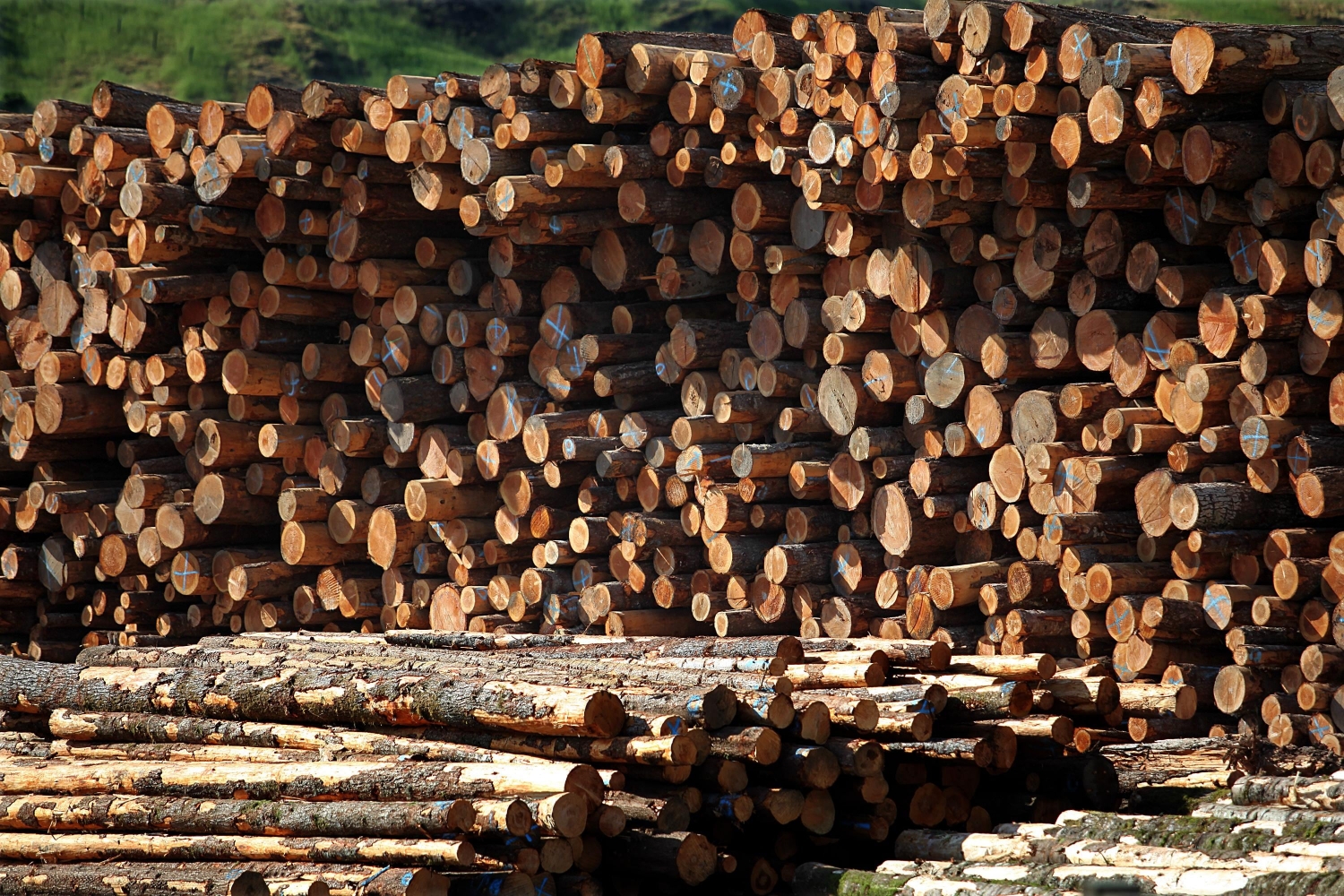
Nestled in the foothills of the North Cascades, where logging has long fueled the economy, the Mount Baker School District is facing a budget deficit exceeding $1 million, which local officials say is tied to declining timber sales on state lands.
Three years ago, the rural district entered into what are known as “binding conditions,” an arrangement where the state now oversees its day-to-day financial operations. Since then, it’s cut around 30 employees and increased class sizes.
“Our main reason that we went in binding conditions was a precipitous drop in timber revenue, a loss of about a million dollars a year from what our revenue had been,” said Russ Pfeiffer-Hoyt, school board president. “It’s been a lot of work and a lot of pain.”
The district’s timber revenue predicament is not unique among rural school districts. And it highlights rising tension around how the state is managing its public forests at a time when Lands Commissioner Dave Upthegrove has limited logging of some older tracts of trees.
In the backdrop is a debate about whether Washington’s K-12 schools should depend heavily — or at all — on money that comes from timber harvests.
Since statehood in 1889, Washington has managed millions of acres of so-called trust land granted by the federal government.
The state is legally obligated to generate money from these lands for schools and other beneficiaries. Today, the Department of Natural Resources oversees about 3 million trust acres, with revenue derived mainly from logging.
But in recent years, there’s been increased pressure to conserve state land with trees that are around a century old, but that don’t meet the criteria to be considered protected old-growth.
Upthegrove ran on a promise to do so when he won election in 2024. On his first day in office, he paused 23 timber sales, giving the agency time to reassess that land.
Eight months later, he announced a plan to set aside 77,000 acres of older forest, taking it out of rotation for logging. The agency says it intends to generate new types of revenue from this land through thinning forests, selling credits on carbon markets, or cutting select trees for telephone poles. But it’s unlikely these options could yield as much money as traditional timber sales.
Critics say the pause disrupted the flow of timber revenue to schools and also argue that older forests are some of the most lucrative to log.
“The older forests are the best timber stands to harvest and they’re part of the trust that’s supposed to be managed for the beneficiaries and not for other interests that conflict with the beneficiaries,” said Pfeiffer-Hoyt.
A main trade group for the timber industry in the Northwest is also blasting Upthegrove and his agency.
“When they sell less timber, they’re generating less revenue for the state,” said Heath Heikkila, director of government affairs for the American Forest Resource Council. He added that there are counties “that face bankruptcy, potentially,” if state timber sales lag too far.
In 2022, the agency conducted $186 million of timber sales. That number has declined each year since, with last year’s figure checking in at $134 million.
Upthegrove defends his moves. He says that the department has not reduced timber sales and that he’s following through on his campaign commitment to do more for the climate by keeping some older forests intact.
“For the next five years here, we have stability, certainty with operations and budgets, and no reduction in our timber program,” he said in an interview.

Upthegrove put the onus for decreased timber revenue for schools on factors outside his control, such as sagging lumber prices and economic turbulence. He also pointed out that timber sales can take up to three years to see through and that some decisions made before he took office are affecting schools now.
‘Inconsistent and unreliable’
Since the beginning of the year, rural school and county officials have publicly criticized the commissioner’s new approach, calling on the agency to prioritize its fiduciary responsibility to counties and schools.
For 10 years, the Eatonville School District, in southeastern Pierce County, has been trying to find the money to restore track and field facilities that are in such disrepair they’re considered a safety hazard, requiring home sporting events to be held at other schools.
“We’d had some serious injuries on our field,” said Ronda Litzenberger, chairwoman of the school board. “We went to state and we couldn’t even play on our field,” she added. “We were renting other fields for our kids to play.”
Located near Mount Rainier, the forested district encompasses state, tribal and federal lands that aren’t subject to property tax.
After two failed bond measures, in 2024, the district gained voter approval for a levy while expecting over $170,000 from the Railroad Creek timber sale to pay off interest on borrowing. But that sale was among those paused by Upthegrove’s order.
“We’d gone through this whole thoughtful process and then it was just a complete turn on what we’d been promised,” Litzenberger said.
The sale was completed in September of last year, but Litzenberger doesn’t know when the school district will see those funds.
BLM proposes quadrupling allowed logging on millions of acres in western Oregon
That’s because schools aren’t paid when sales are auctioned off. They’re paid when the trees are removed. A buyer has three years to log, and they often wait until market prices for wood increase.
The Department of Natural Resources then gets a roughly 25% cut of profits. What remains is divided among local agencies.
The funding is “inconsistent and unreliable,” said Brett Greenwood, assistant superintendent of business and operations for the Sedro-Woolley School District.
State forest revenue for his district, just south of Mount Baker, is at a 10-year low. At its peak, the district received over $3 million from the Department of Natural Resources. For the past school year, it’s received around $150,000.
“When you spend 85% of your entire budget on people, $2 million, $3 million equates to a lot of staff members not having jobs anymore,” said Greenwood.
‘We need to find another way’
Washington state superintendent Chris Reykdal knows just how bad rural schools are struggling. But as one of six voting members on the Board of Natural Resources, he’s often voted against timber sales containing older forests.
Cutting down trees to pay for schools is an “outdated” approach, he said. He argues that the problem is that the Legislature has not kept up funding education.
“Why in the world are we still trying to rely on timber sales to fund schools? This is highly volatile,” he said. “The Legislature needs to reprioritize schools,” he added.
Reykdal pointed out that, for decades, schools saw little extra benefit from timber harvests on state lands. That’s because under past state policy, any logging revenue they received was offset by reductions in other funding the Legislature approved.
That changed about seven years ago when the state passed a law allowing districts to keep timber revenue on top of their regular funding. Timber revenue suddenly became supplementary, but it exposed the districts to the volatility of timber markets.
At the time, schools were told that timber sales can take years to play out, Reykdal said, and they were warned to be careful with how they budgeted the money.
“Don’t put it into permanent staff salaries. Don’t put it into debt obligations,” Reykdal said. “Use this for one-time stuff.” Instead, he said, “Districts have created a dependence.”
Understanding the budget crisis that looms for rural Oregon counties (August 2025)
Though timber revenue drop-offs have resulted in over 20 job losses at the Sedro-Woolley School District, according to officials there, Greenwood, the assistant superintendent, agrees with Reykdal’s overall take on school funding.
“It shouldn’t be some kind of guessing game,” he said. “We need to find another way.”
Upthegrove agrees, too.
“Back in the day,” he said, timber revenue was a major part of school funding, but now it makes up so little of a school’s budget that it “shouldn’t drive our management decisions.”
“We should be driven by what is the most sustainable, what’s good for current and future generations, what’s in the broad public interest and the interest of the trust,” he added. “I think there are better systems.”
Washington State Standard is part of States Newsroom, a network of news bureaus supported by grants and a coalition of donors as a 501(c)(3) public charity.
This republished story is part of OPB’s broader effort to ensure that everyone in our region has access to quality journalism that informs, entertains and enriches their lives. To learn more, visit opb.org/partnerships.
News Source : https://www.opb.org/article/2026/04/06/logging-fund-washington-school-districts/
Other Related News
04/06/2026
The Oregon Department of Emergency Management is hosting free webinars this spring for rur...

04/06/2026
Absurdist extraordinaire Triffles newest play at Imago flirts with Sontags famous definiti...

04/06/2026
The Lane County District Attorneys Office says a case will be dismissed after an Oregon Su...
04/06/2026
By Robin Linares Oregon Capital Chronicle SALEM Ore -- While the Pacific Northwest west of...

04/06/2026
The Portland Trail Blazers play the Denver Nuggets on Monday in an NBA matchup at Moda Cen...

Follow

Download Our App


Copyright 2022 © EPUERTO. All Rights Reserved