

Published on: 02/13/2026
This news was posted by Oregon Today News


Description

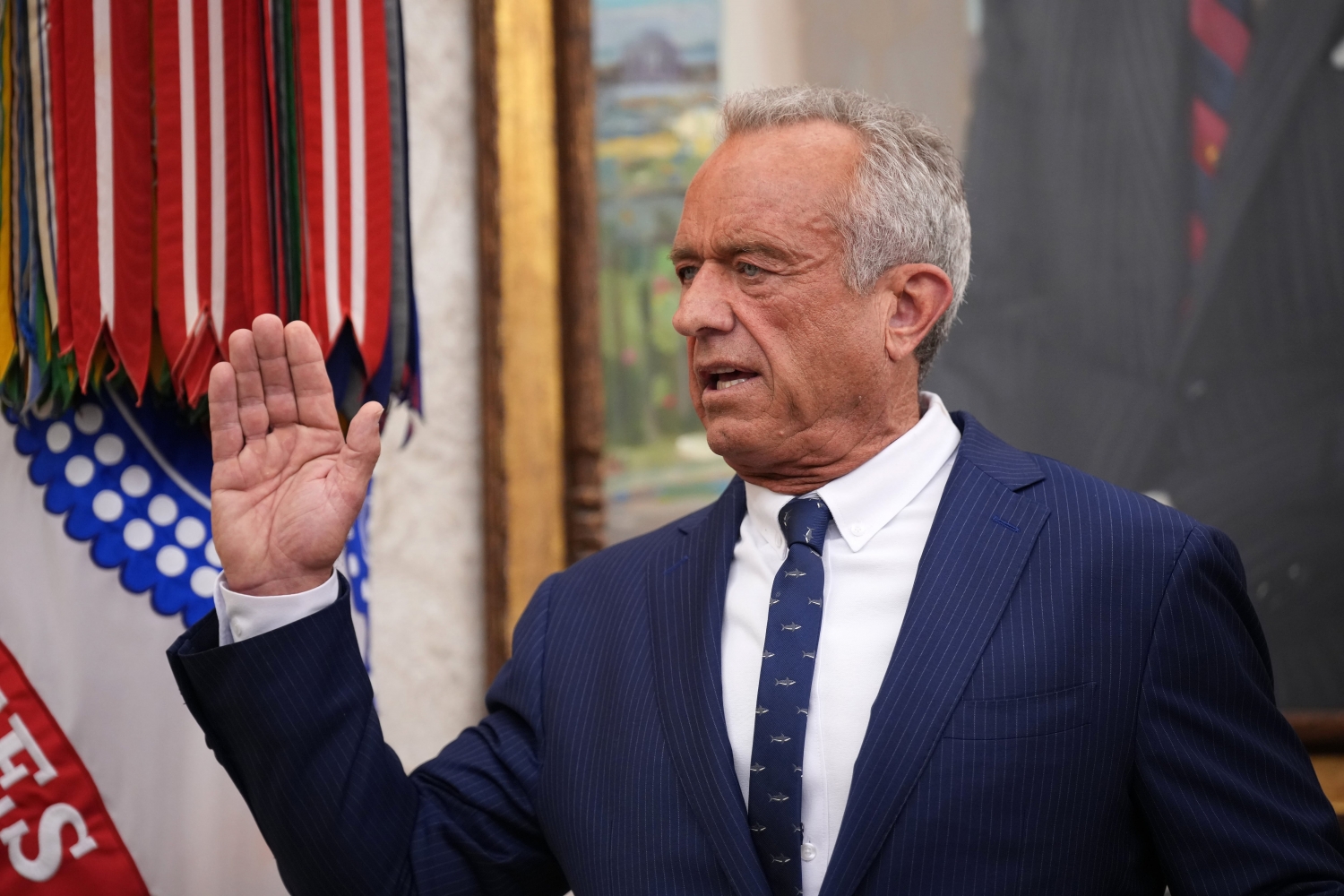
One year after taking charge of the nation’s health department, Health and Human Services Secretary Robert F. Kennedy Jr. hasn’t held true to many of the promises he made while appealing to U.S. senators concerned about the longtime anti-vaccine activist’s plans for the nation’s care.
Kennedy squeaked through a narrow Senate vote to be confirmed as head of the Department of Health and Human Services only after making a number of public and private guarantees about how he would handle vaccine funding and recommendations as secretary.
Here’s a look at some of the promises Kennedy made during his confirmation process.
The childhood vaccine schedule
In two hearings in January 2025, Kennedy repeatedly assured senators that he supported childhood vaccines, noting that all his children were vaccinated.
Sen. Elizabeth Warren, D-Mass., grilled Kennedy about the money he has made in the private sector from lawsuits against vaccine makers and accused him of planning to profit from potential future policies making it easier to sue.
“Kennedy can kill off access to vaccines and make millions of dollars while he does it,” Warren said during the Senate Finance Committee hearing. “Kids might die, but Robert Kennedy can keep cashing in.”
Warren’s statement prompted an assurance by Kennedy.
“Senator, I support vaccines,” he said. “I support the childhood schedule. I will do that.”
Days later, Sen. Bill Cassidy of Louisiana, a Republican and chairman of the Senate Health, Education, Labor and Pensions Committee, declared that Kennedy had pledged to maintain existing vaccine recommendations if confirmed.
Cassidy, a physician specializing in liver diseases and a vocal supporter of vaccination, had questioned Kennedy sharply in a hearing about his views on shots.
“If confirmed, he will maintain the Centers for Disease Control and Prevention’s Advisory Committee on Immunization Practices’ recommendations without changes,” Cassidy said during a speech on the Senate floor explaining his vote for Kennedy.
A few months after he was confirmed, Kennedy fired all the incumbent members of the vaccine advisory panel, known as ACIP, and appointed new members, including several who, like him, oppose some vaccines. The panel’s recommendations soon changed drastically.
Last month, the CDC removed its universal recommendations for children to receive seven immunizations: those protecting against respiratory syncytial virus, meningococcal disease, flu, COVID-19, hepatitis A, hepatitis B and rotavirus. The move followed a memorandum from the White House calling on the CDC to cull the schedule.
Now, those vaccines, which researchers estimate have prevented thousands of deaths and millions of illnesses, are recommended by the CDC only for children at high risk of serious illness or after consultation between doctors and parents.
In response to questions about Kennedy’s actions on vaccines over the past year, HHS spokesperson Andrew Nixon said the secretary “continues to follow through on his commitments” to Cassidy.
“As part of those commitments, HHS accepted Chairman Cassidy’s numerous recommendations for key roles at the agency, retained particular language on the CDC website, and adopted ACIP recommendations,” Nixon added. “Secretary Kennedy talks to the chairman at a regular clip.”
Cassidy and his office have repeatedly rebuffed questions about whether Kennedy, since becoming secretary, has broken the commitments he made to the senator.
Vaccine funding axed
Weeks after Kennedy took over the federal health department, the CDC pulled back $11 billion in COVID-era grants that local health departments were using to fund vaccination programs, among other initiatives.
That happened after Kennedy pledged during his confirmation hearings not to undermine vaccine funding. Kennedy replied, “Yes” when Cassidy asked him directly: “Do you commit that you will not work to impound, divert, or otherwise reduce any funding appropriated by Congress for the purpose of vaccination programs?”
A federal judge later ordered HHS to distribute the money.
The National Institutes of Health, part of HHS, also yanked dozens of research grants supporting studies of vaccine hesitancy last year. Kennedy, meanwhile, ordered the cancellation of a half-billion dollars’ worth of mRNA vaccine research in August.
A discredited theory about autism
Cassidy said in his floor speech that he received a guarantee from Kennedy that the CDC’s website would not remove statements explaining that vaccines do not cause autism.
Technically, Kennedy kept his promise not to remove the statements. The website still says that vaccines do not cause autism.
But late last year, new statements sprang up on the same webpage, baselessly casting doubt on vaccine safety. “The claim ‘vaccines do not cause autism’ is not an evidence-based claim because studies have not ruled out the possibility that infant vaccines cause autism,” the page on autism now misleadingly reads.
The webpage also states that the public has largely ignored studies showing that vaccines do cause autism. That is false. Over decades of research, scientific studies have repeatedly concluded that there is no link between vaccines and autism.
A controversial 1998 study that captured global attention did link the measles, mumps and rubella vaccine to autism. It was retracted for being fraudulent — though not until a decade after it was published, during which there were sharp declines in U.S. vaccination rates.
KFF Health News is a national newsroom that produces in-depth journalism about health issues and is one of the core operating programs at KFF.
News Source : https://www.opb.org/article/2026/02/13/has-rfk-jr-kept-the-promises-he-made-in-order-to-get-his-job-at-hhs/
Other Related News


02/13/2026
DEAR ABBY I have been married 50 years and recently remembered that my husband cheated on ...
02/13/2026
The Olympic champion finished more than 5 12 seconds faster than the silver medalist
02/13/2026
Lawmakers must pass bill with Koteks signature by Feb 25 to move referendum date A bill to...

Follow

Download Our App


Copyright 2022 © EPUERTO. All Rights Reserved