

Published on: 11/27/2026
This news was posted by Oregon Today News


Description
In North Plains, Oregon, a half-hour drive northwest of Portland, Tanya Golden is growing saffron on her mother’s land. Under high-tunnel greenhouses to keep rain water off, her teenage daughter Zeza tends the rows of saffron crocuses alongside her mother and jokes “how much am I getting paid for this?”
“It’s a family affair-air…” Tanya sings. An homage to the 1971 Sly and the Family Stone song of the same name, implying she labors for the family rather than earthly riches.

The vast majority of saffron in the world comes from Iran, where it is a core part of the cuisine and used to elevate moods and for other medicinal purposes. In the U.S., saffron is a niche crop, so small the United States Department of Agriculture does not track numbers for domestic saffron production.
Saffron may be the world’s most expensive spice, but that’s for good reason. Everything is done by hand: the planting, tending, harvesting, then pulling up the bulbs to divide daughter corms that the mother corm has produced. The biggest corms are stored and then planted in the summer, when it all starts again. The saffron crocus is sterile and cannot reproduce by seed like its wild cousins.

Originating in ancient Greece, the flower has been hand-tended by humans for thousands of years and spread along trade routes to become part of cultural traditions in many places — bouillabaisse in France, risotto in Italy, Tahchin (saffron rice) in Iran, the golden dyed robes of Buddhist monks.
The spice itself is so lightweight it takes a lot of labor to fill even a small jar. But the reward is potentially worth it: high-end saffron can go for $10,000 a pound.
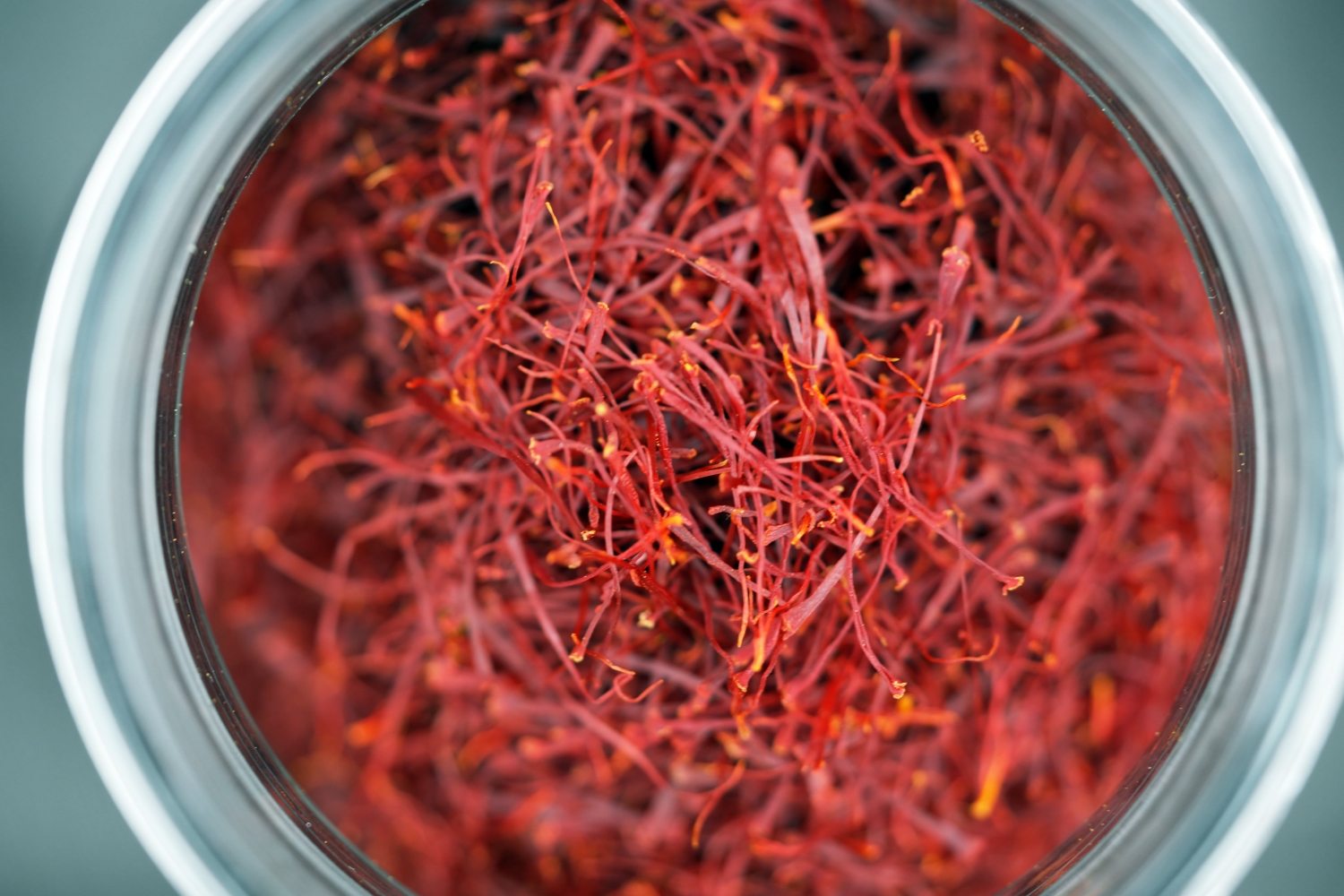
That doesn’t mean it’s easy to make a living as a farmer growing saffron. Harvest is painstaking. On a sunny day in early November, Tanya and her daughter Zeza spent hours on it. Harvesting the spice involves plucking the tiny red stigmas — the female parts of the flower — from the crocuses by hand.
It takes about 4,000 flowers to yield an ounce of the spice. The spice is so potent, recipes often call for just a pinch, so saffron’s seductive flavor and golden color can be enjoyed by people from many walks of life.
“I did all the math and I should be a millionaire right now,” Golden laments, then laughs. “What can be so hard about planting a corm, picking a flower, and pulling it apart?”

Tanya Golden is a third-generation farmer with grandmothers who are Grand Ronde and Cherokee. Before farming, she was a competitive skateboarder, a commercial fisher and chased odd jobs far and wide until she felt the pull to return to her roots in Oregon. The idea to grow saffron came to her during a NAYA entrepreneurial workshop she’d been invited to attend when the raw chocolate truffles she was making kept winning local awards. Tanya says, “Saffron — it found me.”
The saffron from Golden’s farm has also caught the notice of local purveyors like Jeb Z and Rachelle Hollabaugh of Portland-based Canopy & Company, which makes small batch botanically infused wines and liqueurs. Saffron is traditional in amaro and vermouth, so the Hollabaughs were excited to find it locally grown.
Comparing it to Herat, Afghanistan-grown saffron, they found Golden’s crop stood up nicely. “Oregon saffron was a little bit richer and rounder, and in our case, that works really well,” says Jeb.

Every fall for the past few years, Tanya invites some of the local Persian community to join her for harvest. At last year’s event in October, it was stormy outside with wind whipping the trees and heavy rain. But the greenhouse was dry and crowded with people speaking Farsi and feasting on delicious traditional Persian teas and desserts — like Sholeh Zard — many of which have saffron in them. The mood was jubilant. “Saffron is like gold to us!” Parisa Sadeghi says.
After the feasting, the crowd carefully picked the swath of newly opened blooms, and then sat down to even more carefully pinch off the tiny threads. The air was full of the scent of crocuses and saffron. Among other health benefits, saffron is a euphoric, so no one minded the tedious task.

“The best medicine — for mind especially — is saffron,” says Javad Golshan, one of the Persian elders.
Ali Esteghlalian, a Persian storyteller and traditional cooking instructor, summarizes the power of saffron this way: “So if the world and its events are dampening your soul, have some saffron and it uplifts you and gives you a jolt of joy.”
Tanya Golden says, “I’m still learning the plant, it’s still teaching me.” Standing among her blooming crocuses, which have not yet made her a millionaire, Tanya remains intent on her pursuit of saffron. “People say you can’t grow saffron in Oregon,” she says with a defiant smile. “Well watch me! Watch me.”
News Source : https://www.opb.org/article/2026/11/27/oregon-saffron-superabundant/
Other Related News

11/27/2026
Get ready for your close-up Best Buys Black Friday sale is offering a massive deal on this...
11/27/2026
There will be seven Oregon high school football champions crowned this weekend

11/27/2026
Strobe Talbott who served as deputy secretary of state for most of Bill Clintons presidenc...
11/27/2026
UGG dropped a big Black Friday surprise for fans a huge discount on one of its most belov...
11/27/2026
Dear Miss Manners What is the proper way for a business to send Christmas cards Should the...

Follow

Download Our App


Copyright 2022 © EPUERTO. All Rights Reserved