

Published on: 05/20/2026
This news was posted by Oregon Today News


Description
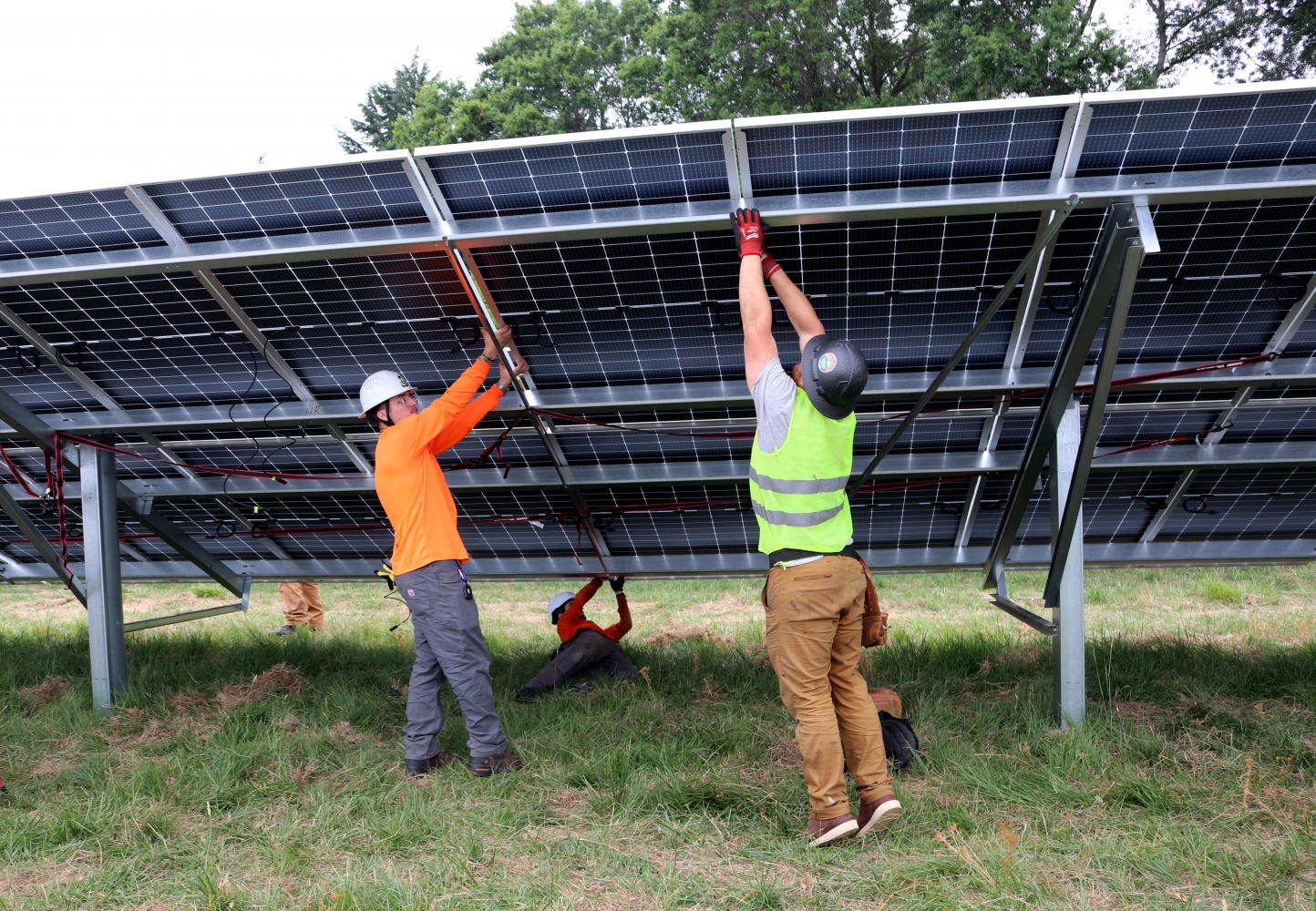
Since 2001, Portland has built a community solar project to reduce emissions and lower energy bills for 150 low-income families. The city has distributed more than 20,000 free air conditioning units to help vulnerable households prepare for heat waves. It has funded energy efficiency retrofits for 3,100 homes. And 2,000 people have been trained in the renewable energy and construction fields.

These projects have all been made possible due to an innovative billion-dollar climate fund. The Portland Clean Energy Fund is a first-of-its-kind racial, social and climate justice fund aimed at helping the city’s most vulnerable residents adapt to climate change while also reducing carbon emissions.
A 65% majority of voters passed the measure in 2018, and in 2019 the city began levying a 1% retail sales tax on large corporations within Portland city limits— think Target, Walmart, REI.
Unlike a sales tax, which is paid by the consumer, the companies pay the city a small percentage of each sale. For example, with a $100 purchase, the city earns $1. Since then, the fund has garnered about one billion dollars and is projected to reach $1.6 billion by mid-2029.
“It’s a fund that’s intended to scale up local, community-based climate solutions that address our very real climate realities, community resilience and economic resiliency,” said Sam Baraso, the Portland Clean Energy Fund program manager.
On the first day of President Donald Trump’s second term, he signed an executive order that halted spending for former President Joe Biden’s landmark Inflation Reduction Act, which dedicated billions of dollars to climate projects across the country. But Portland’s climate fund continues to grow, even as much of the nation grapples with severe federal funding cuts for climate projects.
How was the fund created?
The idea for the fund began nearly a decade ago, when leaders from nonprofits run by communities of color workshopped ideas on how to best generate money to support climate action. At the time, funding was very limited and leaders recognized the increasingly urgent need to address climate change impacts like prolonged extreme heat waves and wildfire.
Together, community leaders came up with the idea to tax these large corporations to create a new way to fund climate action that centers on those most impacted by climate change.
“The Portland Clean Energy Community Benefits Fund was born out of the experience of frontline communities who too often have been hit first and worse by the climate crisis and who have been historically left out of decision-making processes,” Baraso said. “The fund really poses a simple and powerful question: ‘What if those most impacted by climate change were the ones designing solutions?’”
Climate wins so far
Some of the projects that are already underway include:
- Distributing more than 20,000 free portable air conditioning units for homes in need since 2022
- Building a community solar project that’s reducing emissions and lowering energy bills for 150 low-income families in a predominantly Latino neighborhood
- Planting 15,000 trees over five years in urban heat island areas
- Removing six concrete parking lots and turning them into urban gardens and community spaces, greening up a surface area equivalent to eight NBA basketball courts
Since 2021, the fund has distributed four rounds of community-based nonprofit grants totaling about $262 million. Grants range from about $8,000 to as high as $10.3 million — and many projects are also helping reduce greenhouse gas emissions.
“That’s what’s been able to keep this going is folks seeing themselves in this, seeing themselves as beneficiaries of this, and not just themselves, but multiple generations into the future,” Baraso said.
Portland’s City Budget Office estimated that completed projects from the first three rounds of grants have so far helped reduce about 25,500 metric tons of carbon emissions. That’s the equivalent of removing about 6,000 gas-powered vehicles from the road for one year. That number is projected to increase as more projects get underway.

The climate fund has generated significantly more money than projected, and that’s led to debates from elected officials to local business groups about how to spend the money and what counts as climate action. Portland Mayor Keith Wilson proposed a $75 million plan to redo the Moda Center, the entertainment and sports arena where the National Basketball Association’s Portland Trail Blazers play. He and other supporters want to renovate the dated stadium with green technology, but others say the project doesn’t align with the fund’s focus on helping vulnerable community members first.
The Portland Police Association has proposed diverting 25% of the climate fund’s annual revenue to hire 400 more police officers in the city. Proponents say the city is lacking law enforcement, while opponents maintain the importance of protecting the climate fund’s original intent. The proposal could go in front of voters later this year.
A blueprint for other cities
The success of the fund has caught the attention of other cities. Ann Arbor, Michigan; Denver, Colorado; and Seattle have similar funds.
“We did look to Portland because it was exciting to see some significant dollars actually going towards those investments,” said Elizabeth Babcock, executive director of Denver’s Office of Climate Action Sustainability and Resiliency. “We definitely took that as one of our inspirations.”
But Babcock said the city of Denver has some specific rules that make it difficult to create a retail tax like Portland’s, so, after seeking input from the community, the city decided to create a sales tax instead. Citizens approved a 0.25% sales tax — exempting critical items such as food, medicine and childcare products— for their Climate Protection Fund. In its first year, it generated $41 million.
Ann Arbor also wasn’t able to replicate Portland’s retail tax, so the city went a different route — it increased property taxes to help generate funds for climate action.
More and more cities are developing their own climate funds, said Amruta Nori-Sarma, Assistant Professor of Environmental Health and Population Science at the Harvard Chan School of Public Health.
“This type of solution works particularly well because if you have that level of local buy-in, then you can identify solutions that are, maybe we can call them not necessarily easy wins, but these are the places where we could potentially have a huge impact,” she said.
But Nori-Sarma points out smaller towns and cities might not have enough large retailers to recreate Portland’s tax or Denver’s sales tax or want to increase their property taxes due to limited population.
That’s why community input from the start is necessary for funds like these to be successful, she said, to be able to find the best way to generate funding.
“I think that’s another thing that makes the Portland Fund a little bit unique is that because of the structure and the mechanism, it’s very well funded,” said Nori-Sarma.
The Portland Clean Energy Fund is expected to complete its first five-year plan by mid-2029, investing $1.6 billion back into the city.
News Source : https://www.opb.org/article/2026/05/20/portland-climate-fund-retail-tax-blueprint/
Other Related News

05/20/2026
Anthony Grissett owns several McDonalds franchises and when he saw Delilahs story he deliv...
05/20/2026
LA PAZ Bolivia Bolivias President Rodrigo Paz faces a deepening crisis as widespread prot...
05/20/2026
The 48-ounce drink buckets return May 22 alongside a new Cherry Lime Rickey Refresher and ...
05/20/2026
Subscribe to OPBs First Look to receive Northwest news in your inbox six days a weekGood m...
05/20/2026
BUNIA Congo The head of the World Health Organization on Tuesday expressed concern over t...

Follow

Download Our App


Copyright 2022 © EPUERTO. All Rights Reserved