

Published on: 01/26/2026
This news was posted by Oregon Today News


Description

This article was produced for ProPublica’s Local Reporting Network in partnership with Oregon Public Broadcasting. Sign up for First Look to get OPB stories in your inbox six days a week.
Washington state has launched a sweeping effort to speed up construction of renewable energy projects, prompted by reporting from Oregon Public Broadcasting and ProPublica that chronicled how the state came to rank dead last in the nation for renewable energy growth.
Washington’s Department of Commerce, which works on state energy policy, has offered up state employees to help the federal Bonneville Power Administration process its backlog of renewable energy projects — though it remains uncertain whether the agency will accept the offer.
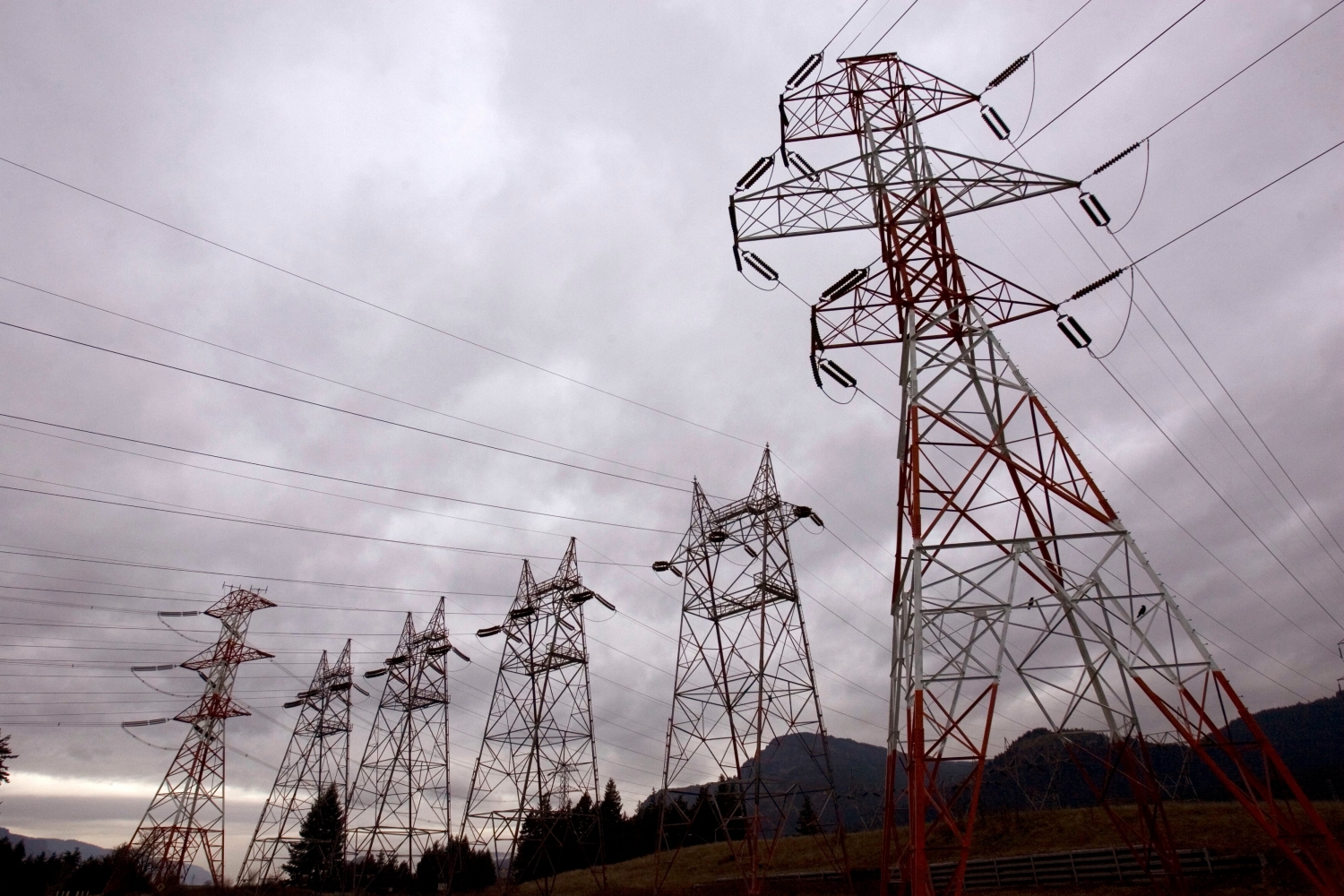
Bonneville, which owns 75% of the Northwest’s power grid, must sign off before wind and solar developers who wish to connect to its grid can break ground.
Meanwhile, four state agencies have recommended that Washington’s Legislature provide incentives for utilities to upgrade transmission lines, plan “microgrid” energy projects that don’t need to connect to Bonneville’s power lines, and create a new state agency to plan and potentially pay for major new transmission corridors. A bill to create such an authority had a hearing on Jan 21.
The Commerce Department, the Department of Ecology, the Energy Facility Site Evaluation Council, and the Utilities and Transportation Commission are also meeting regularly to diagnose what’s holding up more than a dozen high-priority wind, solar, and energy storage projects that could make an outsized difference.
Joe Nguyễn, who recently stepped down as the state’s commerce director, said there’s added urgency to get the work done since OPB and ProPublica last year showed that other states like Iowa and Texas have made far more progress than Washington.
“We’re forcing these tough conversations that have never been done before,” Nguyễn, a former state senator who helped pass Washington’s law setting a deadline to go carbon-free, said during a recent public forum. He spoke at the panel just before leaving the state Commerce Department in January to take a job as head of the Seattle Chamber of Commerce.
“We probably have to modify some policies, we’re going to amend some things, we have to make strategic investments, but I think that’s a good thing,” Nguyễn said at the forum. “I’m not daunted by the task.”
Under Bonneville, projects face longer odds of successfully connecting to the electrical grid than anywhere else in the country, OPB and ProPublica found.
The federal agency weighs how many new transmission lines and substations will be needed to carry the added load, and it has historically been slow to pay for such upgrades, renewable energy advocates have said. Often, the burden falls on the builders of the wind and solar projects.
Washington and Oregon lawmakers failed to account for this obstacle when they required electric utilities to phase out fossil fuels. Combined with rapid growth in electricity demand from new data centers powering artificial intelligence, studies now predict rolling blackouts in the Pacific Northwest within the next five years.
Inspired by OPB and ProPublica’s reporting, the Seattle nonprofit Clean & Prosperous published a report this month identifying energy high-potential projects that could generate enough power for 7 million homes and contribute $195 billion to the state’s economy if built by 2030. Kevin Tempest, research director for Clean & Prosperous, said the fact that Washington ranked 50th nationally for green power growth was poorly understood until the recent news coverage.
“I don’t think that we were aware of just how stark it was,” said Tempest, whose group advocates for “entrepreneurial approaches” to eliminating fossil fuels and promoting economic growth. “So that really opened our eyes and, I think, accelerated a lot of conversations.”
Separately, in Oregon, Gov. Tina Kotek recently signed two executive orders intended to speed up the construction of energy projects. Kotek, too, said the news reports helped galvanize policymakers.
Nguyễn told OPB and ProPublica their reporting made him realize “the people who talk about clean energy are not actually doing it.” But now, he said, “Washington state’s desperately trying.”
‘Things that we can control’
Most of the high-priority projects identified by the state and by Clean & Prosperous are waiting for approval to connect to Bonneville’s substations and transmission lines so that developers move toward construction.
The federal agency’s review process historically has been sluggish and often puts the onus on a single energy developer to invest tens of millions of dollars in upgrades or else wait until another developer comes along to shoulder some of the cost. In addition, state officials in Oregon and Washington must also sign off on the location planned for new power lines and wind or solar farms — a process with its own bottlenecks.
“There are a myriad of reasons why projects are not happening,” Tempest said. “It’s different for each case.”
But he said across all projects, Bonneville is “a common feature for some of the new facilities not breaking ground.”
Bonneville spokesperson Kevin Wingert said in an email that the agency has implemented several reforms over the past year to enable faster connections to its grid. For example, the agency began studying clusters of projects collectively, based on their readiness, and expects its first study to be done at the end of the month.
Wingert said the agency has identified 7 gigawatts worth of projects — roughly the capacity of Grand Coulee hydroelectric dam, Washington’s largest power plant — that it says it’s on pace to have online within five years. It expects to have more than double that amount connected and energized by 2035.
In the near term, the state is focusing on grid improvements to the transmission system it can make without Bonneville, according to Casey Sixkiller, director of the Washington Department of Ecology.
He said Washington will work to help projects connect to some part of the roughly 25% of the region’s grid that is operated by investor-owned and public utilities.
“I think the point is for us in Washington, trying to find, as we wait for BPA, who’s years behind, what are the other things that we can control that we should be prioritizing and trying to move forward?” Sixkiller said.
Kurt Beckett, chair of Washington’s Energy Facility Site Evaluation Council, which issues site permits for energy projects, said localized improvements that can be made outside of Bonneville’s grid are cheaper and will have tangible, immediate results. They also have the benefit of “buying time for the bigger, harder upgrades that Bonneville’s in charge of.”
Bonneville says it plans to spend $5 billion on nearly two dozen transmission lines and substation improvements, but many of those projects are years away with no firm deadline.
What’s within Washington’s control in the near term is to streamline state permitting of projects that have received or don’t need Bonneville’s approval.
The need was highlighted by the passage last year of President Donald Trump’s so-called One Big Beautiful Bill Act, which will phase out key federal energy tax credits and set a July 4 deadline for projects to break ground. The credits cover as much as 50% of construction costs for most solar and wind farms.
More than 200 wind, solar and battery storage projects theoretically could meet the deadline “should development processes improve,” Clean & Prosperous concluded in its report. The group said it was a reference to both Bonneville’s role and the state’s.
Sixkiller said Washington leaders are prioritizing a smaller list of 19 proposed projects they think have the best chance of beating the July deadline. In some cases, the developers already have a connection agreement with Bonneville in place. In two, the projects will connect to power lines run by a utility.
An offer of help
In addition to actions taken by state agencies, Washington lawmakers are considering a bill that would ease the state’s reliance on Bonneville to build new power lines. That would come in the form of a state transmission authority — a new state agency in charge of planning transmission routes, acquiring land and working with developers to build new lines.
It could also eventually pay for projects. Washington lawmakers are calling for a report on what financing tools, such as the ability to issue bonds, the new transmission authority will need.
The bill has support from environmental groups, labor unions and energy developers. However, lobbyists for large industrial energy consumers and for Bonneville’s public utility customers opposed the bill, saying they supported the intention to build more transmission but wanted the state to focus on relaxing its permitting requirements to let utilities solve the problem.
For the time being, state officials told OPB and ProPublica they are working to shore up Bonneville’s ability to do the work that the region’s grid needs.
Beckett said he hopes the state can help Bonneville with the agency’s self-imposed goal of cutting the average time a project spends in the queue from 15 years down to five or six.
Agencies have offered Bonneville some of their staff to help its analysts complete grid connection studies, which Washington officials said makes sense because the state, in many cases, is already reviewing the same projects that are awaiting the federal agency’s permission to connect.
Bonneville hasn’t said yes yet. Wingert said Bonneville’s interconnection studies have “numerous technical and regulatory requirements” that make them “inappropriate or infeasible” for the state to conduct on BPA’s behalf.
But, he said, the agency was open to working with the state to speed projects up at some point.
“There may be opportunities to coordinate efficiencies between state policies and BPA’s interconnection processes in the future,” Wingert said.
Nguyễn said that technical requirements shouldn’t keep Bonneville from accepting the state’s help in vetting projects or analyzing their impact on the grid, and that state employees could help with the less technical aspects of the report if needed.
“If you want us to bring you lunch so your analysts can go faster, we will do it,” he said. “That’s the level of seriousness I have about getting transmission built.”
News Source : https://www.opb.org/article/2026/01/26/our-reporting-showed-washington-ranks-last-in-green-energy-growth/
Other Related News

01/26/2026
Oregon DMV now gives local preference to rural customers scheduling behind-the-wheel drive...

01/26/2026
DEAR ABBY My best friend Brooke started dating a man Angus last year From the start he mad...

01/26/2026
Dear Eric My youngest son is in his mid-40s He had some heavy mental issues a few years ag...

01/26/2026
State Senator Anthony Broadman of District 27 Representative Jason Kropf of House District...

01/26/2026
Exploring Italy in a vintage Fiat 500 offers a nostalgic journey through history and cultu...

Follow

Download Our App


Copyright 2022 © EPUERTO. All Rights Reserved