

Published on: 12/12/2025
This news was posted by Oregon Today News


Description
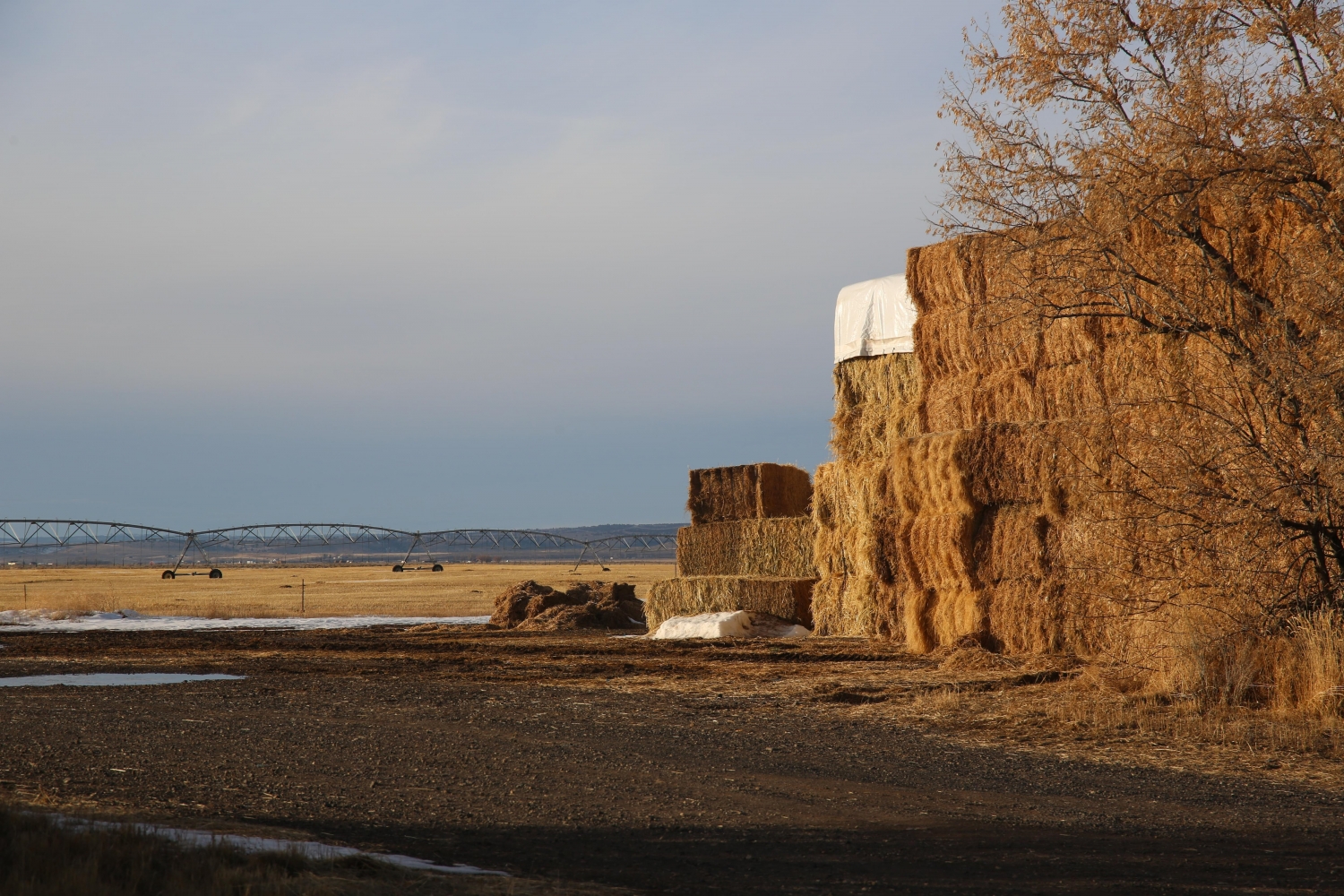
Farmers in Harney County have come to rely on an aquifer that has long been known to be in serious decline.
Now, Oregon water regulators will make drastic changes to how much water they can draw from the ground, following more than two years of meetings to come up with a solution.
On Thursday, the Oregon Water Resources Commission unanimously voted to designate the Harney Basin in southeast Oregon a critical groundwater area. The commission simultaneously denied a petition brought by local irrigators, community members and elected officials that would have put strict restrictions on only the most depleted areas of the basin.

The commission – a volunteer advisory board appointed by the governor – oversees the state’s water resources department, which, for years, enabled excessive pumping for irrigated farming, mainly to grow hay to feed cattle.
This designation will give the state more authority to reduce how much water irrigators can pump out of the aquifer.
It’s a decision that will bring with it tough decisions and economic pain in an area whose economy largely depends on agriculture.
“People feel huge economic anxiety about how this is all going to work,” said Water Resources Commissioner Janet Neuman. “I feel like we’re in a really, really tough position. But we’re trying to undo some mistakes of the past.”
‘Sometimes, you need a thumb on the scale.’
The adopted changes don’t kick in until 2028.
The changes will require water use cutbacks by up to 70% in some parts of the basin over the next 30 years. Irrigators will have to install meters on their pivots and report how much water they use every year. The critical groundwater designation also means the state will no longer approve new groundwater rights in the basin.

The adopted rules exempt the Burns Paiute Tribe and county municipalities from water curtailments.
The water resources department will also delay cutbacks to water use in three areas of the basin, Silver Creek, Lower Blitzen-Voltage and Silvie, to give irrigators a longer runway to come up with voluntary agreements –meaning, people will be allowed a more flexible approach to cutting back water use as long as it aligns with the goals of the state.
This critical groundwater area designation, and the restrictions that will come with it, follows pushback from irrigators, ranchers and farmers who’ve said the adopted rules will put families out of business.
They’ve also argued that the proposed changes are too aggressive in some areas of the basin that currently are not experiencing excessive declines.
If fully implemented, the proposed rules could take a $41 million bite out of the local agriculture economy.
In October, a coalition of irrigators, tribes and local government officials organized under state Rep. Mark Owens — a Republican from Harney County and a farmer — filed a petition asking the Oregon Water Resources Commission to consider a different set of rules that diverged from regulators’ own proposals to curb overpumping in the region.
That petition followed moments where some residents felt unheard and frustrated by the water resources department’s proposed changes — and with the process that led to it.
“Unfortunately, this process kind of devolved into a pissing match between the people of Harney County and state bureaucracy, with the Water Resource Commission caught in the middle,” said Harney County Commissioner Rob Frank.
He said he believes the department overstepped its authority.
“I don’t believe the entire basin had to be declared a critical groundwater area,” he said. “I think that it’s a conflation of policy and science, and that’s been a frustration all along.”
Neuman, the water resources commissioner, said she understands the tough positions many families will be in.
But, people will also be in a tough position if nothing or too little is done either way, she said.
“Sometimes you need a thumb on the scale,” Neuman said. “I mean, why do we have habitat conservation plans under the Endangered Species Act? Because there are listings, and recognitions that things have gone badly for certain species, and so then you get the listing, and then people say ‘OK, let’s figure out how we can manage within this framework,’ and I think that’s what has to happen here.”
Going forward, it’s likely the department will face legal challenges from some water users.
Rep. Owens told the commission the water resources department can still avoid most of the fallout if it allows more time for irrigators to come up with voluntary measures in the areas of the basin that are not as overdrawn.
“We can figure out how we can limit arguments and litigation, or we don’t,” he said. “Go through the regulatory process in the worst areas [of the basin]. I think you’ll actually probably see less litigation in those areas because most of the members have identified there’s a problem. Hold off on the others.”
News Source : https://www.opb.org/article/2025/12/12/oregon-harney-basion-now-critical-groundwater-area/
Other Related News

12/12/2025
The Oregon Department of Transportation ODOT is set to implement significant changes for t...

12/12/2025
On Friday at 701 pm a flood warning was released by the National Weather Service in effect...
12/12/2025
On Friday at 705 pm the National Weather Service issued a dense fog advisory in effect unt...
12/12/2025
Mount Hood is more dirt than snow currently and the chairlifts are empty as Timberline awa...
12/12/2025
Led by students at Hillsboro High School hundreds of young people across the city walked o...

Follow

Download Our App


Copyright 2022 © EPUERTO. All Rights Reserved