

Published on: 06/26/2026
This news was posted by Oregon Today News


Description

Every year, about 90% of Central Oregon’s Deschutes River disappears into networks of canals and pipes traversing high desert. Between April and October, what’s left in this major river — one of the largest spring-fed waterways in the U.S. — looks more like a creek trickling out of Bend, Oregon.
Six irrigation districts — quasi-public corporations — divert the water to green up the properties of about 7,500 landowners in one of the state’s driest regions. Of the six, none is as powerful as the Central Oregon Irrigation District. It has rights to use more than half of the Deschutes’ volume — more than all the other districts combined. And under state law, in times of scarcity, most of the others must cut back to protect COID’s share of the river.
During the last drought, state water law forced commercial farmers downstream to fallow their land while COID diverted four times what its landowners’ crops consumed, an Oregon Public Broadcasting and ProPublica analysis of state data found.
Our analysis showed similar ratios across both wet and dry years, roughly aligning with estimates of what COID told the state its crops required. While state water managers did not dispute our analysis, the irrigation district said it didn’t trust the satellite-based data we used, which Oregon lawmakers backed to study water availability.
COID landowners are doing exactly what the law encourages them to do, state legislators said. To keep rights to the water, districts have to prove to the state that their customers are consistently using it “beneficially.” In the district, our reporting found, more than 9 out of 10 acres were pasture — grass for grazing or landscaping, or hay for livestock — considered beneficial under the law.
Oregon and other Western states have so far rejected any legislation that restricts what people can grow or how efficient they must be: Opposition to change is strong because water rights are a form of property rights. Water rights also raise property values and can bring agricultural tax breaks.
If lawmakers took on bedrock water law, “we’d get crushed by the powers that be and we might even not be reelected,” said state Rep. Ken Helm, the Democratic co-chair of the House Committee on Agriculture, Land Use, Natural Resources and Water.
“What should we do? I think we should leave more water in the river. Legally speaking, that doesn’t have to happen,” he said. Helm, a land-use lawyer, grew up in Bend and has watched the region transform. “Affluent people are moving into Central Oregon for reasons that have nothing to do with growing a crop,” he said.
As things stand now, COID’s Managing Director Craig Horrell said he “can’t tell people what they can and can’t farm, if it’s allowed.” The district’s job is to distribute water to its customers and to “deliver it much more efficiently and sustainably in the future,” he said.
The question is how.
Oregon has pushed three main solutions:
1. Pipes
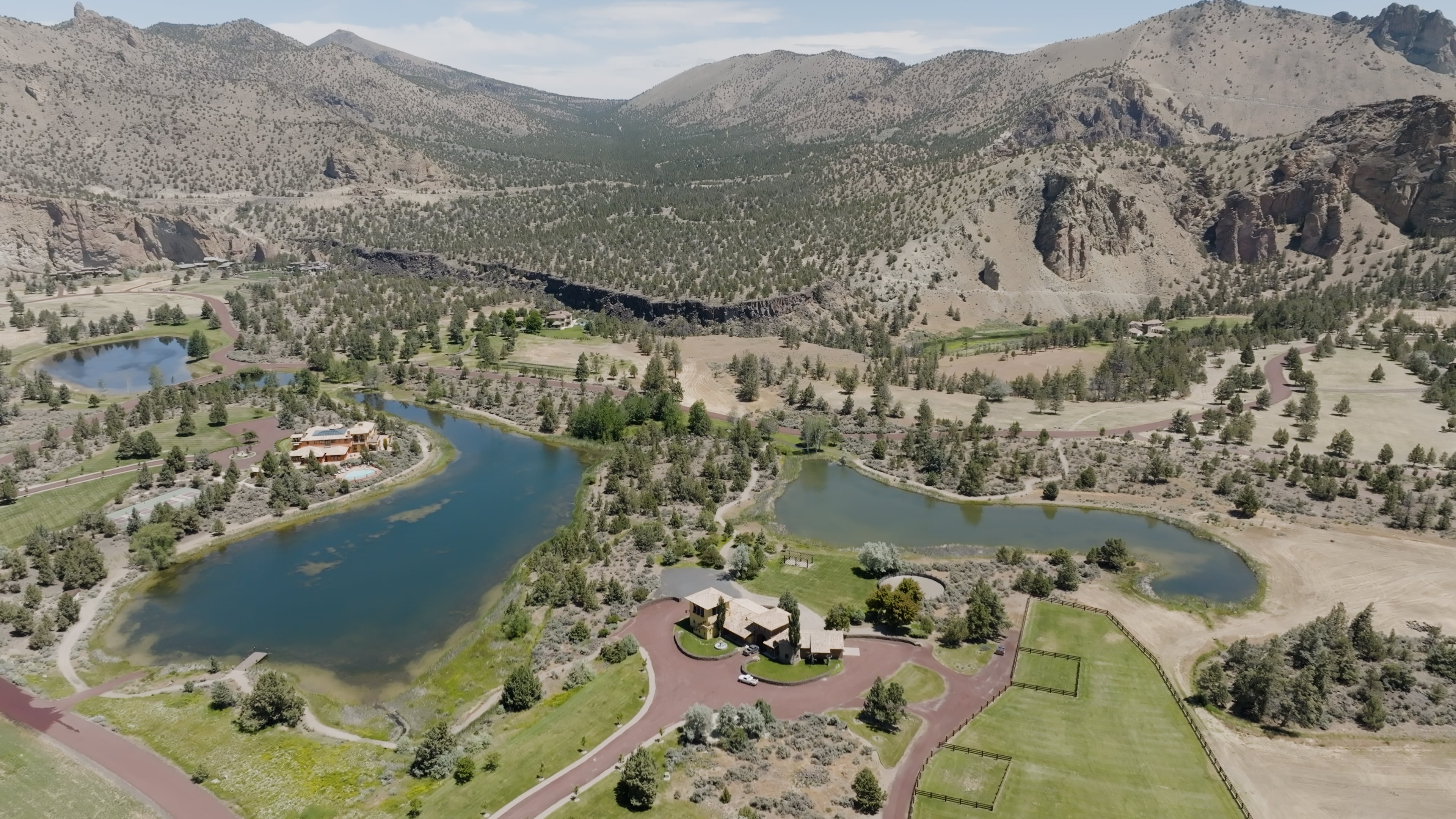
COID delivers most of its water through open canals built 120 years ago. Blasted from porous lava rock, the canals have to be completely full for gravity to push water across the district’s more than 42,000 acres. Nearly half the water evaporates or seeps into the ground under the canals before reaching its destination. COID’s state water rights factor this in.
Replacing the canals with pressurized pipes could save a lot of water. It could also take 50 years and cost more than $700 million. The district is in the final planning stages of what could be a $360 million project to pipe a main artery leading to more than a thousand landowners between Bend and Redmond, Oregon. Few make their living as farmers, our reporting found. In exchange for federal and state funding for piping, COID has pledged to send water downstream to farmers outside the district.


The plan has gotten broad support, especially from Oregon Sen. Jeff Merkley: “Repeated severe droughts make every drop of irrigation water highly valuable, and the best way to preserve irrigation water is to pipe it,” he told OPB and ProPublica.
The catalyst for focusing on COID, he said, was a threatened species of frog, which lives exactly where irrigation districts have long siphoned water, destroying its habitat. To stave off lawsuits under the Endangered Species Act, the districts agreed to leave more water in the river over time.
As it switches from canals to pipes, COID is supposed to send the water it saves to a neighboring district that will have to take less from the river as part of the plan to restore the frog’s home. That district, North Unit, serves a valley famous for commercial farms, but it’s already water-poor. It has rights to far less water from the Deschutes than COID does. Evan Thomas, a fifth-generation farmer and leader of North Unit, put the stakes plainly at a March public meeting in Redmond: “This pipe has to go in the ground by 2028 or North Unit, all of Jefferson County, basically quits farming.”
But even those who acknowledge that piping is a critical solution note that it won’t stop COID from diverting more water than its customers need — or from sending that water to a lot of residential properties growing grass and pasture. Last year, the nonprofit Central Oregon LandWatch pushed for a bill to put limits on overwatering. Helm and Republican state Rep. Mark Owens started drafting legislation, but they never introduced it. Owens, a hay farmer in Eastern Oregon, said irrigation districts weren’t happy with the proposal. “I weakened,” he said. “We weren’t going to get it through the building. We lived to fight another day.”
2. Sharing
The Deschutes has never had enough water for all the landowners who laid claim to it more than a century ago, said Deschutes River Conservancy Executive Director Kate Fitzpatrick. Leaving water in the river for fish and wildlife wasn’t even considered a legal, beneficial use of the resource until the 1980s.


“So that’s what we’re working with,” Fitzpatrick said. “We’re not going to win the game by pointing fingers at who’s doing what with the water.”
With more demand than supply, her nonprofit works with irrigation districts to roll out incentives for landowners to be more efficient or share voluntarily. One program pays landowners to dry up land so COID will leave more water in the river. But the district limits participation, and the program’s efficacy has plateaued for decades, state data shows.
State lawmakers last year also created a pilot “water bank” program. The concept marks a big change in the law and could allow COID landowners to keep what water they need and rent out the excess to farmers downstream without losing rights to it.
But since Oregon’s governor signed the bill into law nearly a year ago, COID and other key players haven’t signed anyone up. That’s because the canal system fails if it doesn’t have enough water in it, Horrell, the district’s manager, said. Piping could allow the district to scale up these other solutions in the future, he said.
There’s another problem, too: To rent out part of a water right without completely drying up their property, landowners would need to measure their use precisely — something many don’t want to do.
3. Data
COID said it doesn’t measure or report the volume of water it delivers. This is typical across Oregon, where the vast majority of water goes to agricultural lands. But policymakers and experts have long said the state can’t tackle water shortages unless it knows how much the people with irrigation water rights use on their properties.
The Legislature’s attempts to require meters on all individual farms and wells have faced fierce public backlash. “At one point my office was getting a call a minute,” Owens, the state representative, recalled of an effort last year. The fear, he said, is that the state will use data to take away water rights or to try to charge by the gallon.
Owens has given up on trying to force statewide metering for now, he said.
On his own Eastern Oregon hay farm, he started a pilot project that uses a weather station and satellite data to track how much his fields drink. He can look on his phone and see how many days he should irrigate the following week, he said. He also led the charge for Oregon to invest in a cutting-edge study to apply this technology to statewide water planning. Scientists with the Oregon Water Resources Department co-authored a report with researchers from the Nevada-based Desert Research Institute. It provides estimates over nearly 40 years of how much water crops consumed on every irrigated field in Oregon. The data, which OPB and ProPublica used in our reporting, was published last year. Horrell said such data has too many variables and is not ready to guide how the district monitors water use.
State managers are not currently using that data to regulate how water is used, but instead to account for where it goes, Oregon Water Resources Department Director Ivan Gall said in a recent interview. He said tight state budgets have so far kept his agency from sharing it “with the public and decision makers in a way that is understandable and meaningful.”
Owens and Helm said they tried and failed to make it easier to learn from critical data about Oregon’s water — how much there is, how clean it is, where it’s coming from and where it’s going — but a pilot project ground to a halt after state funding dried up last year.
News Source : https://www.opb.org/article/2026/06/26/oregon-save-deschutes-river-farmer-solutions/
Other Related News
06/26/2026
By law one irrigation district has rights to most of the water from the Deschutes forcing ...
06/26/2026
Waterfalls luscious hiking trails and nature galore await travelers that go west and visit...
06/26/2026
Chris Casad awakens each day before dawn on the Central Oregon property he bought nine yea...

06/26/2026
According to Lt Mike Perlatti of the Twinsburg Fire Department crews were initially called...

06/26/2026
Chetco Community Public Library is excited to announce a new addition to its Library of Th...

Follow

Download Our App


Copyright 2022 © EPUERTO. All Rights Reserved