

Published on: 04/10/2026
This news was posted by Oregon Today News


Description

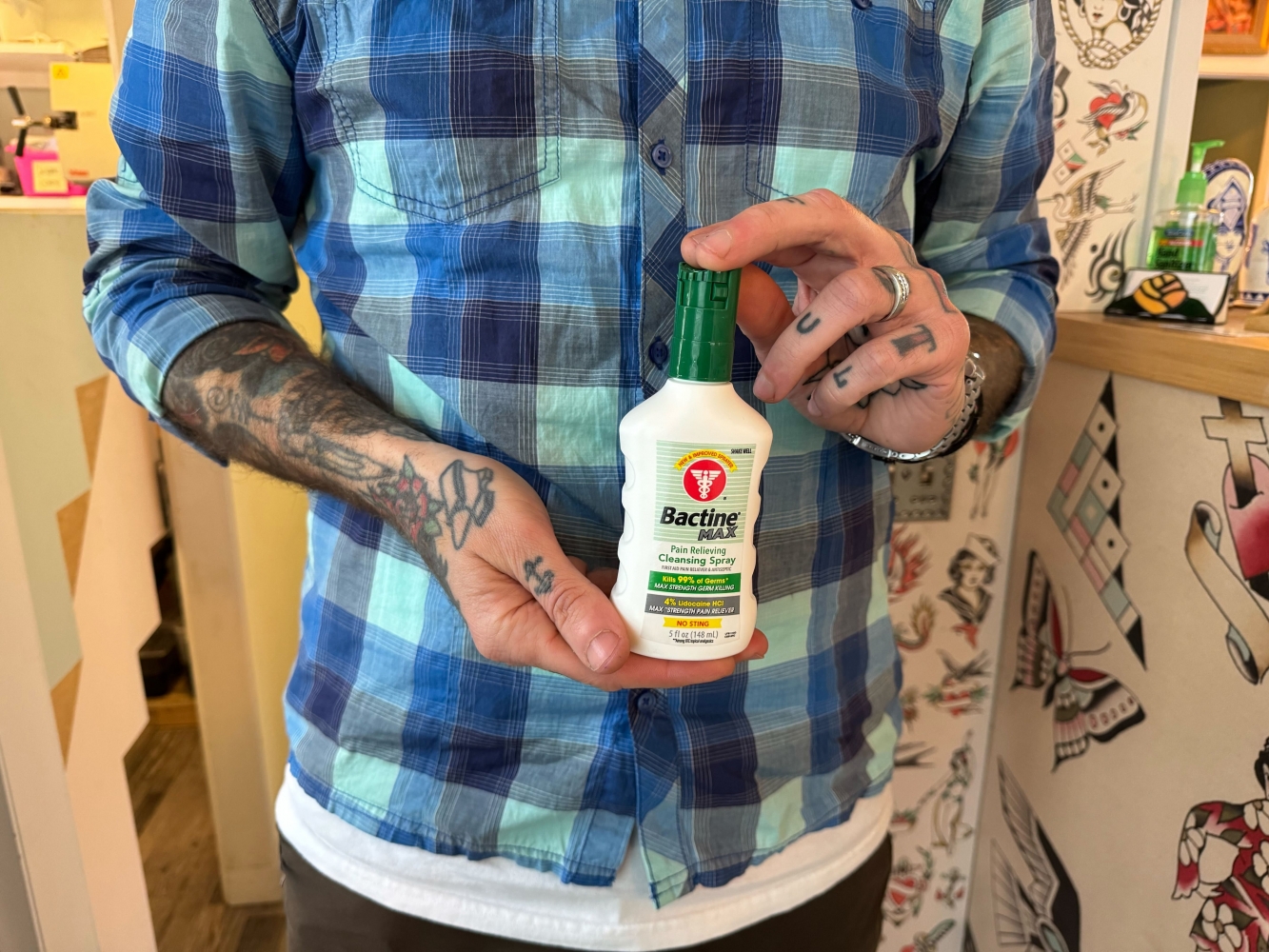
The Oregon Health Authority issued a practice clarification on March 25, 2026, stating tattoo artists are prohibited from using over-the-counter and nonprescription topical anesthetics like numbing cream and Bactine spray under Oregon’s current statutes.
This clarification has minor implications for some tattoo artists in the state of Oregon, but it has left others rescheduling appointments and scrambling to adapt.
“It’s just going to devastate the whole permanent makeup industry completely,” said Heather Parish, a cosmetic tattoo artist offering permanent makeup services and education at Carole’s Cosmetic Tattoo LLC Studio & School in Beaverton.
Parish said the clarification was a surprise. She had to cancel appointments that were on her schedule for eyeliner and lip tattoos, and she’s concerned about finding models for student practical hours.
She fears her clients will simply cross the river to Washington to get services. Numbing creams and sprays are not prohibited for tattoo artists in Washington or in any other state — except Michigan, which banned topical anesthetics for tattoo artists last year.
Some artists say the change is so impactful that it should be considered a rule change rather than a clarification of practice. An official rule change would require a vote and opportunity for public input, whereas a clarification takes effect immediately without either.
“Oregon does not even have a single statute that explicitly says numbing is banned. But the recent board clarifications and practice standards have effectively restricted how licensed tattoo artists, which includes cosmetic tattoo practitioners, can use them,” Parish said.
In an email to a group called Reform Oregon Tattooing, Derek Fultz, qualification analyst at the state health authority’s Health Licensing Office, wrote, “Statutes outline what is within the scope of practice for an Oregon licensed tattoo artist, and administrative rules are based on what the law allows. Under Oregon Revised Statute (ORS 690.350), it does not mention the use of topical anesthesia. Since it is not included in the law, it’s not something that can be turned into a rule or voted on by the Board or public.”
Kaysie Anderson, another cosmetic and medical tattoo artist in Portland, says her business is seriously affected by the change.
“I use numbing for nearly every single service I perform. For cosmetic tattooing especially, topical anesthetics are not optional, they are essential,” she wrote in an email to OPB.

“Without numbing for certain procedures, not only would my clients not be able to tolerate it, but I wouldn’t be able to see my work clearly or implant pigment effectively,” she wrote.
Anderson is the founder and owner of Exuvium Studios on Main Street in Portland. Her services include permanent eye, eyebrow, lip and cheek makeup, small artistic tattoos, areola reconstruction and tooth gems.
“Clients often come for things like camouflage and reconstructive tattooing when they have already experienced trauma, medical hardship and pain,” she wrote.

All types of tattoo artists in Oregon receive the same license from the Oregon Health Licensing Office. That means the clarification applies to artistic tattooers, who provide artwork on the skin; cosmetic tattooers, who provide permanent makeup such as eyeliner and lip blush; and medical tattooers, who offer services such as scar camouflage and areola reconstruction for mastectomy patients.
Some of these types of tattoo artists frequently use numbing creams and sprays, but there’s a wide range of use.
Even before the Oregon Health Authority’s clarification, many artistic tattooers rarely or never used numbing creams and sprays simply out of preference, saying they can change the skin texture and make it harder to work with.
“For me, for artistic tattooing, I don’t see it being that big of a problem,” Sean Lanusse, artistic tattooer at Thunderbird Tattoo in the St. Johns neighborhood of Portland, said.

“It makes the skin kind of weird in my opinion,” he said. “Almost like tattooing a Nerf football.”
Despite that, Lanusse said many tattoo artists rely on Bactine spray during especially long sessions, and most artists have a bottle on hand for cases where it would be useful.
“Potential criminal charges”
Since the Oregon Health Authority clarification, the artists at Thunderbird Tattoo have removed their bottles of Bactine from their stations and placed them together on a high shelf in the studio. In compliance with the clarification, they will not use it anymore.
“It’s disappointing that that’s how the state decided to go about it, just kind of slide out a memo,” Lanusse said. “You were never allowed to; therefore, effective immediately,” he said.
Bactine and similar topical anesthetics are available at drugstores with no restrictions. Cosmetic tattooer Parish is frustrated by a rule that prevents her from using a product that’s otherwise legal and readily available.
“You can buy over-the-counter products and use them at home, use them on your children, but you can’t use it for a client,” she said.

The health authority clarification states that administration of topical anesthesia to a client by a licensed tattoo artist is not within their scope of practice, and “the administration of drugs to other people may constitute the practice of medicine.”
It also warns that if a tattoo artist is found administering topical anesthesia or other nonprescription drugs to a client, they could “face sanctions from the Board of Electrologists and Body Art Practitioners, including civil penalties, suspension or revocation of the license and potential criminal charges.”
When asked about enforcement, a spokesperson for the Oregon Health Authority wrote, “HLO [the Health Licensing Office] can on its own motion initiate a complaint or inspection of a facility and accepts complaints from the public. HLO would review complaints to ensure HLO has jurisdiction then conduct a thorough investigation.”
According to the spokesperson, the health authority has issued two disciplinary actions against practitioners for using topical anesthesia. In both cases, numbing cream was used around the eye and in one of those cases, medical-grade strength lidocaine was used.
Zuri Victoria, an esthetician & cosmetic/medical tattoo artist at Tattoo 34 in Portland’s Hawthorne neighborhood, said she prefers not to use numbing creams and sprays anyway, and she was satisfied with the rollout of the clarification.
“When you are licensed with OHLA, they send you updates on everything and anything. So there’s constant communication on their end,” she said.
Still, she said the clarification was significant to her because it impacts certain clients more than others, like the ones seeking scar coverage.
“Client comfort is something that I do highly respect and consider,” she said. “With medical tattooing, the scars themselves can either lack sensation or they can be hypersensitive.”
In an email to OPB, a spokesperson for the Oregon Health Authority declined to answer whether the rollout of the clarification was typical, writing, “There is always room for artists to provide public comment to OHA.”
Anderson, the cosmetic and medical tattooer, said she plans to fight this clarification, and she’s in contact with other artists who agree.
“I am of the opinion that if no regulations have changed, then I will continue to use the products and procedures that have always been acceptable prior to this ‘clarification,’” she wrote.
How did we get here?
The Oregon Health Authority is in the process of reviewing the curriculum for tattoo artists through the Board of Electrologists and Body Art Practitioners and a committee made up of tattoo artists in the region. It’s officially called the Tattoo Course of Study Review Committee.
The board has been reviewing the curriculum for months, navigating myriad opinions and trying to find common ground that works for all types of artists in the state.
“We were in these committee meetings to look at the tattoo school curriculum. And at one point, it was brought up that there was no information in the curriculum whatsoever about any topical anesthetics,” said artistic tattooer Lanusse, who is on the committee. “So we pointed out that that wasn’t in the curriculum at all. And then that triggered the state to look into it.”
In an email to OPB, a spokesperson for OHA confirmed that concerns raised by people on the committee and the board triggered the review of the current statutes.
When asked about the potential impact on the businesses of cosmetic and medical tattoo artists, the OHA spokesperson wrote, “It is not within the scope of a tattoo artist to administer topical anesthesia. The self-administration of topical anesthesia or other over-the-counter nonprescription drugs by a client is not regulated by the Board.”
Allowing a client to apply their own topical anesthetics is a loophole that artists are generally aware of, but all the artists interviewed by OPB said it poses risks.
“If someone orders something off of Amazon or takes it upon themselves to make that executive decision and then they show up … There could be an issue,” Victoria said.

Parish said if clients have to apply their own anesthetics, they could choose an inferior product or apply them incorrectly. “I buy from a reputable company, a permanent makeup products LLC,” she said. Plus, the client has to pay for it themself, raising the cost of the service.
Anderson is not part of the board or committee, but she appeared at the last Health Licensing Office meeting to share her concerns about the clarification. In a statement to OPB, she wrote that the problem goes beyond the clarification, and tattoo artists are misinformed about topical anesthetics in general and need instruction.
“I didn’t know much about topical anesthetics myself, but they significantly affect my work, so I had to learn about how different types of ingredients behave,” she wrote.
“One phrase I hear repeated a lot is that ‘numbing changes the skin texture,’ topical lidocaine doesn’t do that. [Artists are] talking about formulas with vasoconstrictors like epinephrine, and they don’t even realize what’s in the product they’re using or know how that affects the skin. You should know what you’re putting on your clients and how it behaves,” she wrote.
Parish said she joined the board to make tattooing better for artists and clients, and she’s frustrated with this outcome.
“Oregon has been known to — they just say all these rules and regulations. If you’re wrong or you’re late, you get penalized … We’re paying all our fees and schools and everything, doing all the things we’re supposed to and they’re not doing their portion of it,” she said.
News Source : https://www.opb.org/article/2026/04/10/oregon-health-authority-tattoo-artists-cosmetic-numbing-cream-bactine/
Other Related News

04/10/2026
Novig has confirmed that the Novig promo code OREGON has been upgraded for Masters Day 2 k...
04/10/2026
On the second day of his federal trial Javier Francisco Vigil abandoned his insanity defen...
04/10/2026
The Oregon Department of Corrections this fall will start delivering personal tablets to t...

04/10/2026
In December 2016 as Donald Trump was headed to the White House for the first time Betsey S...

04/10/2026
Bill Galvin has spent much of the past month answering the phoneIts been very very busy he...

Follow

Download Our App


Copyright 2022 © EPUERTO. All Rights Reserved