

Published on: 09/08/2026
This news was posted by Oregon Today News


Description

A worst-case tsunami triggered by a Cascadia Subduction Zone earthquake could kill as many as 40,000 people along the Oregon Coast, according to a state analysis.
The threat is why emergency managers recently released guidance on coastal structures that are specifically designed to save lives in a disaster.
These so-called tsunami vertical evacuation structures can be towers, apartment buildings or parking garages constructed to withstand the force of giant ocean waves triggered by an earthquake.
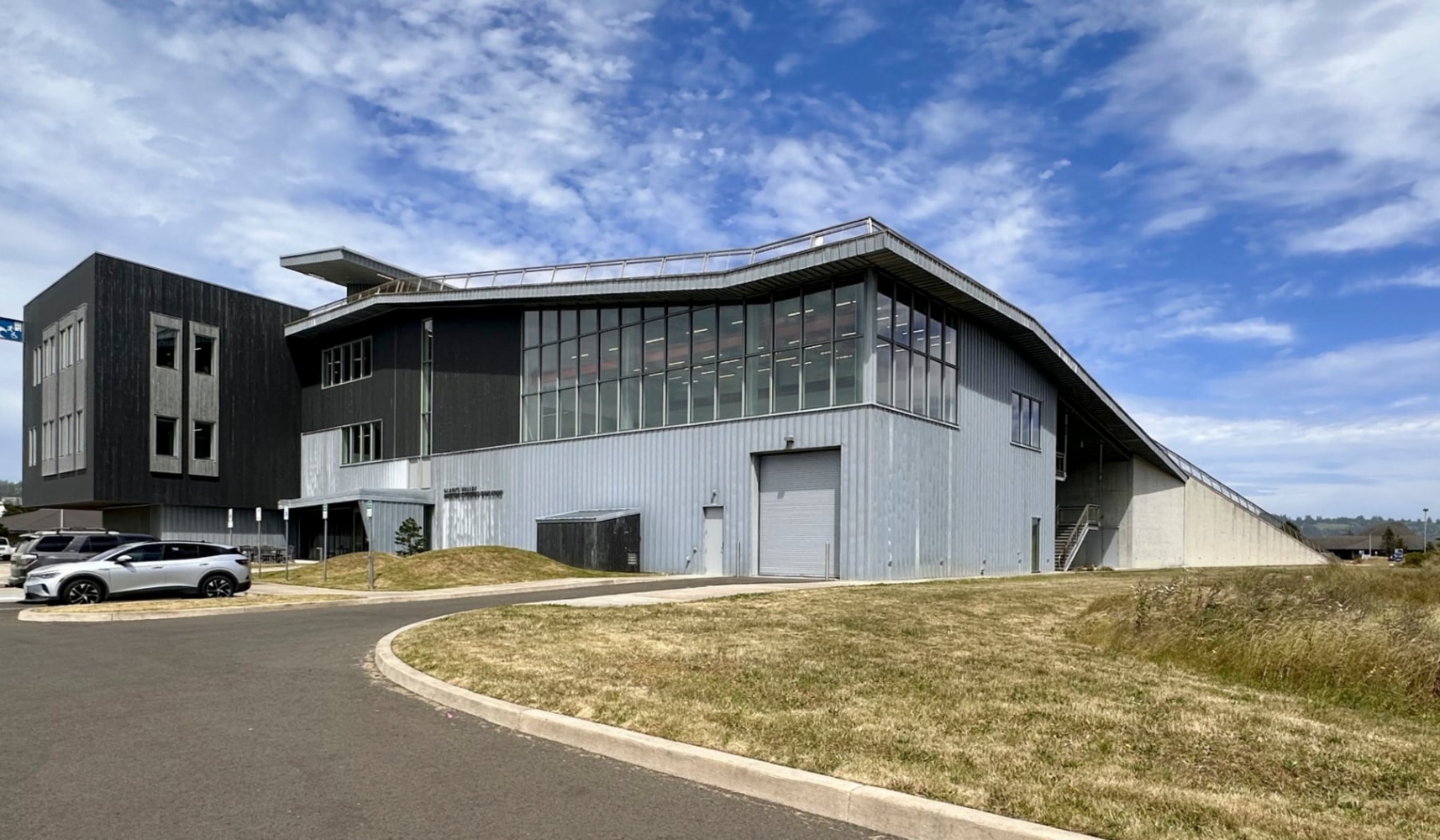
Oregon currently has just one verified tsunami vertical evacuation structure, located at Oregon State University’s Hatfield Marine Science Center in Newport, with two more in the process of being developed.
State emergency leaders estimate 15 to 20 are needed in vulnerable areas along the coast from Brookings to Astoria. But for small coastal communities, securing the millions of dollars needed to design and build structures capable of surviving a tsunami can be a major challenge.
The obstacles are compounded by uncertainty around federal emergency management funding as well as local commitment to move projects forward, said Stephen Richardson, state hazard mitigation officer with the Oregon Department of Emergency Management.
“We have a saying in emergency management that emergencies start and end locally, so we’re really trying to give the local communities information so that they feel empowered and informed to make the correct decisions that would benefit them,” Richardson said of the state guidance released Aug. 26.
The Cascadia Subduction Zone is a coastal fault running 700 miles from northern California to British Columbia. It last unleashed a 9.0 magnitude earthquake in 1700, dropping the coastline several feet and triggering a massive tsunami, according to OEM. The agency has warned that scientists predict a roughly “37% chance that a megathrust earthquake… will occur in the next 50 years.”
Some coastal communities could see the first tsunami waves reach shore within 10 minutes of an earthquake, leaving little time for residents to flee to higher ground, said Bridget Good, a mitigation analyst with OEM. For anyone caught in the waves, the chance of survival is estimated at less than 1%, she added.
“Vertical evacuation structures can be designed to save hundreds, even thousands of people per structure,” Good said.
Multiple state and federal partners spent four years developing the latest guidance for building different types of evacuation structures. The 99-page document also includes hazard maps, GIS tools and offers ways for communities to get involved.
But Richardson said building enough structures to prepare Oregon’s coast comes with a significant hurdle: finding the money to pay for them.
“If we can help amplify that voice, then we can start to take more of these hazards a little bit seriously,” he said. “Just because it hasn’t happened doesn’t mean it won’t happen.”
News Source : https://www.opb.org/article/2026/09/08/oregon-coast-lacks-tsunami-proof-evacuation-structures-to-survive-the-big-one/
Other Related News

09/08/2026
Call or Email us to cater your next event 707 458-3445 Hiouchicafegmailcom

09/08/2026
A superstar headliner is remaining silent after 14 people were hospitalized at a concert

09/08/2026
Dear Miss Manners I am very fortunate to have found a number of good companions through my...

09/08/2026
Oscar winner Gary Oldman may have revealed who will play the next James Bond

09/08/2026
CORVALLIS Oregon States biggest issue in its loss to No 23 Houston was obvious tackling

Follow

Download Our App


Copyright 2022 © EPUERTO. All Rights Reserved