

Published on: 01/23/2026
This news was posted by Oregon Today News


Description
For years, animal welfare activists have argued that Oregon Health & Science University should close the Oregon National Primate Research Center.
On Thursday, the facility’s opponents achieved a milestone: OHSU’s board of directors began a public discussion of what it would take to close the center or significantly reduce the size of its primate colony.
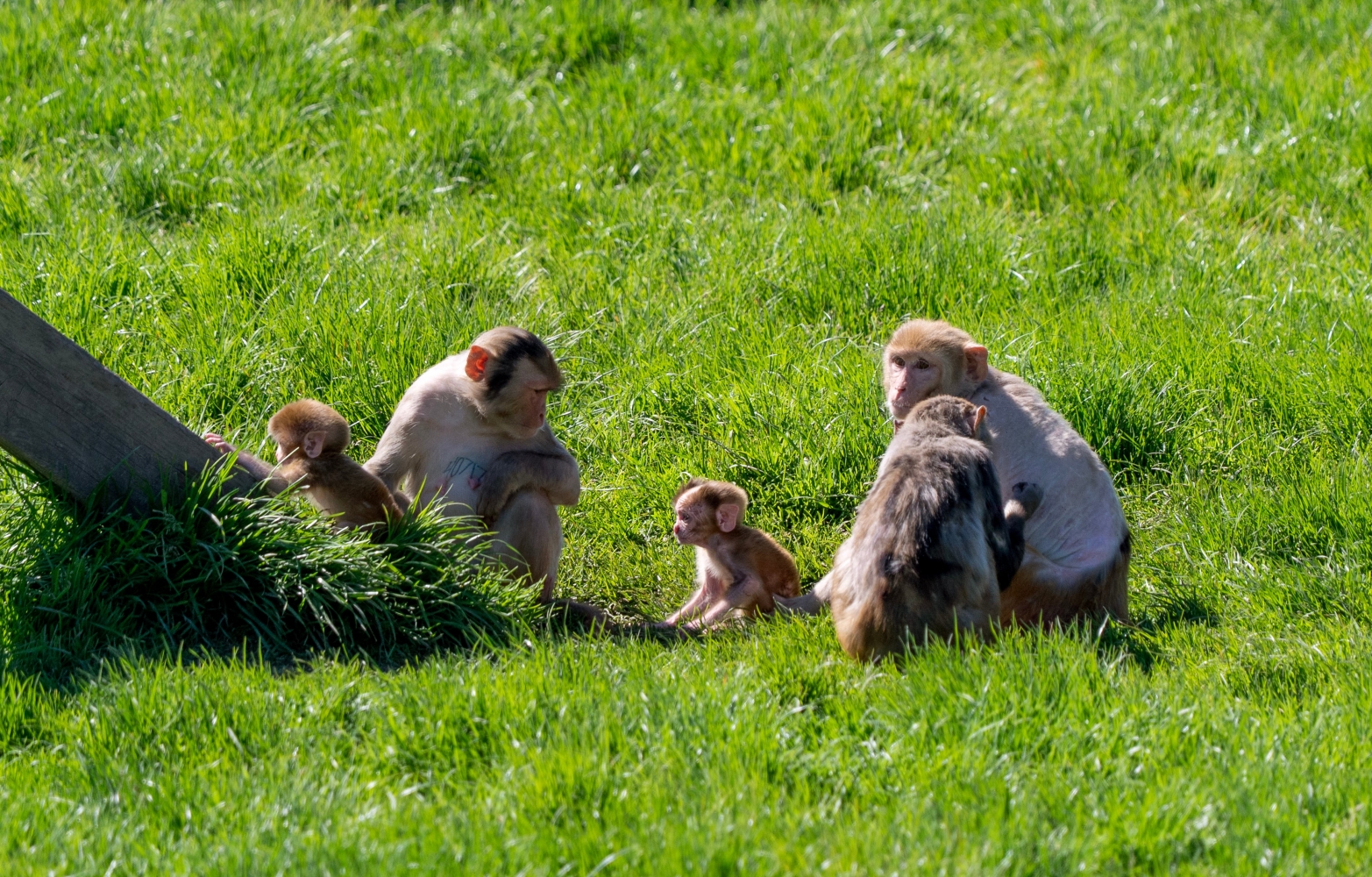
The center is the largest of seven federally funded primate research facilities in the U.S. It houses roughly 5,000 monkeys and baboons – about 5% of the total population of research primates in the country.
The board took no votes during its special meeting on the issue, and whether its discussion is the first step toward a closure plan is unclear.
But a series of events has called into question the center’s long-term viability. In the midst of an ad campaign opposing the center by animal welfare groups last year, which highlighted the deaths of monkeys both in accidents and through the course of research, Oregon Gov. Tina Kotek said she’d like to see the center close.
The National Institutes of Health, which is both the main funder and main client of the primate research center, is also under direction from the Trump administration to begin phasing out the use of animals in experiments.

In theory, OHSU’s board had convened for a narrow purpose: to hear a presentation on a report that detailed several options for closure and how much they would cost. The report was commissioned by OHSU and came at the behest of a budget directive from state Rep David Gomberg (D-Newport), a longtime animal welfare advocate who wants the center to close.
At Thursday’s meeting, Gomberg told the board they shouldn’t treat his budget note as a box to check, and must recognize the direction of federal science policy and come up with a credible plan for closure.
“I’m here to ask you to lead us to a meaningful transition,” he said.
Several of OHSU’s board members seemed to agree that a plan is necessary.
Betsy Johnson, a one-time candidate for governor who was appointed to the OHSU board last year, pressed the center’s administrators on why they seemed to be downplaying the threat posed by the administration’s public position that animal models are no longer at the forefront of scientific discovery.
“We’re dealing with the current administration and will be for the next three years,” Johnson told Skip Bohm, the primate center’s director. If the National Institutes of Health were to cut back funding, she said, “We’re in deep trouble.”
Bohn told the board the national primate research centers are not at that crisis point – yet. There is some daylight, he said, between the Trump administration’s rhetoric on the issue and their actions so far, and some people within NIH still support primate research.
Bohn said he and the directors of the other six national primate research centers had met with NIH Deputy Director Nicole Kleinstreuer in January.
“While no decisions were made there, we talked about the value of the primate centers,” he said. “There was no discussion about closing the centers at that point.”

Under the Biden administration, Bohn said, primate research centers had been directed to increase the size of their animal colonies to support more research into chronic conditions afflicting an aging population.
And last year, the ,titutes of Health re-awarded the Oregon National Primate Research Center a competitive five-year grant that funds animal care and basic operations at the research center through 2029. That grant, though, needs to be renewed annually and the administration can amend it, OHSU attorneys said.
In the near term, the Oregon National Primate Research Center has asked the NIH for permission to reduce its monkey numbers by 20 percent, as a cost-saving measure. It’s still waiting on approval. The center is currently running a deficit and operated at a $12.2 million loss in the last fiscal year.
Hurdles to closing the research facility
Closing the facility would pose unique challenges.
Scientists working with the center’s primates have contributed to 514 peer-reviewed publications over the past five years, and closing it would shrink OHSU’s research portfolio by over $100 million annually, according to OHSU.
It houses six species of primates. By far the largest group is rhesus macaques. The macaque colony is young, and efforts to transfer the animals could be harder in an environment where the administration is cutting back support for animal research.

OHSU hired Huron, a management consulting firm that helped oversee the closure of Harvard’s New England Primate Research Center, to write the report the legislature requested on closure options.
OHSU’s primate colony is about three times the size of Harvard’s.
Huron concluded that OHSU’s cheapest option would be to downsize the Oregon primate center, selling off the animals over time to shrink the center’s operations by 70% over eight years, which would cost an estimated $50 million.
Keeping the monkey colony and repurposing the facility as a primate sanctuary was the most expensive option, according to Huron. It would cost OHSU at least $220 million over eight years.
If the facility were to operate as a sanctuary, OHSU would still need to pay for clinical support and site management. That would cost approximately $36 million - a savings of $10 million annually, compared to operating as a research facility.
Animal welfare advocates criticized Huron’s report, saying it underestimates the costs of continuing research operations and exaggerates the cost of the sanctuary option.
Advocates say the federal government may be willing to foot some of the bill for a sanctuary. In September, the NIH announced rehoming or retiring individual animals that have been used in experiments is a permitted use of grant funding.
Primate center administrators told the board that they believe their main operations grant is still contingent on research taking place, and they have no guarantee the federal government would fund a sanctuary on their campus.

A fierce debate over the role of animal models in scientific research
Critics of primate research, including some within the scientific community, have argued that genetic differences between humans and other primates have frequently prevented this research from translating into viable human cures.
They argue that newer methods, like testing toxicity of drugs using lab-cultured mini-organs or using AI modeling, are advanced enough to replace animal testing and could make drug development cheaper, faster, and more reliable.
That position is becoming federal policy with dizzying speed.
Over the past year, NIH Director Jay Bhattacharya has announced multiple initiatives to reduce the use of animals across scientific research, direct funding to new methods, and eliminate some animal testing entirely.
In December, Health Secretary Robert F. Kennedy Jr. said in an interview that he believes animal research is less predictive of human health outcomes than the new methods and said he is deeply committed to ending animal experimentation. Kennedy said the agency heads under him are aligned on the issue as well.
At Thursday’s board meeting, many of the ONPRC’s experienced research scientists defended their work and argued that animal models are irreplaceable.
Some questioned why the administration, which has attacked the safety of vaccines and other pharmaceuticals, would move so quickly to eliminate a step intended to make clinical trials and new products safer for humans.
Jonah Sacha, chief of the division of Pathobiology and Immunology at the Oregon National Primate Research Center, said that 10 years ago, his lab tested a new compound for the first time in primates, establishing a safe and effective dose that went forward into human clinical trials.
That compound is now an FDA-approved treatment for bladder cancer, Anktiva. It’s being investigated for use in other cancers, too, Sacha said.
“Like so many other treatments, it would not exist without non-human primates,” he said.
Researchers working in neurobiology, hearing loss, reproductive health, and immunology said the primate center’s macaques are uniquely suited to advancing discoveries in their fields.
John Brigandy, a professor in the Oregon Hearing Research Center who is deaf himself without a hearing aid, said he came to primate research after realizing its potential to help find a cure for human deafness. He’s currently working on experiments that attempt to restore hearing in monkeys that were born with a naturally arising mutation that makes them deaf, which he hopes could be adapted for hearing-impaired children.
“Critically, the ONPRC is the only primate center in the world that has the aggregate expertise to support this science,” Brigandy told the board.
Brigandy and others also praised the staff at the primate center and said the facility had been unfairly accused of cruelty by animal welfare groups.
“Research is a human endeavor, fraught with human weakness,” he said. “In rare instances when mistakes are made, we are transparent in reporting them and change policies and procedures to avoid recurrence.”
Animal welfare advocates presented a starkly different picture to the board. Monkeys, they said, are housed in inherently unnatural environments where they are subject to extreme stress.
“Monkeys are still housed alone in cages barely bigger than a kitchen cabinet,” said Kathy Gillermo, a Senior Vice President at PETA. “Their babies are still pulled from their arms. The hard rubber toy called enrichment sitting on the cage floor doesn’t make up for stealing their lives.”
The conditions, they said, pose a fundamental ethical problem and also contribute to making the results of animal research unreliable.
Lisa Engel, a researcher who previously worked at Washington’s primate research center, said her colleagues in Oregon had devoted their careers to diseases like HIV, malaria and tuberculosis.
“After decades of work, billions of public dollars, tens of thousands of dead monkeys, those diseases remain unsolved, and that is not a personal failure of the scientists, it’s a model failure,” she said.
Board members also heard from Zach Belton, a principal at Huron Consulting Group who helped prepare the university’s report on closure options.
Huron worked on-site at Harvard to help coordinate the placement of animals and career transitions of faculty as their center closed. He cautioned the board not to underestimate the cost of closure.
“For some researchers this was highly disruptive to their career and so it was very important in our planning to work with them, researcher to researcher, to understand beyond the grants that they had, what was really the impact,” Belton said.
News Source : https://www.opb.org/article/2026/01/23/ohsu-closure-primate-research-center-scientists-support/
Other Related News

01/23/2026
When Christian Bryson needs quick weather information like for this weekends massive snows...

01/23/2026
She navigated segregation to become an esteemed mathematician and today her work helps bi...

01/23/2026
Venezuelas legislature advanced a bill on Thursday to loosen state control over the countr...

01/23/2026
To Lam was reelected Friday as general secretary of Vietnams ruling Communist Party and ap...

01/23/2026
Ryan Wedding a former Olympic snowboarder from Canada who was among the FBIs top fugitives...

Follow

Download Our App


Copyright 2022 © EPUERTO. All Rights Reserved