

Published on: 01/21/2026
This news was posted by Oregon Today News


Description

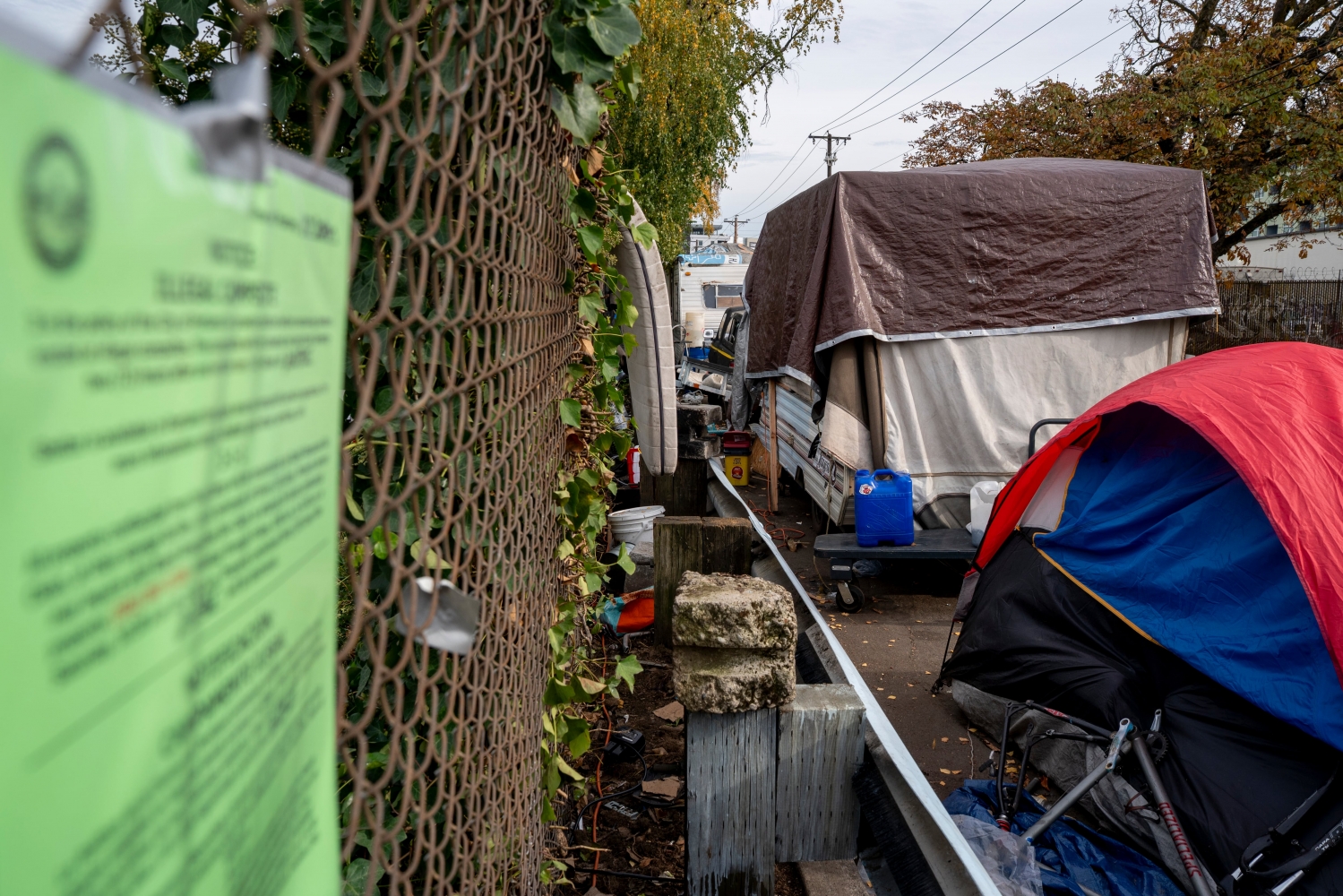
It’s been just over two months since Portland police began ticketing people for camping on public property. Now, the impact that the city’s new penalty has had on the criminal justice system — and those ticketed — is beginning to come into focus.
Court data reviewed by OPB finds that, in the first two months of enforcement, no one has been convicted for violating the camping ban.
Twenty people have been charged with violating the rule, but court delays and missed court appearances have kept the citations from advancing. In all cases, those charged with the crime have been released back into the public. No one has spent time in jail.
These results aren’t surprising to people familiar with the county courts’ challenges. But the early data casts doubt on the purpose of enforcement, which Mayor Keith Wilson has made central to his signature plan to end unsheltered homelessness.
“Enforcement is accomplishing what I think the underlying goal of these citations is, which is to allow the police to go into homeless camps and clear people out,” Grant Hartley, the local director of Metropolitan Public Defender, one of the two nonprofits that provide legal services for people in Multnomah County who can’t afford it.
“But it does not address the underlying issue,” he added. “They’re just going somewhere else and setting up; they’re simply moving around the problem.”
For his part, Wilson is hesitant to read too deeply into this early data.
“We’re not taking any single factor as a sign of victory any more than we’d take a single factor as a sign of failure,” Wilson said in a statement emailed to OPB. “Our goal is to care for the community. Citations are not the first resort any more than they’re the last resort.”

A new enforcement system
Portland’s camping policy prohibits people from tent camping or staying in a vehicle on public property — like sidewalks, parks, streets, and other public areas — if “reasonable shelter” is available. If shelter is not available, the policy limits what people can do while camping.
For instance, there are prohibitions on using a propane heater, digging into the ground, starting a fire, building a structure or blocking access to private property while camping.
People who violate these rules can be issued a citation, a charge that comes with a fine of up to $100 or up to a week in jail.
According to Cody Bowman, a spokesperson for Mayor Wilson, Portland police focus on enforcing the rule in areas of town where camping has turned into a “chronic problem,” due to criminal activity, environmental concerns, or other issues. According to county court data, the majority of those charged for violating this ban were cited either downtown or in the inner eastside.
Since going into effect on Nov. 1, many people have agreed to move to a city shelter instead of receiving a citation. The city says that roughly 110 people who were faced with a citation between Nov. 1 and Dec. 7 agreed to move into a shelter. (The city was unable to share shelter referral data from the full two-month period.)
It’s unknown if those people returned to camping in public after a night in a shelter.
If people camping outside refuse shelter, they are either given a warning or issued a criminal citation. According to city data, nearly 400 people received a warning in the first five weeks of enforcement and were issued 20 criminal citations.
“Police have discretion in all situations and determine warnings and citations on a case-by-case basis,” said Bowman.
A spokesperson for the Portland Police Bureau declined to comment on their enforcement strategy, referring OPB to Wilson’s office.
A dead end in the courts
Multnomah County Court data on cases filed helps fill in some of the blanks.
In the first two months of enforcement, 20 people received criminal citations for violating the city’s camping ban. Some were charged multiple times for violating different parts of the policy, like for blocking a public sidewalk and erecting a structure. One person was charged twice for violating the ban on two different days, bringing the total case number to 21.
Those 21 cases have each taken one of three paths.
Eight of the cases have been stalled because the person charged didn’t show up to their first court hearing, leading to a warrant being filed for their arrest. Seven of the cases have been scrapped by county prosecutors. In six of the cases, those charged have shown up to court but been told to return at a later date, since no public defender was available to represent them.
Chief Criminal Court Judge Michael Greenlick, who oversees the operations of the county’s criminal court system, said he’s not surprised.
“It does largely line up with what I predicted,” said Greenlick.
Before police began enforcement in November, Greenlick told OPB that people experiencing homelessness were anecdotally less likely to appear for a court date. That can be due to the multiple hurdles facing people without a house — from lack of transportation to not having a place to safely store their belongings.
Greenlick also said that county budget cuts and shortage of public defenders would likely mean people charged with the new crime would likely be delayed months before getting their day in court.
According to data collected by the state, more than 1,000 people facing criminal charges in Multnomah County are waiting for an attorney.
With public defenders in short supply, it’s up to the court to decide which cases are prioritized for legal representation. Greenlick said non-violent misdemeanors, like the camping citation, are the lowest priority.
He’s hoping these cases start moving more swiftly soon. Greenlick said the county is working with the state public defense system to create a system to more efficiently resolve minor misdemeanors — but he’s not sure when the program could go into effect.

Other pathways out
In the meantime, Greenlick is looking to prosecutors to find ways to resolve these offenses without jail time.
“I don’t think there’s any interest in putting people in jail in these situations,” said Greenlick. “It’s a semi-coercive way to get people to accept help or shelter.”
Multnomah County prosecutors say that model is working. One of the main reasons why prosecutors dropped seven charges in the past two months is because the person agreed to move into shelter after police charged them.
“We’re very committed to redirecting people into shelter,” said Amanda Nadell, a chief deputy district attorney. “We will dismiss a case at any point prior to trial if you’ve shown you’ve tried to address your houselessness.”
JR Ujifusa is a deputy district attorney in the office, who has been overseeing these cases. Ujifusa said he’s hopeful that the program will be successful.
“But it’s too early to say this is working as intended,” Ujifusa said. “Are we seeing visibly fewer tents? Yes. But I can’t speak to the bigger success. What I know is we’re giving people the nudge to make a change.”
Ujifusa pointed to another benefit of this new enforcement strategy: Officers who visit encampments to warn people about the new law are able to run people’s names through the courts system to check whether they have an active warrant out for their arrest.
According to Ujifusa, bringing people in to address their warrants — which could be anything from being jailed to paying a fine — is a win-win.
“It’s helpful for the community and helpful for people to move on in their lives,” said Ujifusa. “We just want them to move forward with their lives and keep the community safe.”
Hartley, with Metropolitan Public Defender, is less optimistic about the outcomes of the new citation. Hartley pointed to the shortage of varied shelter and housing options for people living outside — and a lack of mental health and addiction resources — as a problem.
“We aren’t talking about the solutions, just the erasure of tents,” Hartley said. “How much are we spending on officers to enforce this? On the courts? Could we be spending that on real solutions to homelessness?”
He worried that the current enforcement system will only push people living outside further out of reach.
“If people are afraid of a citation or they’re not being offered real help, they will just be driven to less conspicuous locations,” said Hartley. “I don’t think that’s what we want.”
Wilson said it’s too early to assess if the new citation system is working as intended.
But he’s heartened by the early data.
“We’re grateful and encouraged that more people are choosing shelter and a pathway to housing over the instability and danger of life on the street,” said Wilson. “We’re seeing encouraging signs across the city, but continuous improvement is at the core of what we do.”
News Source : https://www.opb.org/article/2026/01/21/portland-public-camping-ban-records/
Other Related News

01/21/2026
There are currently several serious data gaps limiting the FDAs ability to know the advers...
01/21/2026
COFFEE WITH A COP Stop by for some conversation on Tuesday January 27 from 830 to 10 am a...
01/21/2026
American Airlines and Delta were the first major airlines to allow travelers to change the...

01/21/2026
For the third night in a row some in Oregon may get a chance to see the northern lights
01/21/2026
The US Supreme Court hears arguments Wednesday in a case that has Wall Street and the fina...

Follow

Download Our App


Copyright 2022 © EPUERTO. All Rights Reserved