

Published on: 10/31/2026
This news was posted by Oregon Today News


Description

The cover of the book is an arresting image. A young Black woman looks off into the distance, cigarette in her right hand as she holds a pear in the other. Behind Yvonne, in the distance, a Rapid Response Bio-Clean truck collects trash bags as workers clear the sidewalk of people experiencing homelessness.
“Outside” is Keith Zimmerman’s self-published debut depicting the lives of dozens of people sheltering on the streets of Portland — an experience that he is personally familiar with.
“Portland’s homeless community is a community that I come from,” said Keith, 52, who goes by his artist name, Keith Z. “I was five years into recovery when I first picked up a camera.”

Keith can’t say the exact year, but he remembers that he started drinking in his teens and first became homeless in his early 20s. He never finished high school.
“I’m a dope fiend,” Keith said of his shaky recall. As a young person, substances offered him relief from his turbulent upbringing. “We don’t do time.”
This month Keith celebrated eight years of sobriety. It was his lived experiences that informed his artistic project chronicling the lives of homeless people when he started taking photos for the first time in his life in 2023 at age 49.
Many of the people featured in Keith’s 155-page photo book, supported by the Regional Arts and Culture Council and the founder of Franklin Foto Bobby Abrahamson, are close friends or community members he’s met walking throughout downtown Portland. The photography school, Franklin Foto, is hosting his official book release on Saturday, Nov. 7, from 5 to 8 p.m.


Keith’s goal in publishing “Outside” was twofold: to reveal and to heal.
After the onset of COVID-19, Keith would overhear public outrage about the disorder, drug use, and mess of encampments. As someone who had previously been homeless and was working as a peer support specialist, he was disturbed by the lack of compassion for people who were dying outside. Keith hopes that his book can present a different narrative.
“People living outside are just like you — they’re our neighbors,” Keith said of photographing unhoused individuals. “I wanted to allow a space for somebody who’s not necessarily had that experience to be able to get close to these people and consider them as human beings.”


Portraits that look back
Joy, humor and survival are juxtaposed across the intimate pages of “Outside.” Couples kiss. People lounge on a makeshift bed as they smoke or sit back on a couch as they play with a blow torch while petting a dog. A fire lit in a steel drum keeps the cold at bay.
Many of Keith’s portraits are shot in color, tightly framed as people are centered, their gaze cast directly toward the viewer. Where people might avert their eyes when they see the despair of human poverty outdoors, Keith’s photos challenge the audience to look back into the souls of people who have been shunned or ignored by society.
“I also found along the way that I could help people feel important by listening to them and caring about them,” Keith said of photographing more than 60 people for his book.


Christianna Lomas met Keith when they were both living in transitional housing in Chinatown about eight years ago. Her story is one of the featured interviews in “Outside.” In it, the 55-year-old describes her journey out of addiction and homelessness into her present-day path to homeownership through Habitat for Humanity.
“He’s got a special vision. He sees people,” Lomas said of Keith’s photography.
Lomas was one of the first people to read “Outside” in Keith’s apartment living room. Looking at her own photo, where she sits in the teal foyer of her two-bedroom home, Lomas became tearful and overwhelmed by emotions.
“I had to be reminded through Keith that I am somebody whose story matters,” she added. “He showed me a part of myself I had forgotten.”

There are other photographers who also capture the lives of homeless people in Portland, but Keith feels that some of them capitalize on the shock value in human suffering.
“A lot of photographers exploit homeless people because homeless people can’t hide from them,” Keith said. He’s seen people getting filmed without their consent while going through psychosis or while high on drugs. “There are photographers who will use a really wide lens with so much distortion that everybody looks like a carnival freak.”
‘I love the people I work with’
For Keith, his reason for photographing people living on Portland’s streets is simple: “I love the people I work with.”
His years of doing outreach in the realm of social work taught him how to build relationships with people who were experiencing housing instability.
He refers to the subjects of his book as collaborators and tries in his own way to compensate people for their time as they make photos together. He keeps a pack of cigarettes in his pocket to hand out smokes. In his wallet is a wad of $1 bills he pays people. He always asks for consent. During the winter, he tries to pass out life-saving necessities like tents and blankets for people.
“Many people authored this book,” Keith said in sharing his own story in “Outside.” He wants to offer his own vulnerability back to the people he photographed. “It’s not about me.”

The seed of inspiration for Keith’s photography began before he even picked up a camera. As an avid reader, Keith’s apartment is filled with hundreds of tomes, including “A Time Before Crack.” The critically acclaimed photo book by Jamel Shabazz, a New York City street photographer, featured Harlem’s vibrant Black communities in the 1980s before the war on drugs.
“What I noticed about his work is that it just stripped away all the stereotypes around that community and just showed joy and unity and dignity,” Keith said. “I thought, ‘That’s how you do it.’ ”
Like Shabazz, Keith shoots entirely on film with his Contax camera. He’s uncomfortable at times discussing his own personal investment, but he’s spent at least $2,500 just to print 125 copies of his photo book — many of which he’s given away to the people in it.
As a self-taught photographer, Keith said it was Franklin Foto, which opened its doors and sliding-scale darkroom to him, and introduced him to a world of fine art. One of their teaching artists, Megan Sinclair, taught him how to develop his film and scan images.
‘A call to arms’
Shooting in film can be a practice in faith when the results aren’t revealed until the pictures are processed.
“I always think of photos as a prayer,” Keith said. The book is also a way that Keith remembers friends who have died while experiencing homelessness.
One of those people is Ruby, a dear friend of his who he described as a well-known pillar of Portland’s homeless community, recognized for being sharply dressed in beautiful suits. Her life is memorialized in “Outside” through an interview with her son and her son’s guardian.

“We say people OD’d, but they die of poverty,” Keith said. Ruby died last year in 2025. “If she had any f—ing resources she wouldn’t have died.”
There are moments when Keith, a bookish and soft-spoken man, is filled with a righteous fervor. He wants to raise awareness around the injustices that people experiencing homelessness are subjected to — having their documents swept away by street cleaning services or facing the imminent threats of living outside, such as physical violence and the Pacific Northwest’s biting winters. That’s where the coda section of “Outside” speaks to that anger.

The last 30 pages of Keith’s book are all black-and-white photos, exposing the grittier reality of sleeping outdoors. The last two images are a diptych of Keith’s best friend, Nae-Nae, her face wet as she weeps for her partner, who was in jail at the time.
“In the front, you’re letting people get to know their lives. At the end, you show what happens if they’re not able to get what is needed,” Keith said. In the last image, on the back cover, “HELP” is written in bleeding graffiti on a window. “I want it to be a call to arms.”


While walking near Union Station on a cold Sunday morning in late October, Keith runs into one of his previous models, Erick Thomas, who is in search of food and a warm place to stay.
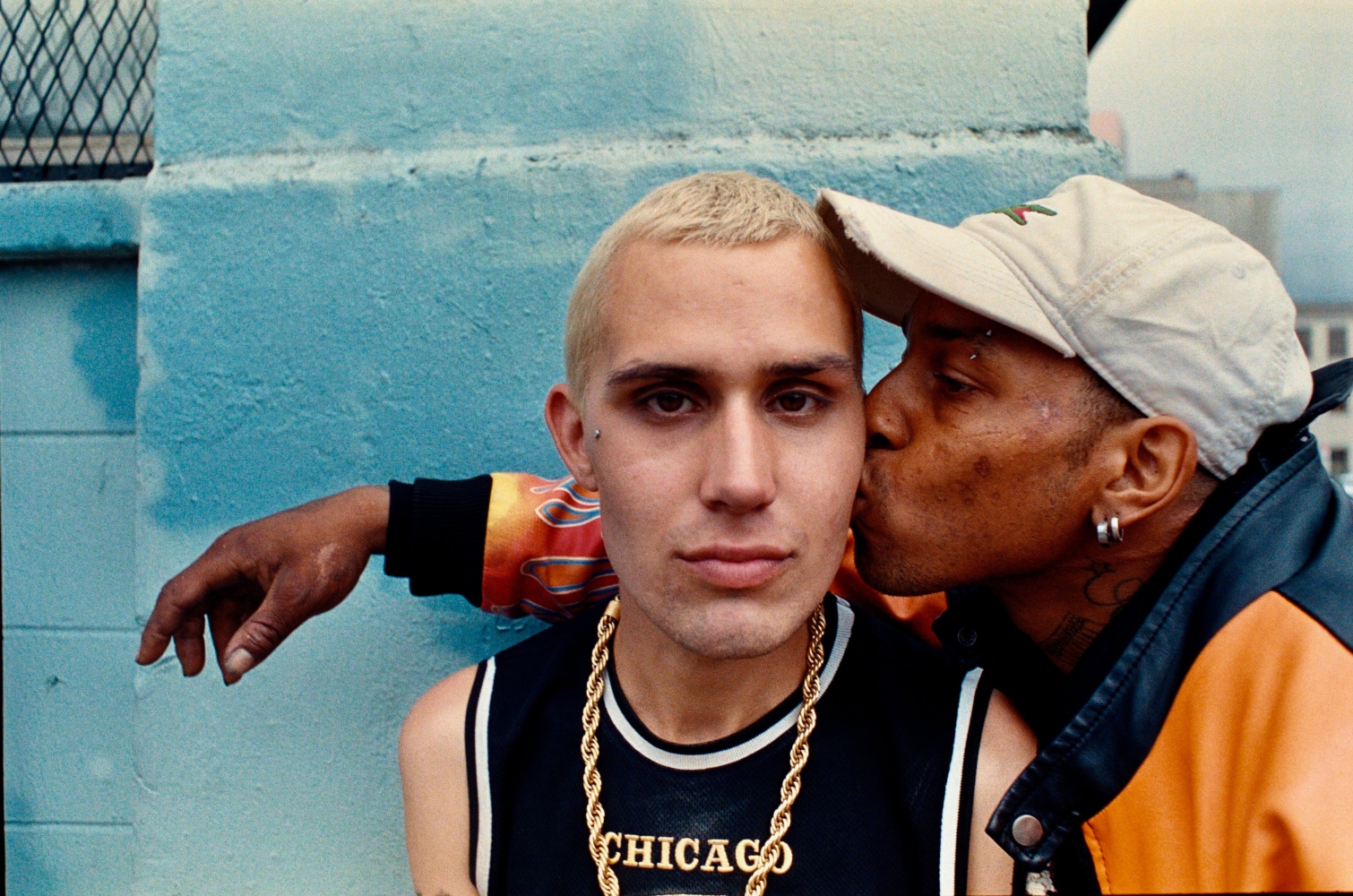
Thomas, 29, is wearing a red sweater, a gift from a street friend, that reads, “I am going to receive everything I desire. All the right people and opportunities flow to me. I have made space for them in my life.” Keith snaps a close-up of the manifestation and Thomas’ Cuban chain that dangles over the text.
In “Outside,” Thomas is pictured kissing his boyfriend on the cheek.
“It was a great day. I felt good. I felt peaceful,” Erick said as he cradled Keith’s book while looking at his portrait. “It’s genuine … unconditional love.”
News Source : https://www.opb.org/article/2026/10/31/keith-zimmerman-portland-oregon-photographer-photo-book/
Other Related News

10/31/2026
No 13 Texas Tech and No 22 Arizona square off today in a battle of 6-1 teams with Big 12 t...

10/31/2026
Michigan looks to get back on track today when the Wolverines visit the Rutgers Scarlet Kn...

10/31/2026
Former NFL quarterback - and NC State star - Philip Rivers was said Friday there is nothin...

10/31/2026
One person has died and at least six others were injured in a shooting Friday night at a S...
10/31/2026
Cassidy Schutz threw her cellphone at the gunman and wrestled with him over his weapon in ...

Follow

Download Our App


Copyright 2022 © EPUERTO. All Rights Reserved