

Published on: 08/23/2026
This news was posted by Oregon Today News


Description

A content warning for readers and listeners: This article and interview recording include discussion of child abuse and separation from parents, as well as familicide and a brief mention of suicide.
Between 1953 and 2019, an estimated 150,000 Korean children were adopted by families in the United States. Another 50,000 were sent to Europe.
What’s harder to calculate is how many of those children were actually orphans, how many were actually surrendered by their parents, how many of their parents understood they’d never be able to see their children again, and how many of the children sent away to other countries did not survive the journey.
Bellingham author Paige Towers told this story in her new book, “What They Stole: A Familicide Rooted in Intercountry Adoption,” detailing how one family settled in Oregon played a key role in this system.
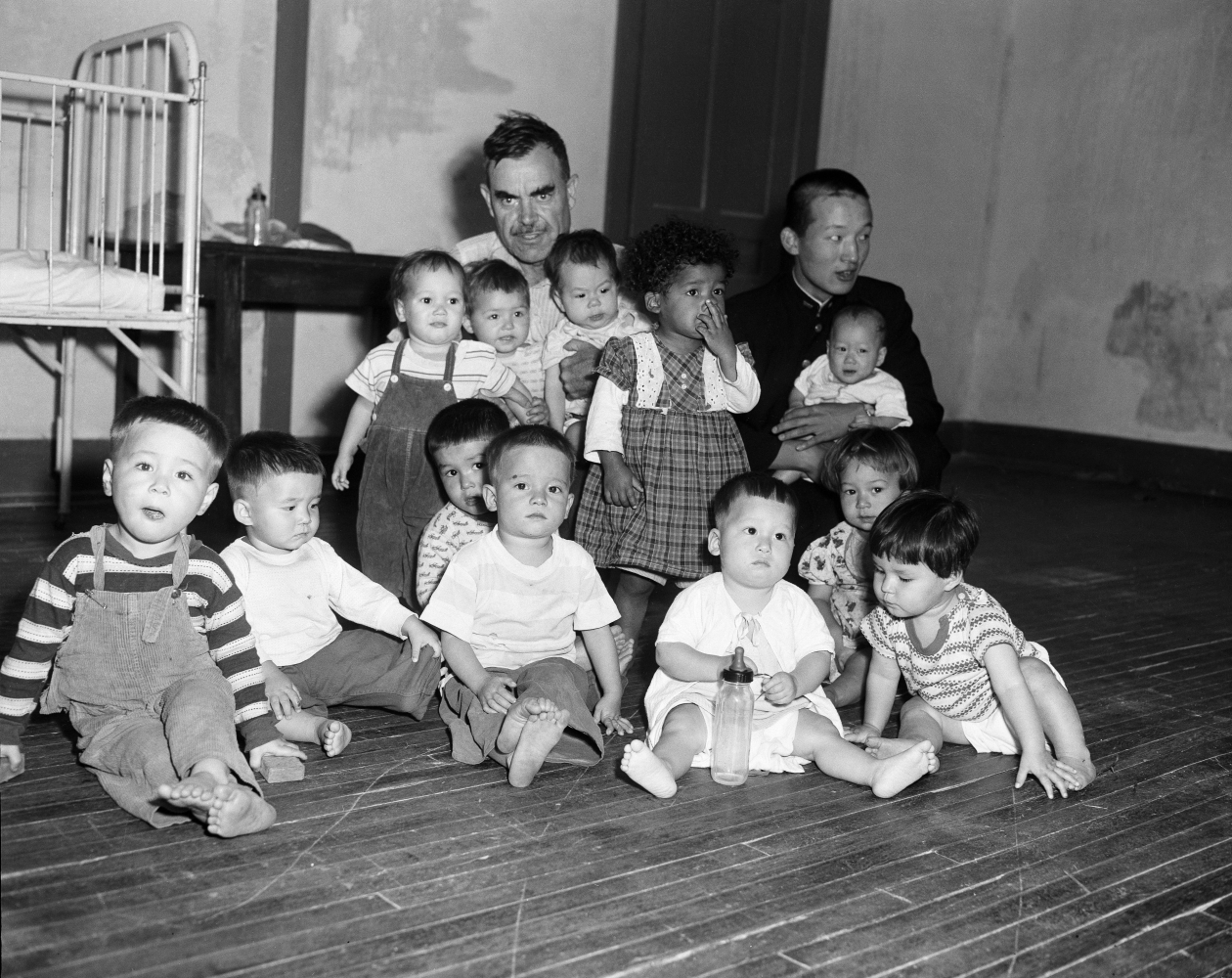
Harry and Bertha Holt, first cousins originally from the Midwest who married, settled their family in Creswell, Oregon, a small city in the Willamette Valley. One day in 1954, the couple and their biological children attended a presentation about sending money to South Korea to support multiracial children — children whose fathers were American GIs who fought in the Korean War.
" The U.S. was starting this Cold War and viewed South Korea to be at deep threat of communism," Towers explained. “And [the U.S. was] embarrassed by the fact that GI soldiers had left behind these groups of children. They viewed [financial support and intercountry adoption] as a very benevolent act on the part of this exceptional country.”
The Holts started by sponsoring children, giving money to an organization called World Vision to support that mission. But before long, Harry Holt felt called to a new mission, a mission supported by his evangelical church: The Holts would adopt eight multiracial children of their own.

This required a special act in Congress to allow eight adoptions — federal law had allowed families to adopted just two children, unless that meant siblings would be separated — and Harry Holt went to South Korean to, in his own words, “collect” eight children.
" They were brought home in 1955 to huge media fanfare. Life magazine, Look magazine, all the national publications covered this," Towers said. “And very quickly, the Holts once again pivoted and decided that they would found their own adoption agency.”
The Holt Adoption Program began accepting applications from born-again Christians looking to adopt multiracial Korean children, and there was no shortage of interest after the widespread media coverage the Holts got.
" The U.S. media was sensationalizing these stories and painting the Holt’s actions as this deeply charitable, heroic act," Towers said.
But those stories ignored the dark realities that played out in Korea and in adoptive homes.
In “What They Stole,” Towers detailed how Korean mothers were coerced to give up their children, how children sometimes were simply kidnapped off the streets, and how children with living relatives were made “paper orphans.”
Some children died on “babylifts” to the U.S., aboard an unpressurized jet the Holts used for years. Other children died while in the Holts’ care in Korea — medical care was deeply lacking in Holt facilities.

" Traditionally, with these Western child centers [in Korea], children were receiving medical care, they were receiving three meals a day. Eventually, hopefully, they would move into a foster family or a domestic adoptive home," Towers said. “But with the Holts, who were deeply anti-science and deeply anti-medicine, the children at their children’s center, per Bertha’s reports, were often dying. Like, there would be two children that died a week. This was because they did not have doctors on staff. They eventually ran out of money, and they fired most of their nurses.”
Still, moved by what they believed to be a mission from God, the Holts continued to take children and attempt to bring them to the U.S. to what they believed to be good Christian homes, even when they were faced with evidence to the contrary.
Towers was first drawn to the Holts story after reading about a 2008 familicide in her hometown of Iowa City.
" Steven Sueppel was a local bank vice president in Iowa City. His wife Sheryl was an elementary school teacher. They were very active in their community. They volunteered. They did fundraising," she said. “Eventually, they adopted four children from Korea through the world’s largest adoption agency, which is Holt International [formerly the Holt Adoption Program].”
(As Towers noted in the book, the Holt agency eventually accepted applications from Catholics, like the Sueppels, “although its founders... originally only allowed born-again Christians to adopt.”)
Towers continued, “Sadly, Steve was facing criminal charges for money laundering and embezzling over $500,000 from his bank employer, and in March 2008, he killed his wife Sheryl and their four adopted children [Ethan, Seth, Mira, and Eleanor] before dying by suicide.”

Towers saw how her hometown scrambled to explain what happened. “Steve must have just snapped,” people reasoned. “It must have just been mental illness.”
" But very quickly, I discovered that this idea that this was just some anomaly was not true," she said. “Unfortunately, Ethan, Seth, Mira, and Eleanor join a large group of children who have been murdered by their adoptive families, including a large group of Korean children who have been murdered by their adopted families. ... But the Holts, as far as I found, there was never any reckoning with that reality. They refused to recognize that they had placed these children without enough investigation first. And that to me is their legacy.”
Katie Campbell is a reporter with KUOW. This story comes to you from the Northwest News Network, a collaboration between public media organizations in Oregon and Washington.
It is part of OPB’s broader effort to ensure that everyone in our region has access to quality journalism that informs, entertains and enriches their lives. To learn more, visit our journalism partnerships page.
News Source : https://www.opb.org/article/2026/08/23/new-book-details-how-an-oregon-family-stole-korean-children-for-decades/
Other Related News

08/23/2026
Haaland shocked friends teammates and fans by cutting off his long blond hair in a viral v...
08/23/2026
Lauren Salkins lawsuit accuses Sheridan Paramount and other studios and producers of copyi...
08/23/2026
April Standafer loves her peaceful life in Corvallis She walks her basset hound She takes ...
08/23/2026
Support Your Local Teams in BruinPanther Rivalry Football Opener Brookings-Harbor High Sch...

08/23/2026
Fromm Family Foods is recalling nearly 6000 cases of two canned dog food varieties after c...

Follow

Download Our App


Copyright 2022 © EPUERTO. All Rights Reserved