

Published on: 08/01/2026
This news was posted by Oregon Today News


Description
Another harvest season for Washington’s venerated vegetable — the Walla Walla sweet onion — is at an end.
Soft and juicy and fragile like a fruit, sweets are as synonymous with the Walla Walla Valley as is wine. And they’re federally protected: Only onions grown in the area can officially be sold as a Walla Walla sweet.
They’re farmed by about a dozen growers in the valley, which straddles southeastern Washington and northeastern Oregon. The flavor enriches menus and recipes throughout, and beyond, the Pacific Northwest. There’s even an amateur Walla Walla baseball team called the Sweets.
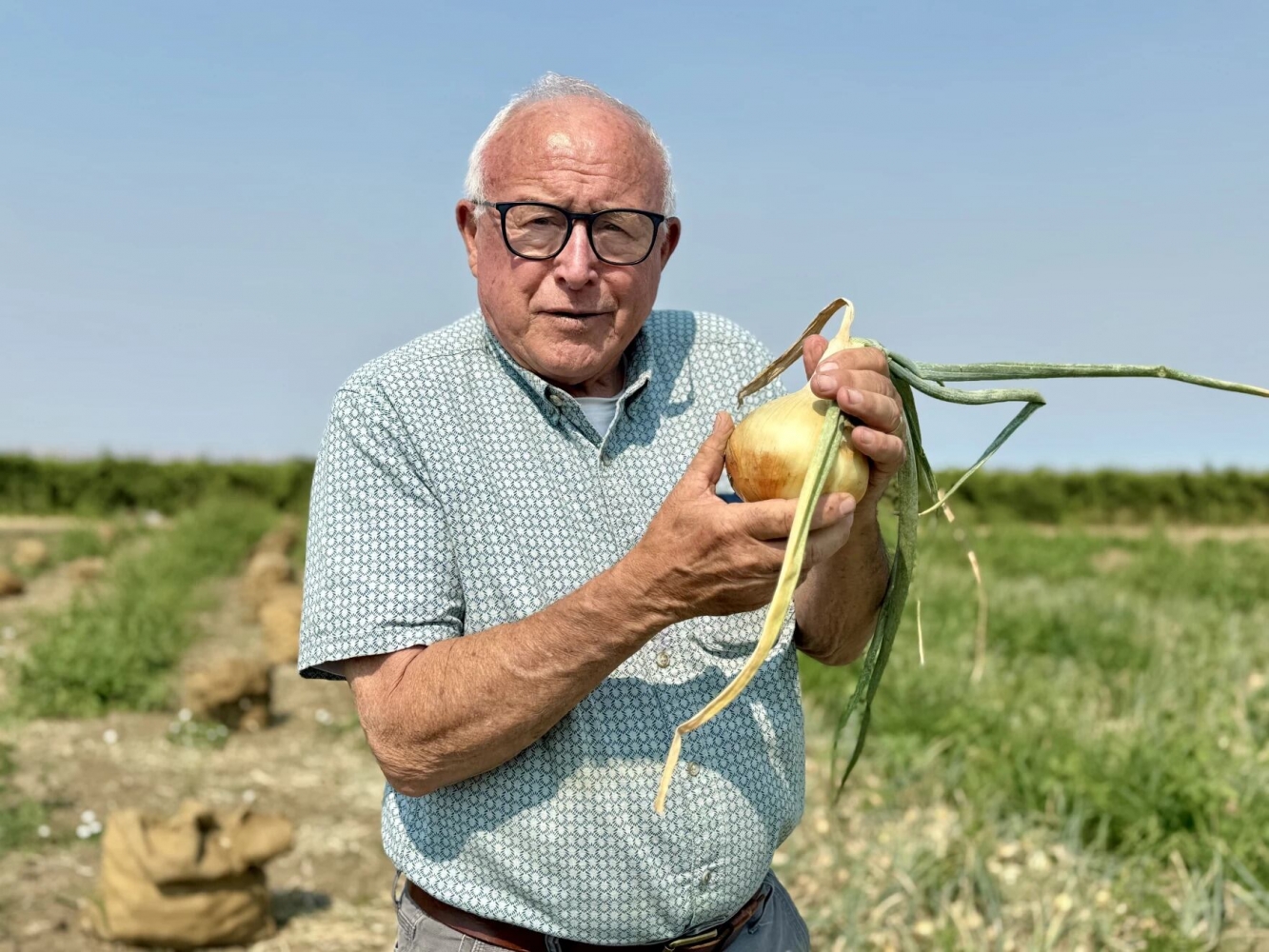
On a Wednesday morning in late July, farmer Tom Williams, 79, drove his Toyota Tacoma out to his seven-acre sweet field in Umatilla County, Oregon.

There, a few workers crouched to pick the transplant onions; these were imported from Arizona as starts and planted in April. In another area, the onions grown from seeds planted in September had all been harvested.
Rows of burlap sacks held freshly gathered onions, which spend a week drying out, toughening up. Then the cured onions are taken in bins to the processing facility at the main farm, across the state line into Washington, where they’re chilled, stored, loaded into cardboard boxes and shipped.
Williams and his brother, Ray Williams, 75, are third-generation farmers who own Williams Organic Farms, a roughly 1,800-acre operation that grows Walla Walla sweet onions, squash, wheat, rye, barley, pinto beans and wine grapes. They started growing the sweets just a few years ago.
This year, they estimate they’ll ship about 100,000 pounds of sweets to destinations that include Spokane, Seattle, Portland, Los Angeles and British Columbia.
“The most fun thing is when you plant a crop, and it actually grows, and you harvest it — it’s almost a surprise to me when that happens,” Tom said with a laugh. He added: “Nature’s pretty cool.”

The Williams’ workers began harvesting the last week of June. It usually takes them about five weeks.
Pepé Carrillo, who oversees the farm’s onions and other crops, said he’d recently started showing up around 5 a.m. — for a while, it was 4 a.m. — to finish the field work while the temperature was still forgiving.
Carrillo was watering the soil where the fall-planted onions had been.
His goal: to germinate the weed seeds that are left behind — weeds grow up with the onions — so they can be removed. That way, his crew will have fewer to pull later. The process obviates the need for chemicals. In a couple of weeks, the crew will plant a cover crop, most likely oats or barley, to keep the soil fertile and further suppress the weeds.
Next year, the field will support a different crop; the onions will be rotated elsewhere.
Tom said, “This is a fundamental organic maxim: You can’t beat nature, so don’t fight nature; you have to live with nature — that’s it.”
Erick Bengel is a reporter with Northwest Public Broadcasting. This story comes to you from the Northwest News Network, a collaboration between public media organizations in Oregon and Washington.
It is part of OPB’s broader effort to ensure that everyone in our region has access to quality journalism that informs, entertains and enriches their lives. To learn more, visit our journalism partnerships page.
News Source : https://www.opb.org/article/2026/08/01/walla-walla-valley-sweet-onions/
Other Related News

08/01/2026
The declaration includes a statewide prohibition on most outdoor and agricultural burning ...
08/01/2026
State Sen David Brock Smith joined the call for FEMA to reverse its denial of assistance g...
08/01/2026
PORTLAND Ore KOIN With a potentially dangerous weekend ahead of us it could mean more fue...
08/01/2026
As a rare Particularly Dangerous Situation Red Flag Warning begins Saturday from 1100 am t...
08/01/2026
A high-pressure ridge is holding heat close to the ground from Arizona to Montana

Follow

Download Our App


Copyright 2022 © EPUERTO. All Rights Reserved