

Published on: 08/19/2026
This news was posted by Oregon Today News


Description

Psilocybin may be within a year or two of becoming the first psychedelic approved by the federal government to treat depression, with multiple clinical trials underway.
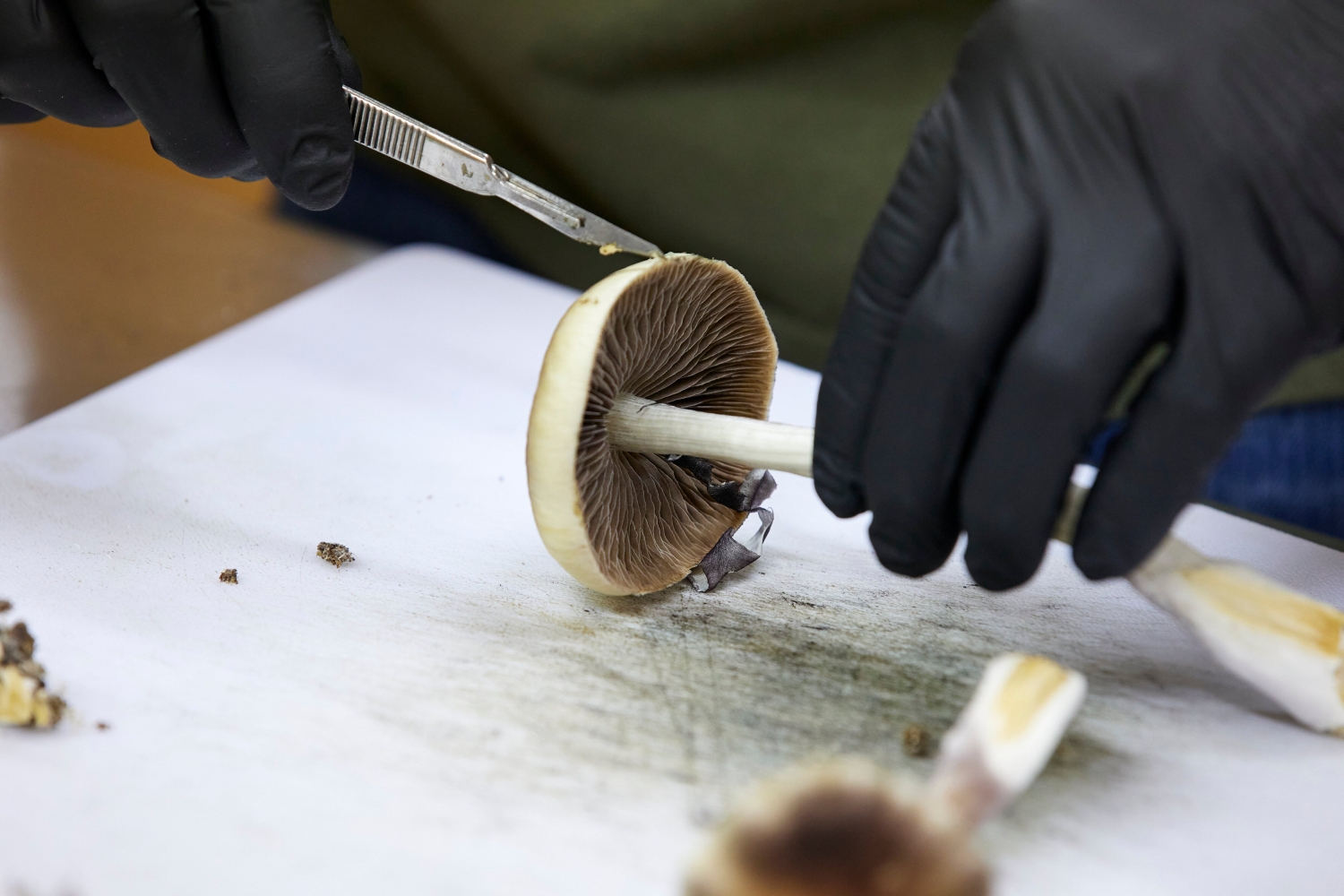
Meanwhile, advocates for psychedelics in Oregon launched their own grassroots experiment. Oregon voters passed Measure 109 in 2020, legalizing the use of magic mushrooms at therapeutic service centers, which opened three years later.
This week, OHSU Professor of Medicine Todd Korthuis and colleagues published the most rigorous evaluation of that program to date.
They recruited about 350 volunteers from more than 20 different service centers statewide, and collected data from them before their first psilocybin session and for three months afterward. More than 90% of their participants completed the full three-month evaluation period.
The study has its limitations — there was no control group, and the participants were on the whole healthier and wealthier than the average Oregonian. But it’s a relatively strong sample of the experiences of the 20,000 Oregonians who have tried legal psilocybin so far, a number that dwarfs the several thousand who have participated in U.S. clinical trials.
The study found serious, negative mental health impacts for just four people, or about 1%of the group. And a majority of the subjects reported fewer symptoms of anxiety and depression after taking psilocybin, and more than half ranked the experience as among the most meaningful of their lives.
OPB health reporter Amelia Templeton spoke with Korthuis, the lead researcher in the study, about what he learned and what’s next.
This interview has been edited for clarity and concision.
Templeton: Clearly a lot of effort went into thinking about the study and designing it. Why did you want to do this?
Korthuis: It grew out of the need we saw when Measure 109 passed. There was really no provision for evaluating the safety and outcomes of a completely innovative state-regulated program.
And so a group of us got together across the community and formed the Open Psychedelic Evaluation Axis, or OPEN, that’s housed at OHSU.
Templeton: I’m wondering how you compare what you saw in this quantitative data with other types of therapy?
Korthuis: The most important comparison that we were interested in is assessing safety in the state-regulated programs, compared with other psychedelic clinical trials that have been conducted.
The people that enrolled in Oregon’s psilocybin services, on average, tended to be a little healthier and not have as severe of mental health challenges as many of the people in the clinical trials. But, reassuringly, they also experienced very few serious adverse reactions.
Many people thought that because it was a less controlled environment than the clinical trials, there would be more adverse events, and we simply haven’t seen that.
Templeton: That is really interesting. At the risk of sounding flip, like, it turns out that Oregonian hippies who are deeply committed to this work are just as good as a bunch of university scientists at guiding you through this experience?
Korthuis: Over 70% of the facilitators enrolled in our study had at least a master’s degree, typically in a mental health field. So I would argue that many of the facilitators in Oregon, and I would say Colorado, aren’t that far off really from the therapists that were conducting clinical trials.
I think another sort of question that might have been embedded in your question: this wasn’t a strictly therapeutic setting, and that’s a really crucial point. The state-regulated models, at least as they’re playing out in Oregon and Colorado, are really not a medical model. They are a wellness model. People can come for any reason, all the way from, ‘I need help with my existential struggles around death’ to ‘I want to have a fun experience with my friends.’
These are entirely outside of the healthcare system. So it really is a very different way of accessing a novel intervention.
Templeton: I want to ask you about the adverse outcomes that you saw. I had two different personal reactions to this. I saw the 1%, and I thought, that’s pretty small. And then I read the table that goes into detail about each of those four adverse reactions. That left me with a different set of takeaways.
Some of the reactions seem like they were pretty high impact — negative in ways that were potentially lasting.
Korthuis: That’s a very important distinction. On the one hand, there were very few of what we labeled as serious adverse reactions. On the other hand, they were quite serious and ranged from, in one person, an event that happened and was limited to the day of and the next day, to people who were still experiencing adverse effects at three months.
There were some themes. First of all, all four individuals had never been exposed to psychedelics previously and received relatively high doses. Second, all four had pre-existing serious mental health challenges that they had previously sought treatment for that had not worked.
So they were coming in with a baseline higher level of acuity than the average person coming into psilocybin services. It begs the question of maybe there are alternative pathways and ways to triage folks that we still need to sort out. We need to be better, as a community, at figuring out who is at increased risk for serious complications and who’s not.

Templeton: It reminds me a little bit of cannabis. Do we have any other clues from other work that’s been done so far about who we might want to triage more carefully?
Korthuis: This was one of the reasons we set up OPEN to begin with — to answer that question. That is one of the things we’ll definitely be able to look at as time goes on. One thing we know is that a few individuals with specific conditions should not be taking psilocybin.
Those are people on certain medications like lithium, people who are actively suicidal, people with active psychosis. And I would add pregnant people.
Templeton: Can you tell me just a little bit more about what jumps out to you about what most people reported, which was having a positive psychological experience?
Korthuis: Sure. I’ll just frame this as, these were not people with diagnosed treatment-resistant depression [the group that’s been the focus of clinical trials of psilocybin.]
Among all comers, they experienced decreases in depression and anxiety and PTSD symptoms of about 70%, and improvements in mental wellbeing overall and life satisfaction — about 25%.
The other thing that was interesting to me is: People came for all sorts of reasons. Our leading reasons that people endorsed were curiosity and a general sense of trying to improve oneself, followed by self-management of mental health symptoms and past trauma.
Even though they came for all of these different reasons, though, there were across-the-board decreases in anxiety, depression and PTSD symptoms.
Templeton: The point I’m hearing you make is: These are not numbers that we should use to assert that this is an effective therapy for depression, or anxiety for people who are seeking out therapy for that specific purpose. But they do support the idea that there may be a broad benefit to people’s sense of wellbeing and mental health if and when they choose to seek it out.
Korthuis: I think that’s a perfect interpretation.
News Source : https://www.opb.org/article/2026/08/19/psilocybin-oregon-use-ohsu-study-results/
Other Related News

08/19/2026
For shoppers who love flowers and plants to adorn their homes Trader Joes may already be a...
08/19/2026
A Portland jury Wednesday awarded 550000 to two teenage girls for their 25 terrifying minu...
08/19/2026
CORVALLIS Among Oregon States 11 true freshmen on scholarship cornerback Kai Wheaton is s...
08/19/2026
JEFFERSON CITY Mo A Missouri judge has allowed new US House districts backed by President...
08/19/2026
Forged in Fire returns with Season 11 Episode 8 tonight Wednesday August 19 at 1030 pm on ...

Follow

Download Our App


Copyright 2022 © EPUERTO. All Rights Reserved