

Published on: 08/18/2026
This news was posted by Oregon Today News


Description

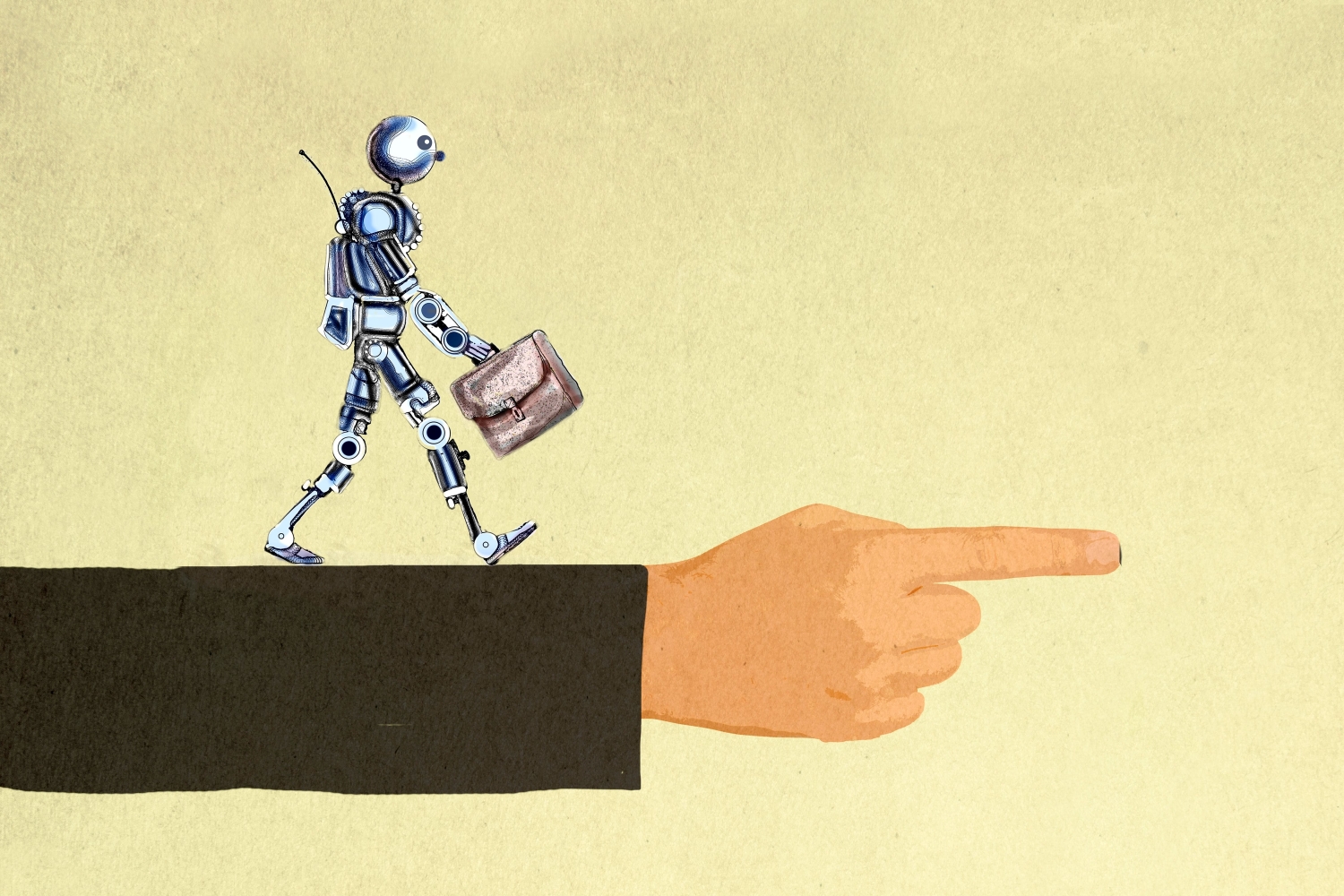
Irene Chang, 21, studied engineering in college because she enjoys solving problems. She also wanted to major in something she thought would lead to a stable career.
“I wanted to work a job right after college,” she says.
But that has been a challenge. Chang graduated in May from Georgia Tech with a bachelor’s degree in industrial and systems engineering. She says she started applying for entry-level data analyst roles about a year ago, while she was still in school. Chang estimates she has submitted around 450 applications since last September and has had about 19 interviews — so far she hasn’t gotten any offers.
Jacqueline Kline, 25, is in the same boat. She graduated this past spring from Florida State University with a master’s degree in communications.
Kline says she did everything she could to land a job after college. She networked, completed multiple internships and started applying for jobs before she even finished her degree.
So far, she says, she has applied to more than 500 entry-level jobs since last December.
“It’s hard knowing that I’m doing everything that I can to be successful and feeling like that’s not enough,” Kline says.
Both Kline and Chang say they think AI may be part of the reason that finding a job in their respective fields has been such a challenge.
“I feel like the entry-level skills that you have, they’re important, but also something that AI can do very efficiently,” Chang says.
According to the Federal Reserve Bank of New York, the unemployment rate for recent graduates — which it defines as 22-to-27-year-olds with a new bachelor’s degree or higher — was 5.7% as of June, more than the rate for all workers, which stands at 4.1%.
Many of those recent graduates think AI is to blame for their employment struggles. This year, in a survey from ZipRecruiter, 47% of them said AI had already affected hiring in their field.
But is AI really the problem, or is it more complicated? Here’s what economists have to say.
How AI may be impacting the entry-level job market
Stanford University economist Erik Brynjolfsson says AI is impacting the labor market for entry-level roles.
“AI is not the whole story, but it’s part of the story and the evidence is building,” he says.
Using payroll data, Brynjolfsson and his co-authors found that since late 2022 — when large language models like ChatGPT started popping up — early-career workers ages 22 to 25 in AI-exposed roles, like software developers and marketing managers, have experienced a 16% relative employment decline.
In comparison, employment rates for older workers in AI-exposed fields and for all workers in jobs that aren’t easily automated — like home health aides, physical therapists and construction workers — remained stable or have grown over that same time period.
Brynjolfsson says there are two reasons young workers in AI-exposed fields may be feeling the job crunch more than others. First, because young workers typically bear the brunt of economic contractions — when companies choose to shed employees or pull back on hiring — junior roles often get cut first.
Second, Brynjolfsson says, large language models are trained on codified knowledge — information that has been written down in a textbook or document. “That has a lot of overlap with entry-level people,” he says, because it’s the same type of knowledge that inexperienced college graduates rely on when they’re getting started in the workforce.
But AI models lack the wisdom that comes with on-the-job experience or tacit knowledge that isn’t written down.
“So for more senior workers, their kind of knowledge is not as affected,” Brynjolfsson says, adding that they don’t need to compete with AI as much.
Or is remote work to blame?
Harvard University economist David Deming isn’t convinced that AI is to blame for the challenging early-career job market.
“If you look very carefully at the timing, it looks like the decline in junior hiring actually started a bit like six months before ChatGPT was released. And so what that tells me is it’s something else,” Deming says. “I think it’s more like remote work.”
A recent analysis from the New York Fed found that companies are less likely to hire recent college grads into roles that can be done remotely. As remote jobs increased following the COVID-19 pandemic, so did unemployment among younger college grads, the New York Fed found.
The analysis also found that AI didn’t explain the rise in unemployment among younger workers and that remote work was more of a driving force.
Deming says hiring an entry-level worker requires companies to invest time and resources to get them up to speed. Employers hiring for remote jobs may be less likely to choose an entry-level candidate because it’s harder to train them from afar.
“And so the value proposition of hiring a junior person when you know they’re going to be at home is just not as great,” Deming says. “And conversely, the value proposition of hiring a more senior person is greater, and because of remote work, you have access to a broader pool of talent from around the country.”
And here’s another thing to consider: University of Chicago economist Anders Humlum says if AI were replacing entry-level jobs, you’d expect to see companies that rely heavily on AI to hire fewer workers. But that’s not what the data shows.
Humlum points to a study done by the financial accounting firm Ramp and the workforce research company Revelio Labs. The study examined AI spending and employee head count across more than 21,000 U.S. firms, from early 2021 to early 2026. It found that at companies making the largest AI investments, entry-level head count grew by 12% over the two years following AI adoption.
“If we look at the heavy users of these tools, the firms that are paying a lot of money to Anthropic and OpenAI to subscribe to their models, they are hiring more than anyone else,” Humlum says.
Change is coming
While they disagree on how much AI is impacting the job market right now, all three economists interviewed by NPR do agree that there’s a major employment shift underway.
They’re among the economists, tech executives and researchers who signed an open letter last month warning that AI could bring about an economic transformation larger than the Industrial Revolution and potentially cause widespread job displacement.
Even so, they’re optimistic.
“This is a really tough time for a lot of the conventional jobs,” Brynjolfsson says.
“I also think it’s one of the most amazing times to be alive, where these technologies allow people to do things they never could have before.”
Humlum says most of the university students he talks to “just have the perception that they are being screwed over by the new technology.” But he says that’s “a very premature conclusion.” He thinks AI is poised to help workers more than it will hurt them.
Deming agrees. “I think on net, [AI] will be a force for good,” he says.
And he does expect AI to affect employment in the future, even if he thinks it isn’t happening yet.
“But it’ll take some time and it’s going to be very bumpy and messy, and, you know, buckle up.”
His advice for recent grads like Kline and Chang: “Hang in there.”
News Source : https://www.opb.org/article/2026/08/18/recent-college-grads-say-ai-is-making-it-harder-to-get-a-job-is-it/
Other Related News

08/18/2026
The dividend is the largest in State Farm Mutual Automobile Insurance Companys more than 1...
08/18/2026
McDonalds describes the toys as the ultimate crossover where Kawaii meets Kaiju bringing t...
08/18/2026
Last season may have been proof that money cant buy a championship but it sure does help
08/18/2026
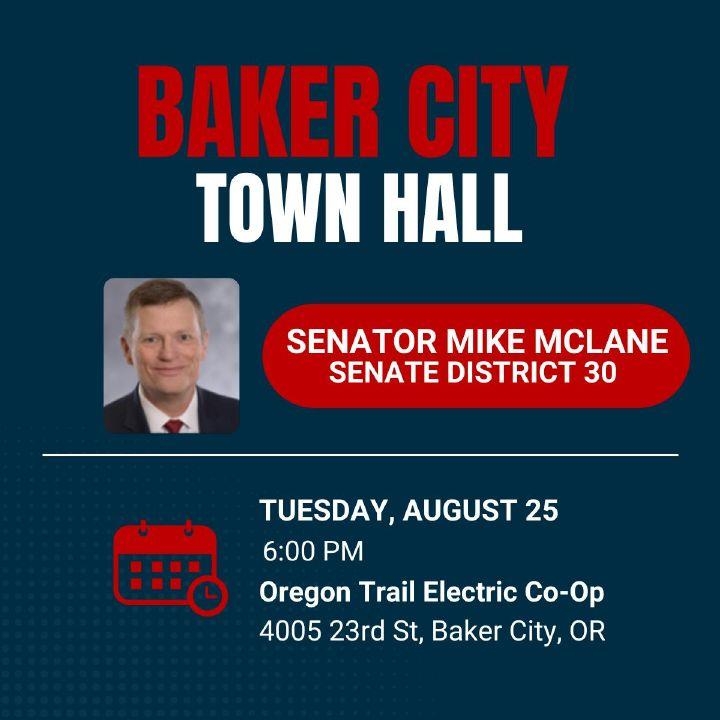
Oregon State Sen Mike McLane whose district includes Baker County is planning a town hall ...
08/18/2026
Allen Rex Roberts was charged in 2021 in Multnomah County with driving a stolen vehicle He...

Follow

Download Our App


Copyright 2022 © EPUERTO. All Rights Reserved