

Published on: 10/19/2026
This news was posted by Oregon Today News


Description

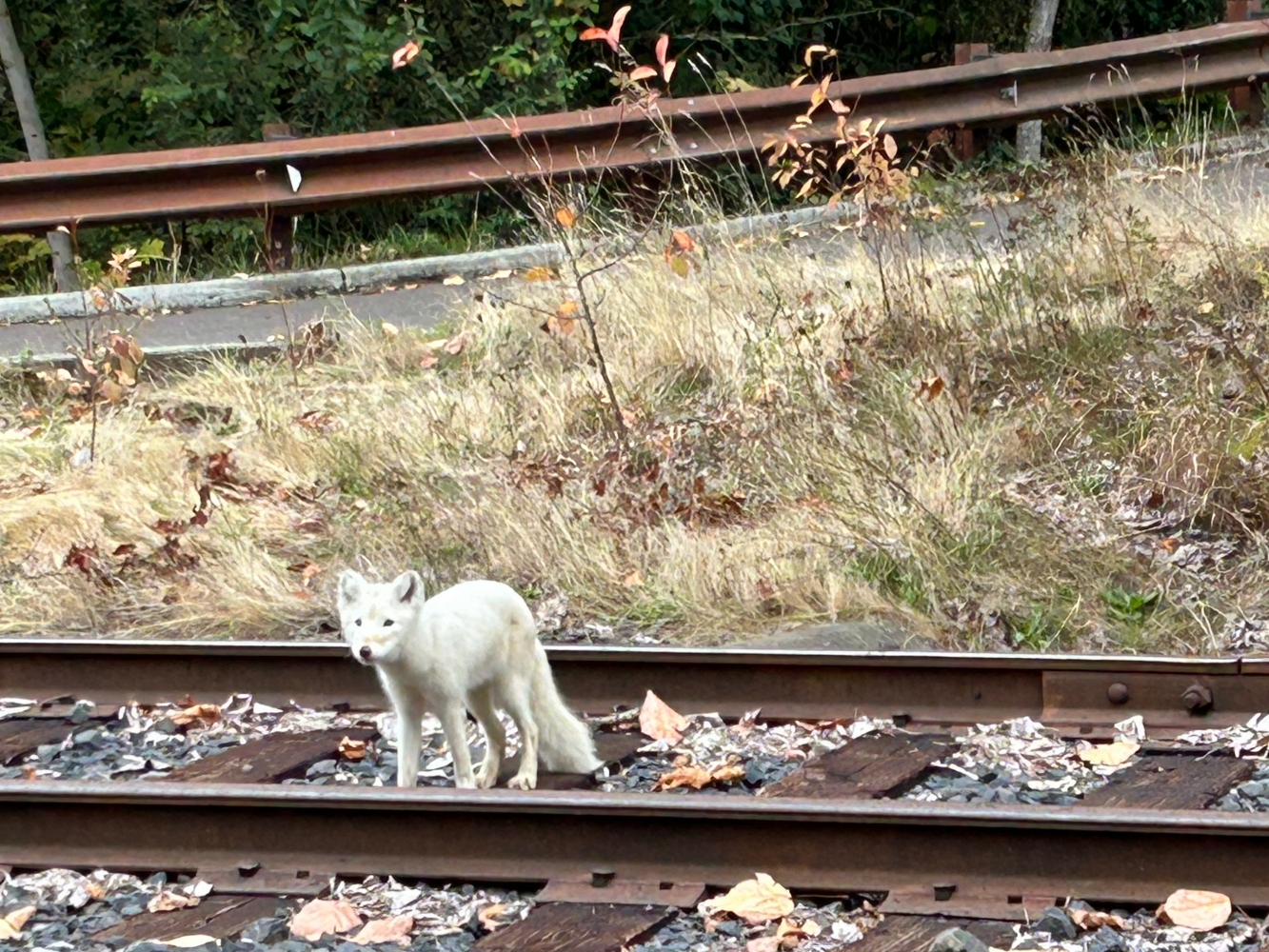
A young arctic fox found wandering Portland two years ago, alone and far from her natural territory, is capturing hearts in the Midwest.
With her fuzzy ears, round dark eyes and fluffy white coat, the little fox made headlines in Portland in October of 2024. That’s when several people — including an OPB employee — spotted her wandering near Willamette Park.
A few days after the initial sightings, she was captured and taken to the Bird Alliance of Oregon, where she received care for hunger and dehydration. Wildlife officials there confirmed she was a juvenile arctic fox and said she was likely raised in captivity as a pet.
Luna couldn’t be released into the wild because she lacks survival skills and is unafraid of humans, so the Bird Alliance of Oregon and the Oregon Department of Agriculture worked together to find her a new home. The Ochsner Park Zoo in Baraboo, Wisconsin, agreed to take her and house her with its resident male arctic fox, Apollo.


This week, almost exactly two years after captivating Portlanders, the Bird Alliance of Oregon shared an update on Facebook about how the fox — now officially named Luna — is faring.
New friends
Apollo isn’t Luna’s only furry companion at the zoo: She also shares an enclosure with two black bears — an adult named Taglu and a cub named Aspen. She was scared of Apollo and Taglu at first, but now Luna often instigates play and nips Taglu to get him to chase her, Katie Gries, manager of the Ochsner Park Zoo, told OPB.
When asked about the practicalities of 15-pound foxes living with black bears, one of which weighs 400 pounds, Gries said it comes down to slow introductions and careful management of the three things they would compete over in the wild: food, water and shelter.
“They’ve got ample amounts,” she said. “We separate everybody for their high-priority items so that they don’t have a reason to fight, and then we scatter-feed everything else.” Gries added that foxes like to “cache,” or hide, their food, with the intention of coming back later to eat it. “Well, black bears have just as good of a sniffer as them, so they often go around and find their food, so they’re helping us enrich and diversify our black bears’ day.”

The enclosure also has plenty of stimulating activities, like puzzles, and places for each species to seek alone time from the other. Gries said Luna sometimes nips the bears on the butt to play and, when the bears have had enough, they simply climb to an elevated perch where they’re out of reach.
Luna’s youthful goading is also sometimes directed at 7-year-old Apollo.
“Originally, Apollo was thrilled to have a new friend to play with that was his size,” said Gries, explaining that Luna was wary and kept her distance at first. “Fast-forward to nowadays, the morning starts with her pulling Apollo by the tail, trying to get him to play, and he’s screaming at her. And that’s typical in our morning routine.”
When she’s not pulling his tail, the two are often found chasing each other, playing and sleeping together. Gries said Apollo is neutered, so there will be no baby foxes, which are known as kits, in the future.
“We have no reason to breed; it’d be irresponsible for us to do so,” Gries said. “A lot of our animals are rescuer rehabs here.”
Clever fox
Gries said Luna keeps staff on their toes.
During training sessions in the keeper area, a task that helps prepare the foxes for vet procedures, Luna demonstrates her talent for disappearing. Gries said if she turns her back for a second, Luna will have silently shot to a different area to climb on top of equipment.
“We’ve had to change how we store things because she likes to steal things from the keeper area and chew on them,” Gries said.


Luna is also a fan favorite among zoo visitors.
“She likes to sit out in the front of her enclosure, attracting a lot of attention,” wrote the Bird Alliance.
Luna is a fully sponsored animal at the Ochsner Park Zoo, which means members of the public or businesses cover her care costs. Each sponsorship lasts a year, and sponsors get an “animal encounter,” Gries said. “Luna and Apollo’s encounters with their sponsorship was they made paintings for them that they got to then take home.”
Exotic pets

Arctic foxes are illegal to own as pets in Oregon. They are a non-native fox species and are classified as regulated exotic animals alongside mammals like elephants, rhinos and big cats.
There are a few exceptions — licensed educational and scientific institutions (like zoos or accredited research facilities) and wildlife rehabilitation centers can legally keep non-native foxes. Private owners with permits issued by the state before January 2010 can legally keep a non-native fox for as long as it lives.
Certain native foxes, including red and gray foxes, can be legally raised in captivity by licensed commercial fur farms, but they can’t be sold as pets. These kinds of businesses are regulated by the Oregon Department of Agriculture.
The fur industry has shrunk dramatically over the last couple of decades amid pressure from animal rights groups and declining pelt prices. Attempts to pass statewide restrictions — such as House Bill 2676, which sought to ban the sale and distribution of new fur products — have not been successful.
Oregon has a list dozens of entries long of exotic species that can be legally kept as pets. A few examples include giraffes, hippos, non-native seals and sea lions, kangaroos, wallabies, sugar gliders, sloths, anteaters and manatees.
Other Related News

10/19/2026
BAKER CITY 1130 am to 1230 pm at Baker County Senior Center 2810 Cedar St Menu Thursday Oc...

10/19/2026
A viral video from a Portland Oregon high school football game shows a Jefferson player hi...

10/19/2026
Congratulations to Sandys Gracyn Fitch for being voted The OregonianOregonLives Oregon Hig...


10/19/2026
Congratulations to Tillamooks Canon Affolter for being voted The OregonianOregonLives Oreg...

Follow

Download Our App


Copyright 2022 © EPUERTO. All Rights Reserved