

Published on: 03/05/2026
This news was posted by Oregon Today News


Description

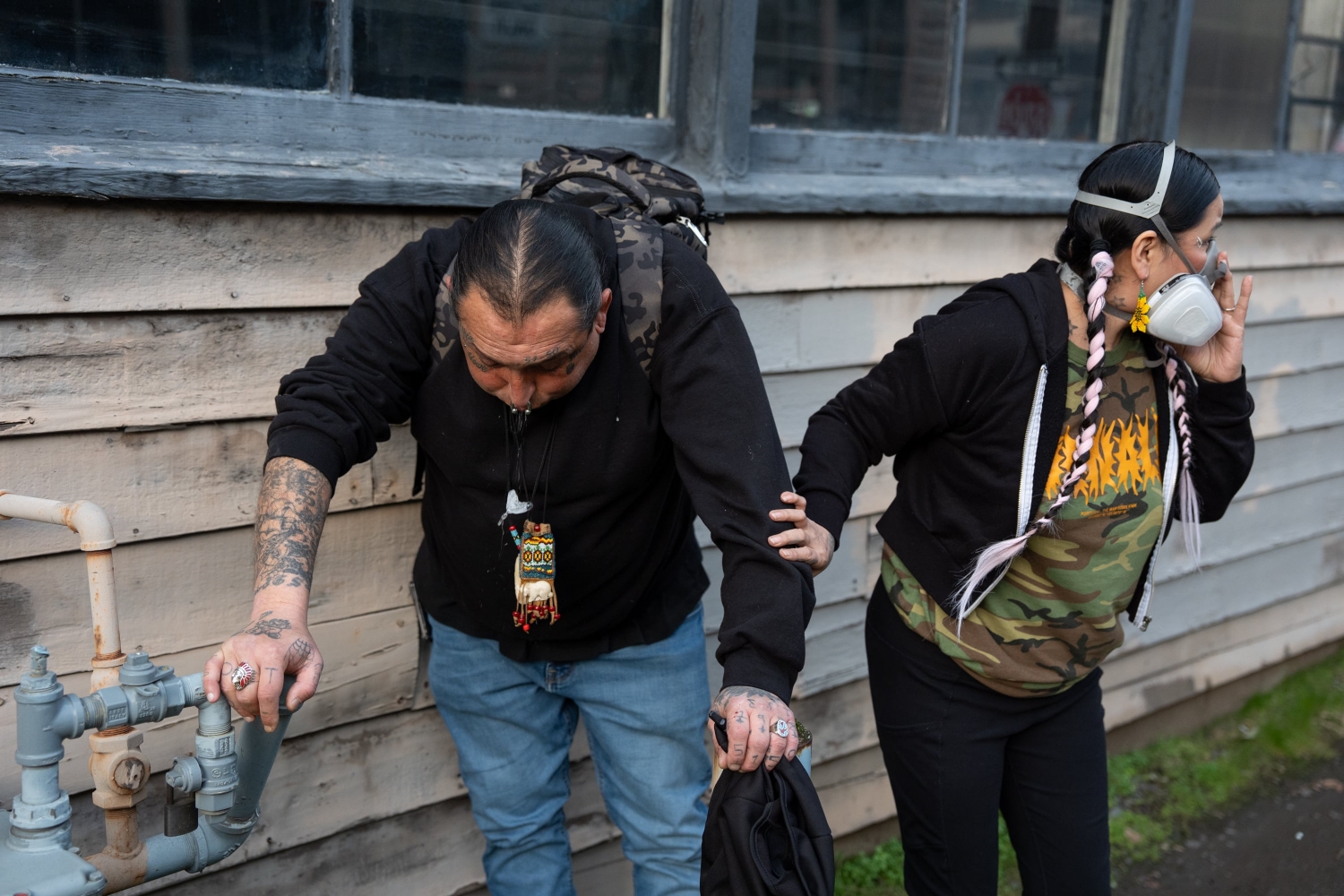
A federal judge appears poised to continue blocking federal officers from using tear gas and chemical munitions on protesters. That’s after days of testimony that revealed a lack of legal guidance and training for the agents tasked with protecting the Immigration and Customs Enforcement building in Portland.
The three-day hearing concluded Wednesday afternoon, with U.S. District Court Judge Michael Simon saying he expected to issue a ruling by Monday.
“I’m not being subtle about where I am leaning,” Simon, who was openly skeptical about instances where federal officers used chemical munitions, said Wednesday. “But I want to be fair.”
Last month, Simon temporarily limited Department of Homeland Security officers from using chemical munitions at the Portland facility unless there was an imminent threat of physical harm.
He let that temporary restraining order expire while he mulled whether to grant a longer-term prohibition on crowd control weapons, but Simon also made clear the spirit of the restraining order remained alive in the coming days.
“It would be very unwise in the future of this litigation to do something in the next four days they haven’t needed to do in the last 28 days,” Simon said of Homeland Security.
The core issue of the case is the treatment of people demonstrating at the ICE building, which has been a rallying place for opposition to President Donald Trump’s immigration enforcement policies.

The ACLU of Oregon initially filed its case on behalf of protesters late last year, but it took on new urgency in January after federal officers at the Portland ICE building increased the use of pepper balls, tear gas and other crowd control weapons during demonstrations.
Several protesters, including a 27-year-old man dressed up in a chicken suit and an 84-year-old woman participating in a march, testified this week that they were hit with munitions while protesting nonviolently or engaged in what they described as passive resistance.
“Watching our government unleash violence in our neighborhoods and our cities impacts all of us,” ACLU of Oregon’s Legal Director Kelly Simon said Wednesday after the hearing concluded. “Pain and fear are the point. It makes us all afraid to speak up.”
Perhaps the most condemning portions of the hearing came from depositions of the federal officers themselves.
In sworn interviews played in court, at least eight Department of Homeland Security officers expressed confusion about several key elements at issue in the case, including actions protected under the First Amendment, what constitutes passive resistance, proper crowd control tactics and their agency’s own use of force policies.
Attorneys for the protesters alleged that no officers had been disciplined or provided corrective guidance after violating policy with their use of less-lethal force as part of “Operation Skip Jack,” the government’s name for the mission to guard the Portland ICE building. Attorneys for the Justice Department did not dispute this in court.
A spokesperson for DHS said in a statement to OPB late Wednesday that the agency is “authorized to do what is appropriate and necessary in each situation to diffuse violence against our officers in the most appropriate manner possible.”
The agency shifted any blame away from its officers and said it lies with the “rioters” and local law enforcement.
“The fact that this particular location is experiencing this behavior more frequently than most others, is not remotely ICE’s fault,” the spokesperson wrote.
Throughout the hearing, attorneys for the Justice Department said protesters who were hit with munitions didn’t always see what was happening around them or what officers might have been responding to when they used force.
They said attorneys for the protesters focused too heavily on days in which officers used chemical munitions and ignored the many days when they didn’t.
Brad Rosenberg, special counsel with the U.S. Department of Justice, said the protesters haven’t met their legal burden to show that “DHS maintains a policy or customs of responding to protest activity with unconstitutional retaliation.”

Federal officers deposed
The hearing featured several depositions of DHS officers, recorded by attorneys working with the ACLU. The officers were identified only by their initials and with their faces blurred.
In one tape, an attorney asked an officer identified as T.R. about firing munitions during a protest on Jan. 19: “Were you aiming at a particular protester or were you aiming at the crowd itself?”
“In the crowd itself,” T.R. said.
Another officer, K.K., said he recognized himself in a video from the same Jan. 19 protest.
“You sprayed people engaged in passive resistance,” an attorney for the ACLU asked him, “even though the Federal Protective Service has a public order policing policy that says not to use pepper spray on people engaged in passive resistance, right?”
“Yes,” officer K.K. replied.
“Do you believe your actions were consistent with that policy?” she asked. After a pause she added: “You can answer.”
“I wish not to,” K.K. said.
Officers also discussed their training in the depositions. One, identified as M.B., said he was put through an hour-long class on use of force and “what to expect on the line regarding Portland, the civil unrest and the proper ways to react.”
When asked if the course covered what types of activities he might encounter during civil unrest, what to do in response to civil unrest or what the definition is of civil unrest, M.B. said he could not remember.
During another exchange played in court, an officer identified as H.M. was asked about using force.
“Is there anything that you can recall from your training that addresses whether the use of a pepper ball launcher against a passively resistant protestor is an appropriate use of force?” asked an attorney working with the ACLU of Oregon.
“I don’t know,” H.M. replied.
“Can you recall in general the type of training you received with respect to First Amendment rights of protestors?” the attorney asked.
“No,” officer H.M. said.
Later during H.M.’s deposition, the attorney asked about constitutional rights during protests.
“Are they free if they’re off federal property to burn an American flag? Is that protected under the First Amendment in your view?”
“That I don’t know,” officer H.M. said. “Things have changed, so I’m not a hundred percent sure.”
Protesters describe fear of future protests
Several protesters testified this week in court that they were still recovering physically and emotionally from the federal use of force they encountered outside the ICE building.
Heather Hellman, a pastor at Multnomah Presbyterian Church, testified about attending a protest in January. Hellman said she walked up to the edge of federal property to stand between federal officers and protesters, holding a sign that read “Jesus said what you do to them you do to me.”
“If they were going to gas they were going to have to tear gas the pastor first,” Hellman testified. “And they did.”
Laurie Eckman, 84, testified that her last time protesting prior to this year was against the Vietnam War. On Oct. 4, she was hit with a pepper ball in broad daylight while holding a sign outside the Portland ICE building. The incident left her covered in blood, requiring a trip to the emergency room.
Eckman testified that she later developed pneumonia after breathing in the pepper ball particles. Since then, she has to start every day by breathing from an oxygen tank.
“I’m really concerned if this becomes normalized,” Eckman said. “If people think they’re going to be labeled a domestic terrorist for standing up for their First Amendment rights, I think that’s a huge step away from democracy.”
Her spouse, Richard Eckman, also testified about the Jan. 31 demonstration that was advertised as family-friendly. The couple attended with members of their church. The Eckmans live in Portland’s South Waterfront neighborhood, blocks from the ICE facility, but had no intention of going near the building again. Eckman, who uses a walker, said he was more than a block away when the federal government shot tear gas into the crowd, hitting thousands.
“We shouldn’t be afraid of going somewhere and have a government agency terrify us,” Eckman said.
Both Laurie and Richard Eckman testified that they have no interest in attending future protests.
Teressa Barsotti also attended the Jan. 31 demonstration against ICE with her daughter. Barsotti, too, testified that the experience turned them off from future protests near the building.
“She’s 13 years old and just got teargassed by her government,” Barsotti said.
News Source : https://www.opb.org/article/2026/03/05/judge-expresses-skepticism-toward-federal-force-at-ice-building/
Other Related News

03/05/2026
Katie Fiso scored 20 points Ehis Etute had 16 points and 12 rebounds and Oregon defeated P...
03/05/2026
WASHINGTON The House is preparing to vote Thursday on a war powers resolution to halt Pre...

03/05/2026
DEAR MISS MANNERS I was in a museum cafe searching for a place to sit with my husband Ther...

03/05/2026
DEAR DR ROACH My doctors office makes patients sign in for appointments on their electroni...

03/05/2026
The No 21 Texas Tech Lady Raiders face the Kansas State Wildcats today in Big 12 tournamen...

Follow

Download Our App


Copyright 2022 © EPUERTO. All Rights Reserved