

Published on: 03/23/2026
This news was posted by Oregon Today News


Description

The Oregon Department of Energy came up with four dozen suggestions to help the state meet its carbon reduction goals more quickly, following a report that the state was falling behind. But the ideas met pushback and calls for more communication, after another state agency’s board directors said some of the suggestions, such as reducing meat and pork consumption, caught them off guard.
This comes after a meeting Thursday of the State Board of Agriculture, where members shared concerns about some of the suggested measures focused on the agriculture industry. Board members asked why they were not made aware of the report prior to its release.
“It’s unfortunate that we weren’t brought in earlier, especially with the prominence of some of the recommendations,” Elin Miller, chair of the Board of Agriculture told OPB. “Hopefully, that’s going to be corrected for the future. I’m confident that it will be because we, as the second-largest industry in the state, we need a seat at the table.”
Now, the state energy department has extended a public comment period to respond to the suggestions, and it has offered meetings with other state agencies, including the Oregon Department of Agriculture, about potential solutions moving forward.
Oregon’s draft gap measures
The burning of fossil fuels, like oil and gas, contributes greenhouse gas emissions that worsen human-caused climate change. Changes to the planet’s climate are helping make weather more extreme — with intense rain and extreme heat increasing the risk of flooding and wildfires. To reduce the worst impacts from extreme weather, the Oregon Department of Energy last Monday released a list of 48 “draft gap measures” to help the state catch up on reducing greenhouse gas emissions and meeting critical benchmark goals.
The report provides several high-level solutions across numerous sectors, including electricity, industry, residential and commercial development, transportation and food and agriculture. Some of those suggestions include installing more solar power, tightening building codes to reduce energy use and reducing food waste.
These suggestions come as a state report, the Transformational Integrated Greenhouse Gas Emissions Reduction project known as TIGHGER 2.0, shows Oregon is already two years behind its 2035 carbon reduction goals due to a boom in data centers and the end of federal vehicle emissions enforcement. TIGHGER 2.0 is an effort by the state energy department to track and forecast the state’s greenhouse gas reduction goals and other programs the state has in place, like the Climate Protection Program and House Bill 2021.
That’s prompted the Oregon Department of Energy to come up with four dozen suggestions to help the state catch up and reduce emissions. According to ODOE’s communications director Jennifer Kalez, the agency consulted with a variety of sources including agency staff, “informal” sector-specific experts, as well as the Oregon Energy Strategy report and the TIGHGER project.
“Specifically, ODOE engaged directly with agencies previously involved in the TIGHGER project, including staff at Department of Environmental Quality, Oregon Public Utilities Commission, Oregon Department of Transportation, Oregon Health Authority, Oregon Department of Land Conservation and Development, and Oregon Housing and Community Services,” Kalez said, mentioning the agency has planned meetings with additional agencies and experts in the coming weeks.
Oregon’s agriculture industry wants a seat at the table
Noticeably absent from the list of agencies ODOE consulted is the state’s agriculture department.
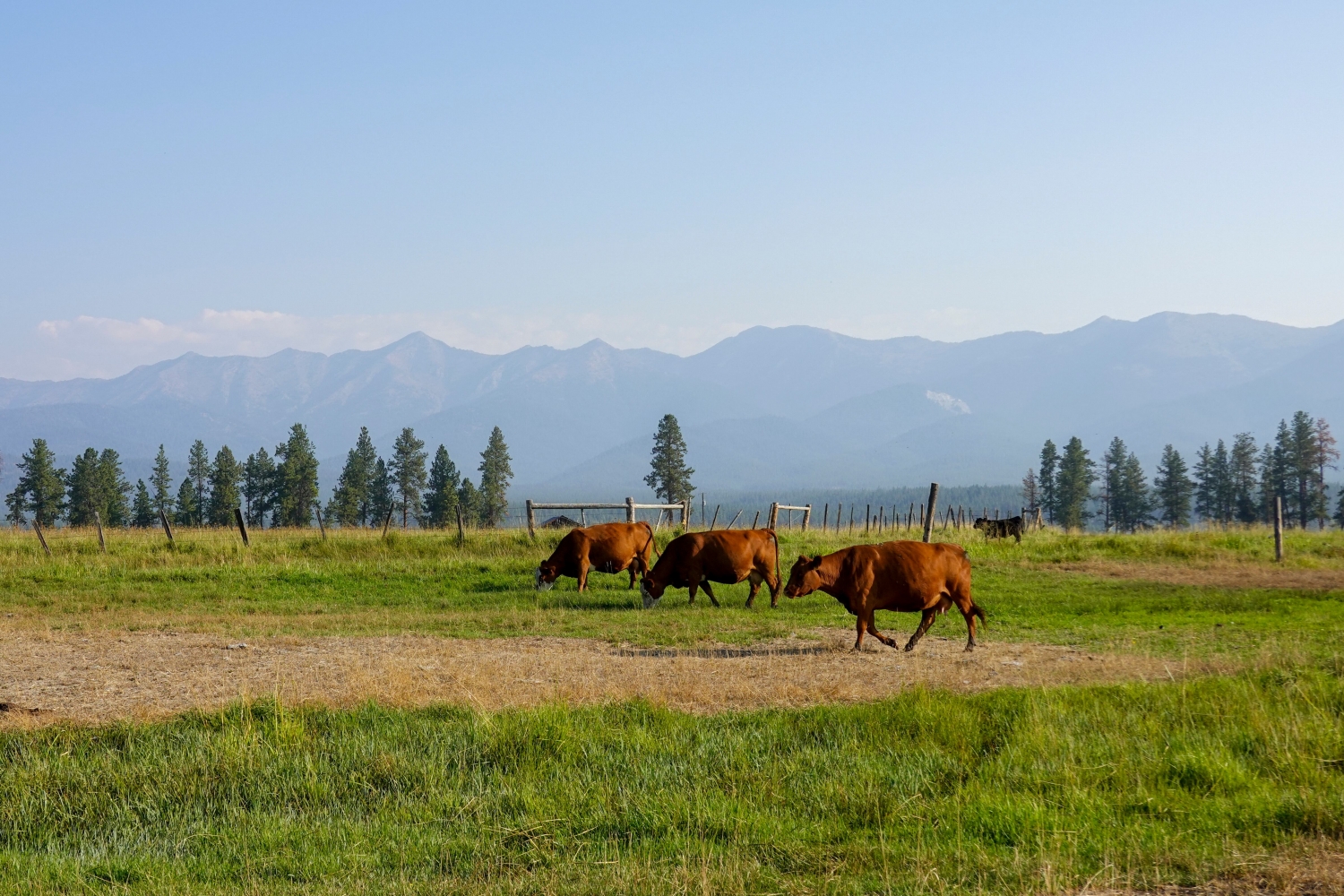
Some of the gap measures proposed by the energy department left the State Board of Agriculture questioning who was part of the process. For example, a suggestion to reduce pork and meat consumption by 50% by 2050 with a shift toward seafood consumption, as well as a cut to poultry and egg consumption by 30% by the same year runs counter to one of the agriculture department’s highest priorities, the Board of Agriculture chair Elin Miller told OPB.
Miller said the board was made aware of the suggestions through news coverage two days prior to the meeting.
“Oregon is a meat-processing desert,” she said. “There’s virtually no meat processing, so ODA, along with the legislature, has been investing heavily in local Oregon meat processing, which is not only more efficient, less expensive, but greatly reduces greenhouse gas emissions by eliminating unnecessary animal and meat transport all over the country.”
Miller, who is also a farmer in Douglas County, said agriculture is the number two industry in Oregon, and “our work intersects with basically each of the Oregon resource agencies and so, we always like to have a seat at the table.”
“We’re wondering, ‘My goodness, where did this come from?’ because we want to be part of a solution to look at ensuring a healthy environment, economy and community,” she said.
Extended public comment period
During the Thursday State Board of Agriculture meeting, Oregon Gov. Tina Kotek’s climate advisor Amy Schlusser expressed surprise at some of the measures. Schlusser said she was also made aware of the report the day it was released.
“I have followed up with the agency and had many conversations with folks in the ag sector and in other sectors that are concerned by some of the ideas that were presented in this draft, and what I have learned is that this is really just intended to be a conversation starter,” Schlusser said during the meeting.
That sentiment was repeated in a letter the Oregon Department of Energy’s director Janine Benner sent to the agriculture board on Friday. Benner said the governor’s office was not consulted in creating the draft list and the public comment period is intended to get feedback and generate other actions or ideas.
“ODOE is not proposing the implementation of any of the draft measures listed. Rather, once feedback on these measures has been received and taken into consideration, we will update the list of measures and model the potential greenhouse gas emissions reductions that could occur if they were implemented. The final report, expected this summer, will offer a menu of potential measures for decision-makers to consider, a subset of which, if implemented, could support Oregon meeting its greenhouse gas emissions reduction goals,” Benner wrote.
People interested in providing comments to ODOE about the 48 draft suggestions have until 5 p.m. on April 10. The agency requests comments to be submitted to [email protected].
News Source : https://www.opb.org/article/2026/03/23/oregon-climate-reduction-efforts-ideas-pushback-agriculture-sector/
Other Related News

03/23/2026
On March 23rd 2026 Kalshi updated their popular 10 code giving new users a 10 guaranteed b...

03/23/2026
Deputies say they have arrested a juvenile in a weekend shooting near the Clackamas Town C...

03/23/2026
Here are The OregonianOregonLives Class 4A all-state teams for the 2025-26 Oregon high sch...

03/23/2026
With March Madness underway the Natural State opted to launch FanDuel Arkansas

03/23/2026
TEMPE Ariz Arizona State has lured Randy Bennett away from Saint Marys to become its next...

Follow

Download Our App


Copyright 2022 © EPUERTO. All Rights Reserved