

Published on: 07/06/2026
This news was posted by Oregon Today News


Description
Editor’s note: To allow them to speak freely, several students in this story — who are minors in families at potential risk of detention by immigration authorities — are identified by only a first name or initial.
Educators at the Hillsboro School District were proud that they had nearly closed the attendance gap between Hispanic and non-Hispanic students by last fall.
Then, Operation Black Rose began.
The U.S. Department of Homeland Security’s massive immigration crackdown swept through Oregon including Hillsboro, the largest city in Washington County, the state’s most racially diverse county. The attendance gap for Hispanic students in the district spiked from less than 1 percentage point during the first semester of the previous school year to 7 percentage points, and then nearly 8 at various points last fall.
Students who did show up were quiet, distracted and anxious. One teacher offered to wait at a bus stop with one of her students after his father was detained by immigration authorities. A middle school started a food bank for parents afraid to leave their homes to shop.
“It was a very emotional roller coaster for me and my students,” Belen Tencos, an English language development and dual language teacher at Hillsboro’s Evergreen Middle School said.

Tencos’ students were at the front lines of a federal enforcement action that made national headlines: Washington County saw Oregon’s highest number of recorded immigration arrests from July to December. In all, Operation Black Rose led to the detention of more than 1,400 people statewide. That number includes some of the 39 kids who were arrested in Oregon between January 2025 and this February, according to the Deportation Data Project.
Many more kids saw their learning disrupted — and not just in Hillsboro. Students across Oregon — and the schools they attended — paid a price in missed school days, heightened anxiety, isolation and lost participation in extracurriculars and sports.
Those months of heightened immigration enforcement reminded Izzy Zamora of how COVID-19 affected students.
“The difference is that this disruption is disproportionately affecting Latino students and often goes unseen at a systemic level,” Zamora said. She’s a mentor for middle and high school students through the Portland-based nonprofit Latino Network.

The repercussions are hard to quantify. Oregon school attendance numbers for the 2025-2026 school year aren’t out yet, so OPB requested data from several school districts that were the most acutely affected by ICE activity.
But those numbers still don’t tell the whole story. In Oregon, students who miss more than 10 days in a row are dropped from enrollment, disappearing from attendance rolls. Students can reappear on those lists if they come back to school, sometimes muddying attendance and enrollment data. And there are no numbers to quantify the impact on many students who continued showing up but struggled to focus and learn.
Where the data wasn’t enough to tell us how immigration enforcement impacted schooling, district administrators, advisers, teachers and students told OPB what they saw, heard and felt.
Students pulling away
At Reynolds School District in East Multnomah County — another area inundated with immigration officers last year — Superintendent Frank Caropelo said the district noticed increases in absences and automatic 10-day drops. The increases were particularly prominent at the high school level. Though the district does not track reasons that contribute to automatic drops, Caropelo said that school leaders believe they are related to the “chilling effect of ICE activity.”
“Anecdotally, we know from students and families disclosing that we have had students and/or family members detained, but again, we don’t keep a count of those,” Caropelo told OPB.
The Gresham second grader who spent three weeks in a Texas detention center this year was a student at Alder Elementary School in the Reynolds School District.
Schools used to be considered a safe haven from immigration enforcement. Before last year, DHS policies barred immigration officials from making arrests at certain sensitive locations, including schools. President Donald Trump nixed that policy after he returned to the White House last year.

Teachers across the country have seen the effects of ICE activity. A national survey conducted by Education Week found 39% of educators reported lower student attendance as an effect of immigration enforcement efforts. Educators reported higher levels of anxiety and distraction among students.
At a February meeting of the Oregon Senate Committee on Education, Forest Grove Superintendent Suzanne West spoke of similar impacts in her Washington County district, where 59% of students identify as Latino.
“We’re seeing daily attendance decline by several percentage points along with an increase in student withdrawals compared to the same period of time for last year,” West shared. “We’re witnessing families lose income earners to detention or become afraid to leave their homes.”
According to data the district shared with OPB around that time, the district had 206 withdrawals. Over half of the withdrawals were at the high school level, and two-thirds of students who withdrew identified as Hispanic.
By the end of the school year, 438 students had withdrawn from Forest Grove. That’s fewer students than withdrew during the 2024-25 school year but almost double the withdrawals of two years ago. According to the district, about 50 of those students enrolled in another state or country. Over 100 students were classified as “not enrolled — status unknown”.
Bills protecting immigrant students, families at Oregon public schools move forward at the capitol
Some students moved to online school, another echo of the pandemic. At David Douglas, another district in East Multnomah County, enrollment in the K-12 online program increased by almost 10 percentage points this year for students learning English — a population whose families may be at heightened risk for ICE detention.
In the online high school, students mostly work on their own.
Kim Anderson, David Douglas Online Academy counselor, told OPB in an interview last year that she tries to get students to build relationships with staff and teachers, but that’s hard to do over a WiFi connection.
“It can be kind of a silo,” Anderson said. “You’re working alone, you’re working independently.”
Online learning outcomes in Oregon show higher than average dropout rates, with students often coming to online school behind academically. The Education Week survey also found an increase in online and homeschool options for students concerned about “the risk of encountering immigration agents.”
Portland State University student Gina Gutierrez mentors students at two high schools in east Multnomah County — Centennial and Gresham — through the Latino Network.
“I think about the timing that we’re in and how we’re living … and how it’s become a privilege for you to go to school in this moment,” Gutierrez said.
When immigration hits home, students bring it to school
When something is on your mind all the time it can be hard to leave it at home. A is a sophomore at Centennial High School. Out of fear for her family, A asked OPB to only use her first initial.
In her speech and debate class, A wrote and read poems about immigration.
“Does my brown skin scare you?”
In an interview she shared why this was her favorite line.
“Why would they be doing this if they didn’t fear us in a way, or view us as something scary because they don’t know us, they don’t know our culture,” she said.
A has noticed her peers also talking about immigration in their writing.
“When something is affecting you, you put it into your work,” she said.
Even if A or her peers were not directly affected by ICE, they were immersed in stories of families being detained by ICE agents online and in the news. At several points last year, videos of masked armed agents barging into Oregon homes circulated widely on social media.

One video showed agents in tactical gear breaking down a bedroom door with guns drawn as a woman hid in a corner with her baby. The incident occurred in October, less than two miles from Centennial High School. A couple weeks earlier several ICE agents held a group of teenagers at gunpoint while they were in line at a Dutch Bros coffee stand in Hillsboro. In November, a high schooler in McMinnville watched as immigration officers smashed his car window and then arrested him during lunch break.
The fear such incidents caused was hard to overstate — even for kids who are U.S. citizens and whose families have legal status, students shared in an informal survey OPB sent out.
In Hillsboro, Tencos sometimes abandoned her regular curriculum to talk about the ICE surge and how students were feeling, giving them a chance to process what was going on.
“Let’s forget about learning English right now and focus on how you’re feeling, how you’re dealing with this at home,” she recalled telling her students.
School staff in east Multnomah County noticed the distraction, too.
“It’s very hard for students to focus,” Aline Alvarez Garcia, adviser to the Latinx student union at David Douglas High School, said. “I’ve had students that were directly impacted and family members were detained, and I think a lot of the time they just expect them to show up to school, and that’s hard.”

For one Albany eighth grader, this difficulty was documented in a letter her teacher wrote to the immigration court in Tacoma, where the student’s mother was detained. The teacher wrote of “emotional distress manifesting as withdrawal, tearfulness, difficulty concentrating or disruptive episodes.”
For four months, that student, Valeria Herrera, only saw her mom from inside the Tacoma detention center. The detention left Valeria and her 16-year-old brother caring for themselves and their father who was recovering from a stroke.
Albany mom released after four months in ICE detention
In one English class at David Douglas High, students learned about propaganda and rhetorical analysis. One exercise was looking at how government websites have changed during the Trump administration.
Joaquin, a David Douglas junior, remembers a short film analysis he wrote.
“It was this film about polar bears who were trying to flee to a different area because their ice caps were melting, and I wrote about how that correlated with ICE and how it’s going right now,” he said.
Another David Douglas student, Elisa, wrote an essay about how one staff member at the school was “pro-ICE,” and how it affected students. Elisa shared her essay with the high school’s principal and administrators.
“It did make me cry, knowing that I had to write this in order for the school to listen,” she said.
“This is how students feel, this is why our attendance is dropping, this is why kids don’t want to come to school.”
David Douglas officials did not respond to a request for comment about student concerns regarding staff support for ICE. According to the district website, school staff are barred from assisting ICE’s enforcement of federal immigration laws “except in rare instances in which DDSD is provided with a criminal warrant.”
Students find their voices
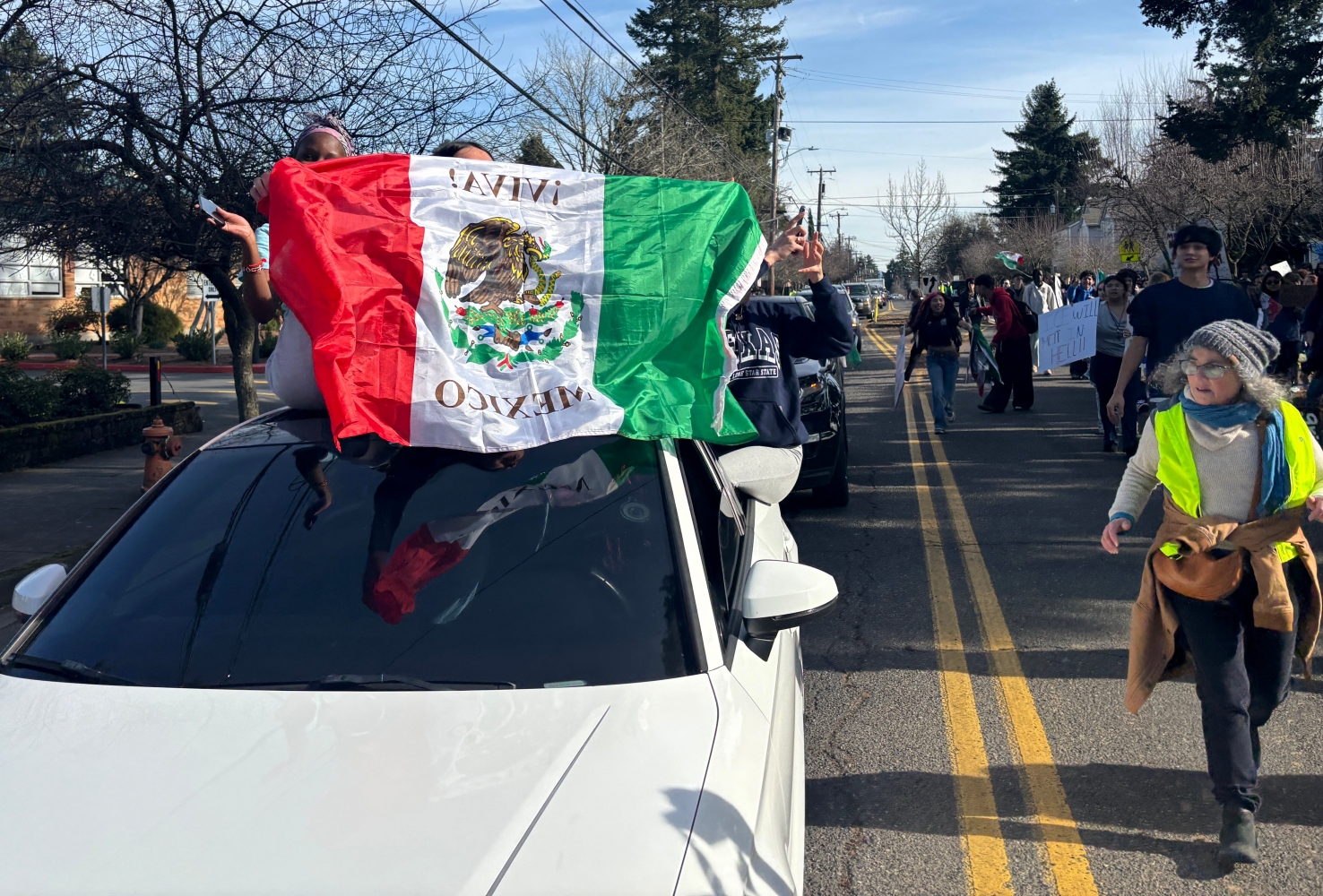
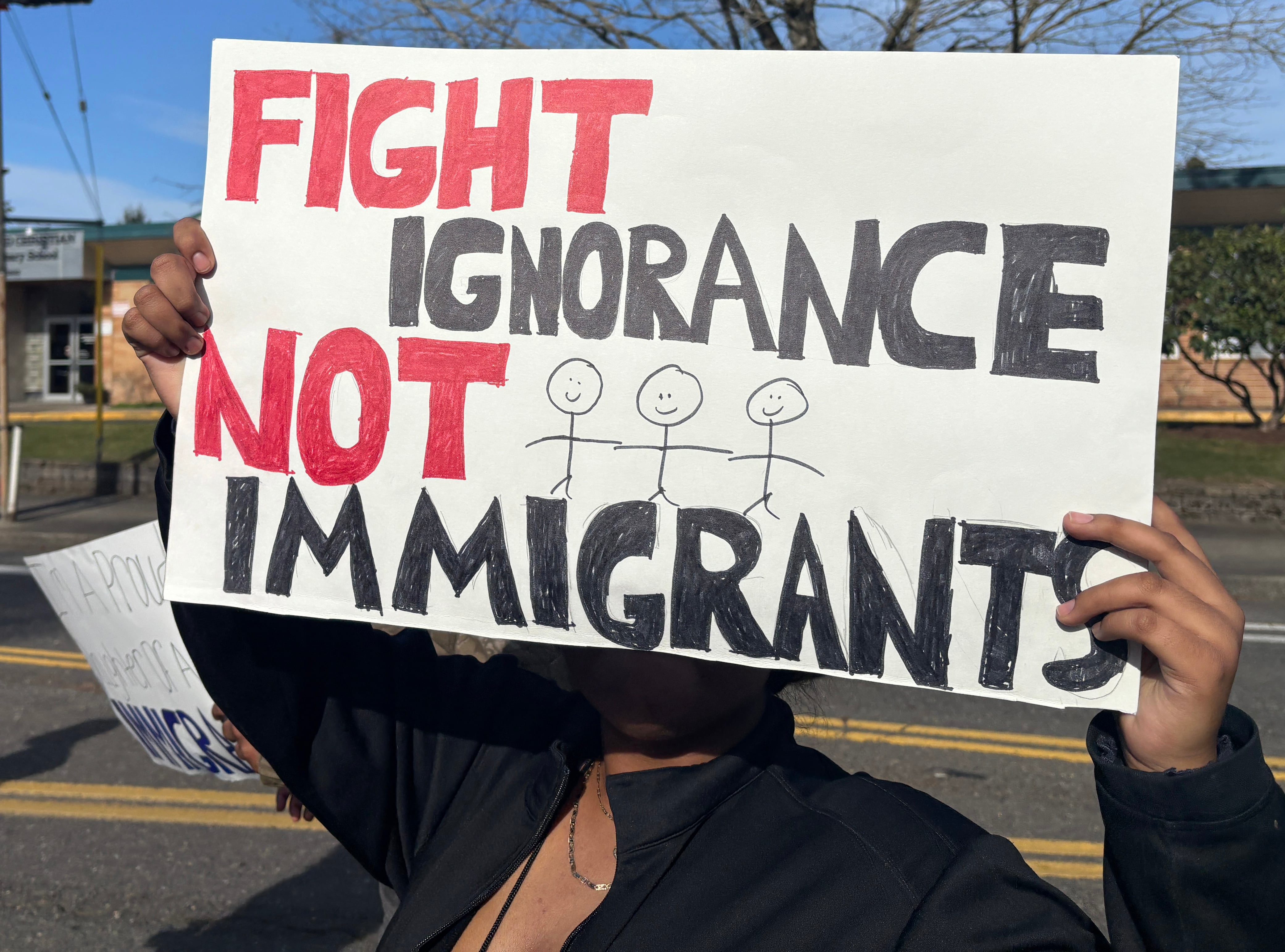
While some students were working through their feelings in class, others were taking to the streets in protest. Students at David Douglas High School walked out of class last February to protest ICE, drawing hundreds to the streets of East Portland.
“It felt amazing, like we were making an impact,” said Valeria, a junior and president of the group behind the walkout, the Latinx Student Union. “We did not expect there to be that many students.”
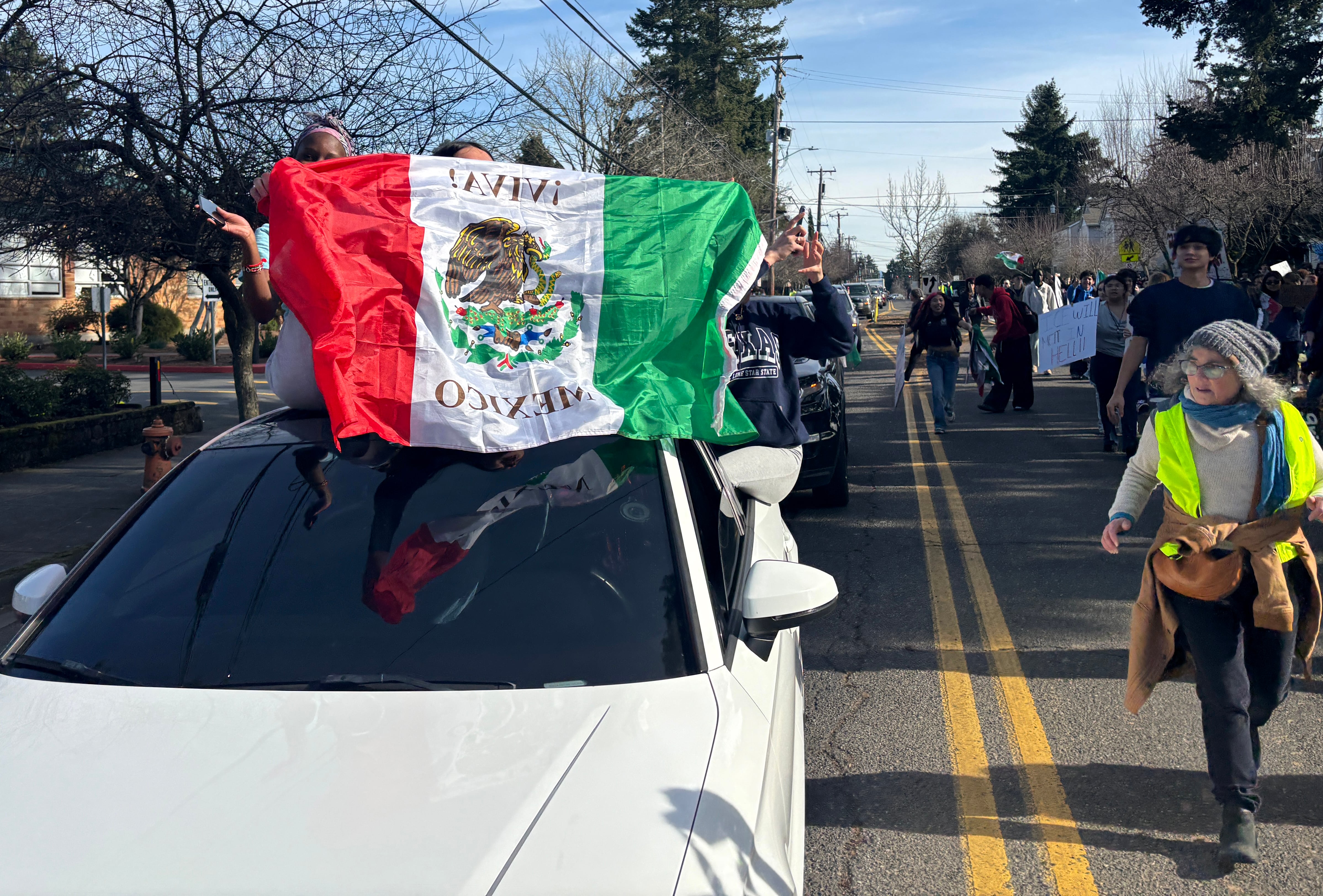
The idea came out of seeing other school walkouts, as well as increased ICE presence in the streets near school. David Douglas High is just a couple of miles from where U.S. Customs and Border Patrol agents shot two people on Jan. 8. The high school itself has also been the center of some controversy, with a protest and counter protest in October related to the formation of a conservative student club. According to coverage of the protests, several adults with no ties to the school district attended.
After the February walkout, students say adults engaged with them again — this time, on social media.
“We were getting so many crazy threats on Twitter about how we’re so stupid, how ICE should raid our school,” said Ruby, a David Douglas student. Ruby said an unrelated lock-in a few days after the walkout had students fearing that ICE was at the school.
Ruby saw a TikTok video of a woman who filmed their walkout, cheering for the students. Then she read the angry comments condemning the students’ activism.
“Why are you using our beautiful diversity as a weapon? Diversity is strength, and I think the adults in our community just need to learn,” Ruby said.
Some students confide in the adult advisers of their in-school affinity group. But Alvarez Garcia, the David Douglas adviser, said she’s not just helping students anymore.
She and community groups working with the school offer trauma-informed training, distribute Know Your Rights information, and help with post-detainment services, like how to track a family member.
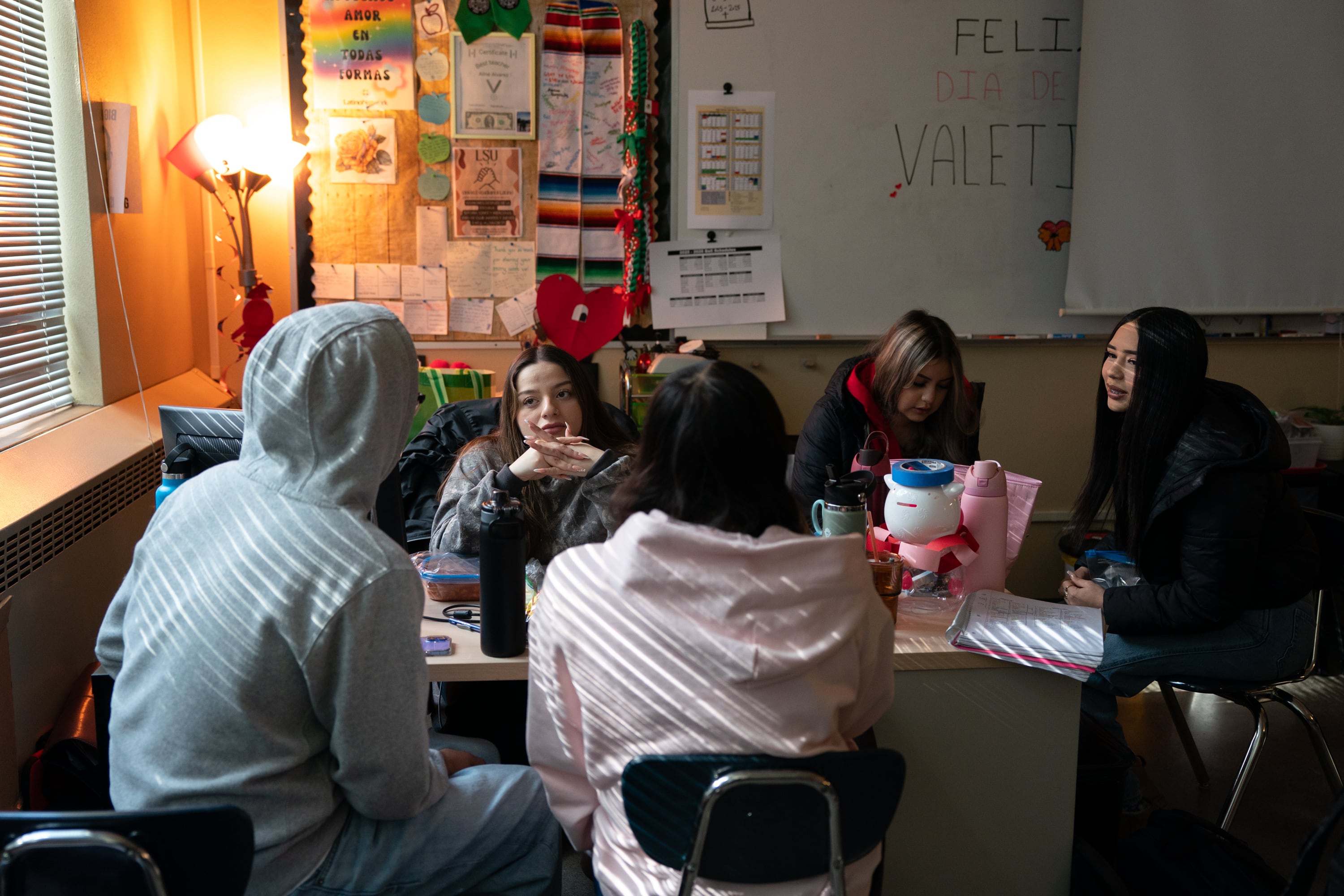
Around the city, Latino Network mentors serve as affinity group advisers, including for Latino students at predominantly white schools like da Vinci Arts Middle School in Portland. That’s where MJ Zavala mentors students like eighth grader Adelie.
Adelie said it can be isolating to be surrounded by white peers, including some who make jokes about what’s happening with immigration.
“They don’t really understand how life could be different because they don’t really want to reflect,” Adelie said.
Earlier this year, Latino Network brought Portland students down to Salem for lobby days in support of bills focused on protecting students and families from immigration authorities.
Lily, a sophomore at a Multnomah County high school, was part of the group. She said she felt empowered by her peers and mentors at Latino Network.
“Without them, I would have stayed in my little bubble and wouldn’t be able to speak out about this,” she said.
For several of the students and adults OPB spoke to, their families came to the U.S. to give their children more opportunities. Despite the fear, Gutierrez, the Latino Network mentor, said she’s seeing students take advantage of that.

“You can either not go to school and not do anything, but in reality, you want to go to school because you want to be something,” Gutierrez said. “Later on in life, you can help out, change the world, change the society that we live in, the system that we live in.”
That’s a sentiment shared by Valeria Herrera, the Albany middle schooler whose mother spent four months in ICE detention this year. The eighth grader said her mom’s arrest made her want to be an immigration attorney when she’s older.
“I never thought it would be something I would want to do but I want to help people in the same situation as me,” she said.
News Source : https://www.opb.org/article/2026/07/06/ice-immigration-crackdown-oregon-students/
Other Related News

07/06/2026
The Trump administrations sweeping effort to slow down the rate of legal migration has aff...
07/06/2026
A key hearing kicks off Monday in Charlie Kirks murder case in Utah where prosecutors aim ...
07/06/2026
Russia unleashed waves of missiles and drones at Ukraine early Monday killing at least 21 ...
07/06/2026
Searchers are calling it the 4th of July miracle on the Oregon coast after a four year old...
07/06/2026
State regulators are seeking steep fee hikes on Oregons nascent psilocybin industry a move...

Follow

Download Our App


Copyright 2022 © EPUERTO. All Rights Reserved