

Published on: 11/26/2025
This news was posted by Oregon Today News


Description

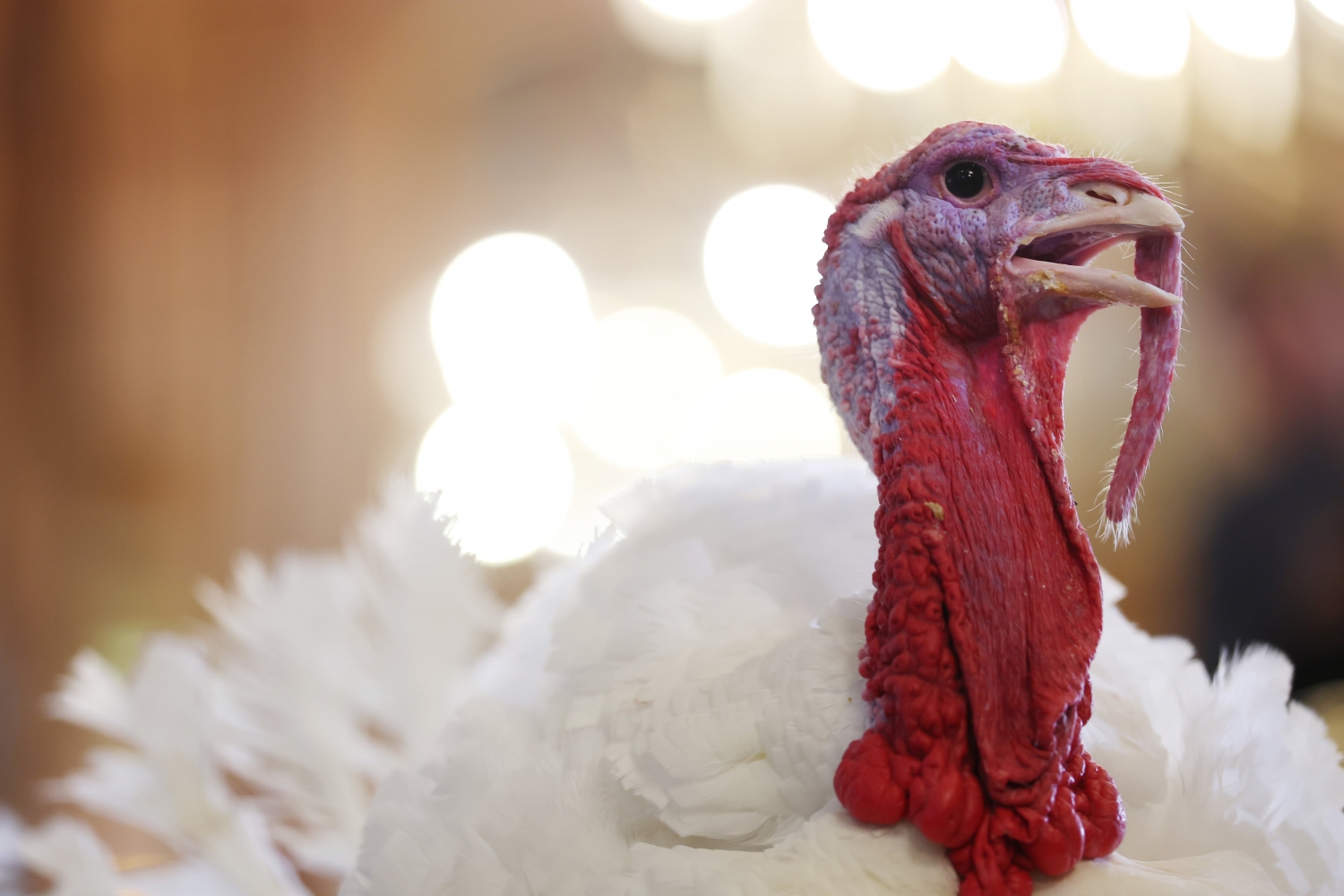
In the English language, the turkey gets kind of a tough break.
Talking turkey requires serious honesty and speaking harsh truths. Going cold turkey is, often, an onerous way of quitting something completely and suddenly. Being a turkey is a rude zinger thrown at movie and theatrical flops, as well as unpleasant, failure-prone people.
Yet, in the culinary world, the turkey looms large, particularly during November. This year, Americans are expected to eat about 30 million of them on Thanksgiving day, according to the National Turkey Federation. It’s a fitting legacy for a bird that’s been a fixture of holiday meals ever since it was first brought across the Atlantic to Europe by colonists.
But for all its cultural ubiquity, much of the turkey’s early history is shrouded in uncertainty, historians and etymologists say. That’s particularly true of how the bird got its name.
“‘Turkey’ is a very confusing, confusing name,” says Anatoly Liberman, a linguist and etymologist at the University of Minnesota, Twin Cities.
So in this week’s installment of “Word of the Week,” we trace the origins of that confusing name — all the way back to pre-Columbian Mexico.
A case of mistaken identity
The species of Thanksgiving turkey that we know today, meleagris gallopavo, was domesticated in the Americas centuries before the arrival of Europeans, according to food historian Andrew F. Smith’s book The Turkey: An American Story. They were found in what’s now Mexico and the U.S. Southwest, though the exact details of who domesticated the birds and when aren’t quite clear, Smith writes. And, thanks to fairly shoddy record-keeping, it also isn’t quite clear which European explorers can be credited with bringing turkeys back home with them.
But by the 1520s, the birds were being raised in Spain and served on the dinner tables of the upper-class, Smith writes. Over the decades, farmers across the continent began to raise them, too.
From there, though, the American bird became a victim of mistaken identity, according to lexicographer Erin McKean. Prior to meleagris gallopavo‘s arrival, the Europeans already had a bird they called the turkey: the African guinea fowl. The two game birds look similar and were ending up on people’s dinner tables in basically the same way, McKean says.

“I bet they look a lot more similar when they’re denuded of their feathers, roasted and on a plate,” she says.
As a result, meleagris gallopavo got stuck with the name “turkey,” too.
But the American turkeys began to eclipse the popularity of their African doppelgangers, Smith writes. And they began showing up in historical documents; in 1550s Venice, for example, they were subject to sumptuary laws, which governed which members of society had access to particular luxuries, McKean says.
“So only certain people were allowed to eat turkey at that point,” she says.
One thing that’s not clear in the historical documents, though, is how the term “turkey” came to apply to guinea fowls in the first place. Smith writes that Europeans often added the word “turkey” onto items that were foreign and strange, like “turkey corn” from the Americas. McKean says that the name is thought to have come from the guinea fowl being brought by traders into Europe through the Turkish region.
But the word’s origin isn’t settled fact, she says. “I’m not sure we’re ever going to know.”
For his part, Liberman says that it’s a myth that the bird has anything to do with the country of Turkey.
“The Europeans knew nothing about [the turkey’s] origin and invented all kinds of names. They were not sure where the bird came from and ascribed its origin to all kinds of foreign lands,” he says.
In that sense, the bird is in good company: Liberman says that the origins of most bird names are mysterious. “Some are entirely fanciful, and some are the product of confusion,” he says.
Back to the Americas, and into the English lexicon
Over the decades, the English grew particularly fond of turkeys, which became a central part of celebrations like Christmas, Smith writes in The Turkey. So when English colonists came to North America and created settlements like Jamestown in the early 17th century, they brought their beloved domesticated turkeys along with them.

The rest is history. Over the next two centuries, colonists’ celebrations of thanksgiving for good harvests and military victories became tradition, Smith writes. And by the time President Abraham Lincoln declared Thanksgiving to be a national holiday in 1863, turkeys were a mainstay of those meals.
Ever since, the turkey has remained on Thanksgiving tables — and in our colloquialisms, though they’ve continued to evolve.
Take “cold turkey,” for example. Now, the phrase is often associated with quitting an addiction – but that wasn’t the case when the first uses of the idiom started popping up in the late 19th century, according to Dave Wilton, the editor of WordOrigins.org. It simply meant that something was done quickly, he says, in reference to the fact that cold turkey is a dish that requires no preparation.
The meaning of “talking turkey” has also evolved, he says, from being “social” and " agreeable" in the early 19th century to talking plainly and frankly around the beginning of the 20th.
Calling someone a “turkey” as an insult comes from theatrical slang, he says. Starting in the late 1800s, second-rate thespians were deemed “turkey actors”. It’s also come to describe box office failures.
Why all the negativity? McKean has a theory: “It’s an ugly bird that struts like a peacock without the beautiful feathers to justify showing off.” (Ouch.)
But it’s a word that has had staying power, despite the fact that it’s likely a misnomer in the first place.
“One thing we can’t lose sight of is that turkey is pretty much a fun word to say,” McKean says.
At the very least, it’s catchier than meleagris gallopavo.
News Source : https://www.opb.org/article/2025/11/26/how-turkey-made-its-way-to-thanksgiving-tables-and-our-lexicon/
Other Related News

04/01/2026
Voters in Ashland will decide whether to renew a school levy for another five years in the...
04/01/2026
Births reported at hospitals in Northeastern Oregon Good Shepherd Medical Center Hermiston...

04/01/2026
The Oregon Employment Department has release the January unemployment report showing the s...
04/01/2026
Were a long way from Italy but there are lots of places to get a great plate of pasta in t...

Follow

Download Our App


Copyright 2022 © EPUERTO. All Rights Reserved