

Published on: 10/31/2026
This news was posted by Oregon Today News


Description

Oregon voters say affordability is the biggest issue in Tuesday’s election, according to a poll commissioned by OPB this fall.
The state’s unsteady economy isn’t lost on leading candidates for Oregon governor. The campaign websites for incumbent Gov. Tina Kotek and state Sen. Christine Drazan prominently mention “make life more affordable” (on Kotek’s site) and “lower the cost of living” (on Drazan’s) as main planks in their platforms.
Meanwhile, the state’s largest public companies are still, for the most part, making money — but earnings are slowing down.
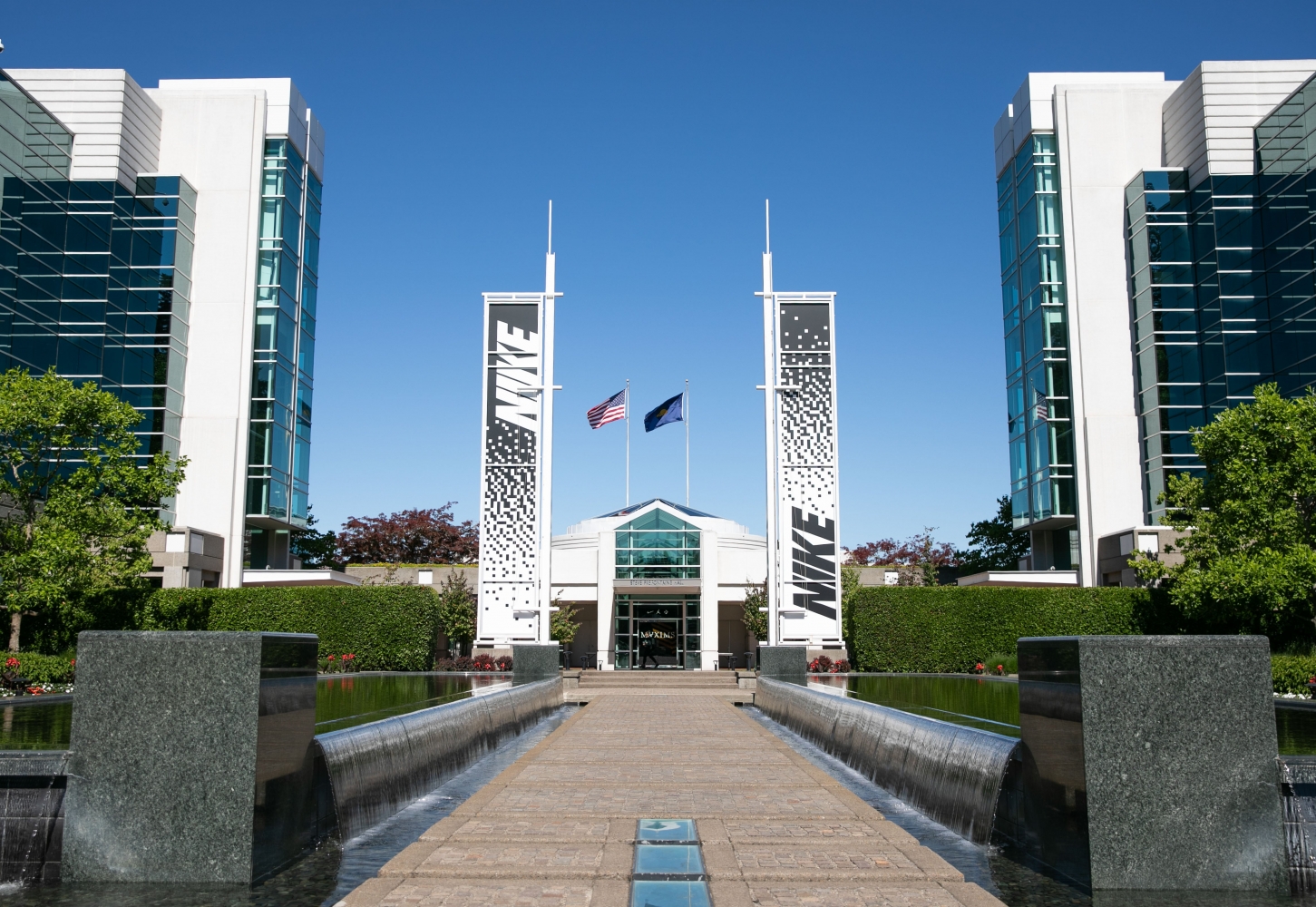
Nike, Oregon’s most recognizable company, is just one example. The shoe manufacturer headquartered near Beaverton reported a $3.1 billion profit for 2026, down slightly from the $3.2 billion the company pulled in the previous year.
But it’s a downhill slide from the $5.7 billion profit in 2024.
In the last two years, businesses operating in Oregon and across the globe have contended with increasing costs that eat into their bottom lines. Tariffs, rising fuel prices and increasing healthcare costs have hit companies hard in the last two years. The financial headwinds have been slowing major companies in Oregon for months.
“We’re operating in a more complex macro environment, where we’re seeing added pressure on traffic and discretionary spending across our geographies,” Nike CEO Elliott Hill told investors in June. “But we’re focused on what we can control, bringing each sport together across product, brand, marketplace and operations and deepening our connections with athletes, consumers and partners.”
Intel agrees to give US government $8.9B stake in its company
As the midterm elections approach, many Oregonians are also trying to focus on what they can control in an unpredictable economy. Families are reeling from the increasing cost of virtually everything, from fuel for homes and vehicles, to skyrocketing healthcare costs, to larger grocery bills. While Oregon’s unemployment rate is still low at around 5%, it’s above the national average and has been creeping upward.
Companies across industries have told investors they are also seeing costs rise. It means most businesses are still bringing in money, but the income isn’t going as far. And some of Oregon’s largest employers have experienced years of losses or lackluster earnings. Overall, it contributes to a feeling that the state is becoming less affordable for workers and their employers.
The semiconductor giant Intel is headquartered in California, but the heart of its research and development is in Washington County. The computer chip firm is Oregon’s largest private employer with around 18,000 workers.
The company is playing catch-up as artificial intelligence overhauls the tech sector. After initially missing the boat on developing the best chips for AI processing, Intel is now partnering with other major semiconductor firms like Nvidia to help supply chips to data centers.
Some of Intel’s financial struggles date back to that early misstep as AI began to take hold as an economically powerful industry. But Intel has also felt the squeeze as tariffs raise prices for parts and machinery.

From January through September, Intel reported a loss of $11.4 billion. Lip-Bu Tan, the company’s CEO, told investors in an October earnings call that near-term challenges like supply shortages meant Intel could not meet demand in recent months. Yet, Tan said Intel is well positioned to take advantage of the growth of AI in the coming years.
“I remain confident in our path forward,” Tan said on the call. “We need to address these challenges with urgency without losing sight of the massive opportunities in front of us.”
Still, the losses this year follow two years of also being in the red. The company lost $767 million in 2025. But that was a much improved showing compared to 2024 when Intel reported a loss of nearly $19 billion.
Although Intel has been struggling to turn a profit, it’s still committed to researching and testing new chips. In order to do that, the company needs specialized equipment. That’s proven to be a boon for Lam Research, which builds machinery for the semiconductor industry. Lam is headquartered in California but employs about 3,000 people in Oregon.
This fiscal year, Lam Research reported earnings of more than $7.25 billion, up from $5.6 billion the previous year. The company also broke ground on a new manufacturing building in Tualatin.
Lam is an outlier among large tech companies operating in Oregon. Lam has seen growing profits in recent years, largely thanks to the boom in AI spending. In addition to Intel, Lam builds tools for other major semiconductor firms helping to fuel the growth of artificial intelligence products.

An Oregon outlier of a different sort is homegrown company Columbia Sportswear. From January through September the company has recorded a profit of $145.6 million, up from $84 million during the same period last year.
“Like Mother Nature, the global business environment can be volatile and unpredictable,” CEO Tim Boyle told investors in a recent earnings call. “So far this year, we’ve navigated tariff uncertainty, geopolitical conflicts, soaring energy costs and supply chain disruptions.”
Finishing out the year strong, he said, will depend on something that happens directly after the midterm election: the holiday shopping season.
“Winter is coming,” Boyle said, “and we are ready for it.”
News Source : https://www.opb.org/article/2026/10/31/oregon-businesses-performance-midterm-election/
Other Related News

10/31/2026
No 13 Texas Tech and No 22 Arizona square off today in a battle of 6-1 teams with Big 12 t...

10/31/2026
Michigan looks to get back on track today when the Wolverines visit the Rutgers Scarlet Kn...

10/31/2026
Former NFL quarterback - and NC State star - Philip Rivers was said Friday there is nothin...

10/31/2026
One person has died and at least six others were injured in a shooting Friday night at a S...

10/31/2026
Cassidy Schutz threw her cellphone at the gunman and wrestled with him over his weapon in ...

Follow

Download Our App


Copyright 2022 © EPUERTO. All Rights Reserved