

Published on: 10/16/2026
This news was posted by Oregon Today News


Description

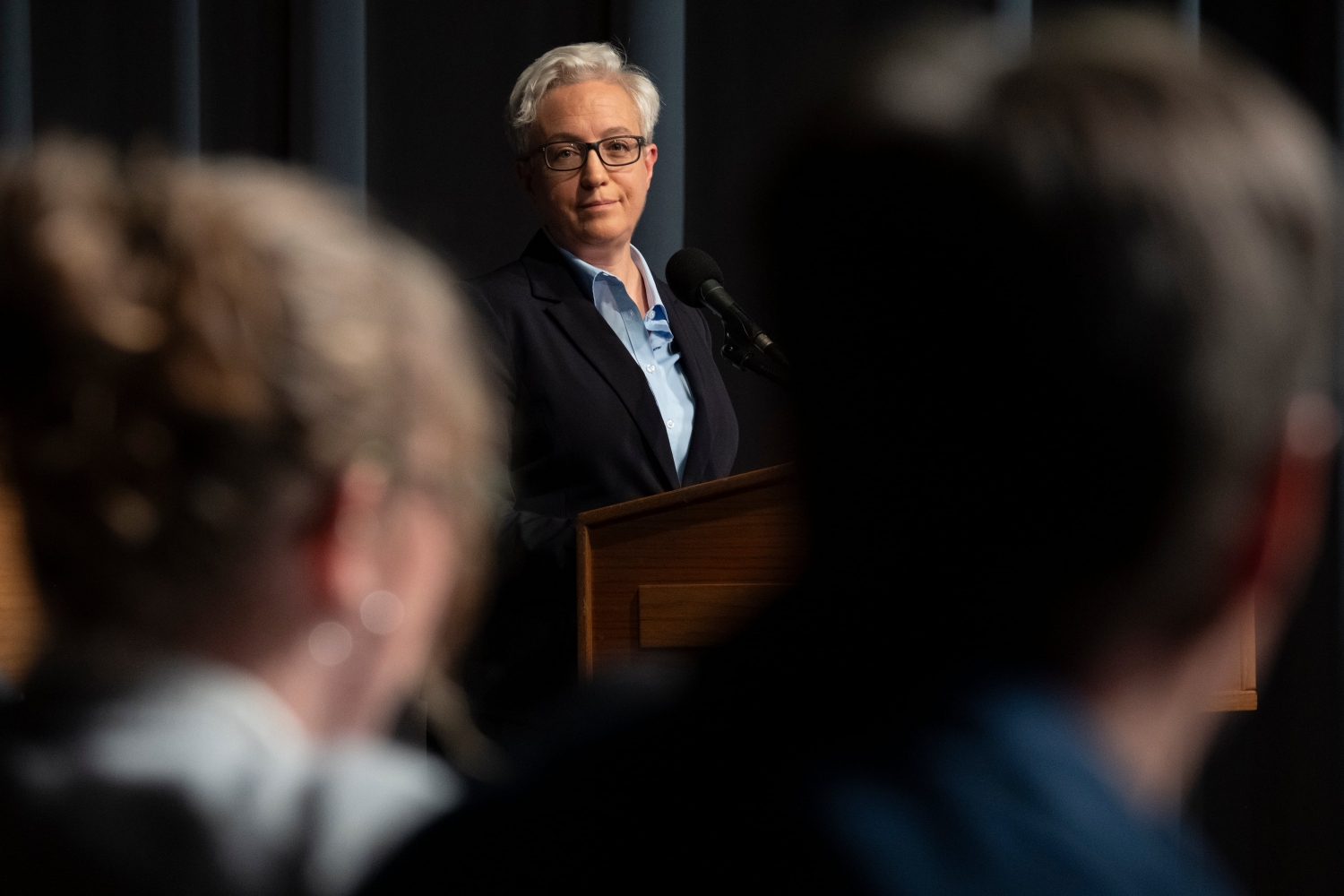
Gov. Tina Kotek does not share Oregonians’ dim view of her last four years.
Polling shows a majority of voters don’t like where the state is heading, and a similar number don’t have a positive impression of the governor. Even some allies have scratched their heads at her first term.
Kotek’s explanation? She hasn’t marketed herself well enough.
“I’ll be honest, I’ve probably done a subpar job talking about what we have been doing and so people don’t know,” Kotek told OPB in an Oct. 6 interview. “I’ve had my nose to the grindstone looking down, working on the job and trying to get sure we can have the outcomes we want.”
A former nonprofit advocate who rose to prominence as the state’s longest-serving House speaker, Kotek took office in 2023 pledging major movement on Oregon’s biggest problems. She is convinced progress is beginning to show as she wraps up her fourth year in Mahonia Hall.
Oregon is on track to produce fewer units of housing this year than when Kotek assumed office, but the numbers are now trending upward. The state’s schools continue to post some of the bleakest testing outcomes in the nation, but Kotek points to recent, modest improvement. Billions spent to better serve houseless Oregonians are showing results in some parts of the state, even as homelessness has appeared to grow statewide.
Meanwhile, the state’s economy has lagged, prompting Kotek to switch her focus toward wooing business in the last 10 months.
“I’ve learned in this first term the wheels of change are probably a little slower than I am happy with,” she said in an interview from Medford. “We need to work harder to continue to make that progress for folks.”
Kotek has also spent much of the last two years parrying policies handed down from the administration of President Donald Trump – from attempts to send National Guard troops into Portland, to aggressive immigration enforcement, to changes that will deny federal food and health benefits to some Oregonians.
Trump’s impact has Kotek betting voters will opt to stay the course rather than yank the steering wheel of the state by electing Republican state Sen. Christine Drazan.
The Democrat’s strategy is based more on talking up the transgressions of the president – possibly the only high-profile politician less popular in Oregon – than her own success. And her plan relies on voters like Carol Hickman.
Hickman, a 60-year-old who cares for her elderly mother in Grants Pass, has spent most of her life in Oregon. These days she’s not happy with what she sees.
“I feel like we have great hearts in this state,” the nonaffiliated voter and self-described moderate recently told OPB. “But we keep misusing money, and I’m deeply frustrated by that.”
Hickman says she’s watched homelessness explode, basic road maintenance go undone, and state funds dumped into nonprofits that don’t deliver. As a result, she is one of roughly 60% of likely voters who told OPB in a recent poll they have a negative impression of the governor.
But that won’t matter much when Hickman’s ballot arrives.
“I’m feeling defeated at the moment,” she said, “but I will only vote for Kotek.”
Hickman says her vote is “100%” based on opposing Trump, who’s not on any ballot this year, but whose policies she says have put her health plan at risk. “My soul is gutted,” she said.
Hickman is far from alone in not loving her options. In a recent OPB poll of 915 likely voters, 47% said they are likely to vote for the governor on Nov. 3. But fewer than 80% of those voters said they have a favorable impression of Kotek.
Robert Lindstrom, a nonaffiliated voter from Eugene who identifies as liberal, told OPB he’s been dismayed to see the governor put forward “radical left” policies that he feels are aimed at pleasing her political base and not the state as a whole.
Democratic tendencies he views as soft on crime are one reason the retired electrician refuses to visit Portland anymore. But it’s Trump’s impact on national politics that has so dismayed Lindstrom that he says he may move out of the country.
Before he goes, the 59-year-old plans to vote Kotek.
“I remember being the working class,” Lindstrom said, adding that Democratic policies are often better for laborers like him. “So I will vote for the Democrat, even though I think they are pushing too far.”
OPB recently sat down with Kotek to talk about her vision for another term. This interview has been edited for clarity and brevity.
What’s the greatest accomplishment of your first term?
There’s no one thing. I’m very proud of the work we’ve done in education: Investing in early literacy early on, three consecutive summers of literacy-focused summer programming – very important. While we can also talk about adequacy, we have provided more certainty and stability. And the other things: stopping the bleeding on instructional time and banning cell phones.
All those things come together. We’re seeing better numbers and graduation rates are up. As a whole, very proud of the work we’re doing on education. But like anything, we’re not done. These problems didn’t come in overnight. They’re not going to be solved in one term, but we are making progress. There is momentum.
I would also add housing to that. We’ve been trying to get more housing into production and we are finally seeing some really strong numbers in terms of our housing starts compared to the rest of the country. Every part of this country is dealing with high interest rates and supply chain and costs in construction, but we are up 11% since the beginning of last year and our housing starts where most of the country is down or flat. So our work is making things happen and so we have to stay on that.
And then we can talk about homelessness and mental health and addiction. But in each of these areas that I promised to work on, we have seen progress and we’ve put building blocks in place that I think are going to show more progress over time. And I don’t want that to be interrupted by someone who can’t work across the aisle, who doesn’t have the budget background that I have. We need a governor like me who can continue to move that progress forward so people can have what they need in the state and we can have the best schools and better paying jobs so people who can afford to live here.
We’ve heard you say a lot: “We have seeded the ground for progress. The things we are doing will make a difference.” Voters are probably not seeing or feeling that progress. What are you promising if you get another four years?
I’m impatient as well as everyone else. We have to be persistent and things do take time. If anything, I’ve learned in this first term the wheels of change are probably a little slower than I am happy with, and we need to work harder to continue to make that progress for folks.
I don’t think anyone can say in the last two years that they feel like anything feels good. And again, I know people have said, ‘Why do you talk about the federal administration so much?’ I think if we are all honest, the amount of chaos and disruption caused by the guy in the White House has made us all feel uncertain and nothing feels good. And the numbers that we can show say we are making progress, we are building a strong foundation that we will then continue to build on.
So in terms of a second term for me: obviously moving on the progress that we’ve made on mental health and addiction care, housing and homelessness and education, but it’s bigger things. We can be bolder. We can get, I believe, to universal preschool across the state of Oregon by the end of my second term. We know that families and employers and the kiddos need high quality care. It shouldn’t just be the most populous county in our state that has a transformative program that is helping families today. We should have that across the state. So I have a roundtable of experts. We’re plotting out a plan. We’re going to try to figure out how to fund it. We can get there by the end of my second term.
Your opponent says your answer to everything is a new tax. You’ve been critical of the way Multnomah County funds its own universal pre-K program with a tax on high income earners, and now you’re saying, “Let’s do it statewide.” How are we going to fund statewide pre-K?
Well, we’re going to figure it out. The reason we have as much early childhood education across the state is that we passed the Student Success Act, which is providing almost $3 billion a biennium now for K-12, for early childhood. Is there something we can do there that could allow us to do more in early childhood? There’s a maybe. I know people want to change the Corporate Activity Tax. Well, let’s put it all on the table. What we need to talk about is: What is it that we want to have in the state? If we can agree on that, then we have to have some agreement at some point in time to say, ‘This is how we will resource it.’ Maybe we have to stop doing some other things to get there, but that’s the kind of conversation I want to leave with Oregonians.
You stood up recently at a rally where people were calling for a three-year moratorium on data centers. You said, “I like a moratorium.” That was a change. How long should a moratorium be for? Are you talking about three years? And what do you say to the rural places that have found real economic benefit from these and might not like the inflexibility that a moratorium imposes?
You hear from rural Oregonians who don’t feel like they are benefiting from these data centers. None of us could have anticipated the exponential growth in data centers because of artificial intelligence. And the way that the speculative nature of putting more data centers all over the country is happening, we all have to take a pause. So I do support a moratorium because we have to get it right.
In terms of how long, I will have a bill at the start of session, along with a lot of other people apparently. My bill will be like, ‘Here’s what criteria you’re going to have to meet if you want to build a new data center in our state, and you’re going to be responsible and you’re going to meet these goals and you’re going to have these standards before you even get a chance to break ground.’ However long that takes to put in place and put those rules in place, I don’t know, but we can’t have new centers being built without those standards.
A big factor in this year’s race is the dissatisfaction that Oregonians are feeling. It’s not just about the state and it’s not just about the Trump administration. Your approval ratings are pretty low. Why do you think that’s the case? Where does this come from and how do you turn that around?
I think outcomes matter, and I’ll be honest, I’ve probably done a subpar job talking about what we have been doing and so people don’t know. I’ve had my nose to the grindstone looking down, working on the job and trying to get sure we can have the outcomes we want. If you look at my homelessness emergency that has been declared for several years now, I said to folks, ‘You get money in your community, you need to produce.’ And people have produced more shelter beds, keeping more people from experiencing homelessness in the first place, getting more people rehoused into more permanent housing. We’re doing that across the state, and I’ve done, frankly, obviously not a really great job talking about it.
So in my next term it’s being a better communicator, spending more time out there with folks, talking to them. I’d love to come back out and visit all parts of the state.
There is an idea out there that unchecked Democratic control for this state has not been good and that it has led to some of the negative outcomes people are feeling right now. I wonder how you feel about that. You’ve had a lot of sway for a long time. Has that been a good thing for Oregon?
I’m very comfortable and have a long track record of working with folks across the aisle. I don’t think a lot of issues in our state are partisan issues. Now, there’s some very partisan issues where I think voters come down voting for Democrats: reproductive healthcare, and other things about who we are as a state and who we welcome here. I’m going to be really honest, those are ideological divides sometimes.
Democrats have not been in charge forever. We had a 30-30 split House in the middle of the Great Recession when we could not get foreclosure protections passed. If Democrats had been in charge, I can tell you foreclosure protections during the Great Recession would’ve happened much faster and fewer people would’ve lost their homes.
I was able to make sure we got Paid Leave Oregon in the state. Lots of families now benefit from the idea that they can stay home and have a little bit of income when they’ve had a baby, when they need to take care of their aging adult parent or themselves. That’s something we have done here in the state, and I think that’s a good thing.
So I guess when people say all these things have been bad, well, which part has been bad? Up until the pandemic, we had significant wage growth. We are challenging ourselves now to be more competitive, to be a state where we can have higher wages and better paying jobs so everyone can have the type of prosperity they want. And I’m looking forward to being a governor for four more years to focus on that type of prosperity for everyone because we want people to be able to live here, thrive, and that kids have what they need.
News Source : https://www.opb.org/article/2026/10/16/gov-tina-kotek-interview-election-2026/
Other Related News

10/16/2026
LOS ANGELES After 44 years the Milwaukee Brewers are finally going back to the World Seri...
10/16/2026
Trillionaire CEO Elon Musk promised a Texas crowd something they had never seen before and...
10/16/2026
Kotek ordered flags be flown at half-staff to remember those who lost their lives in the m...
10/16/2026
Dunkins new drink comes with a one-day promotion celebrating the Halloween season
10/16/2026
In Christine Drazans most recent advertisement the Republican gubernatorial candidate look...

Follow

Download Our App


Copyright 2022 © EPUERTO. All Rights Reserved