

Published on: 07/09/2026
This news was posted by Oregon Today News


Description
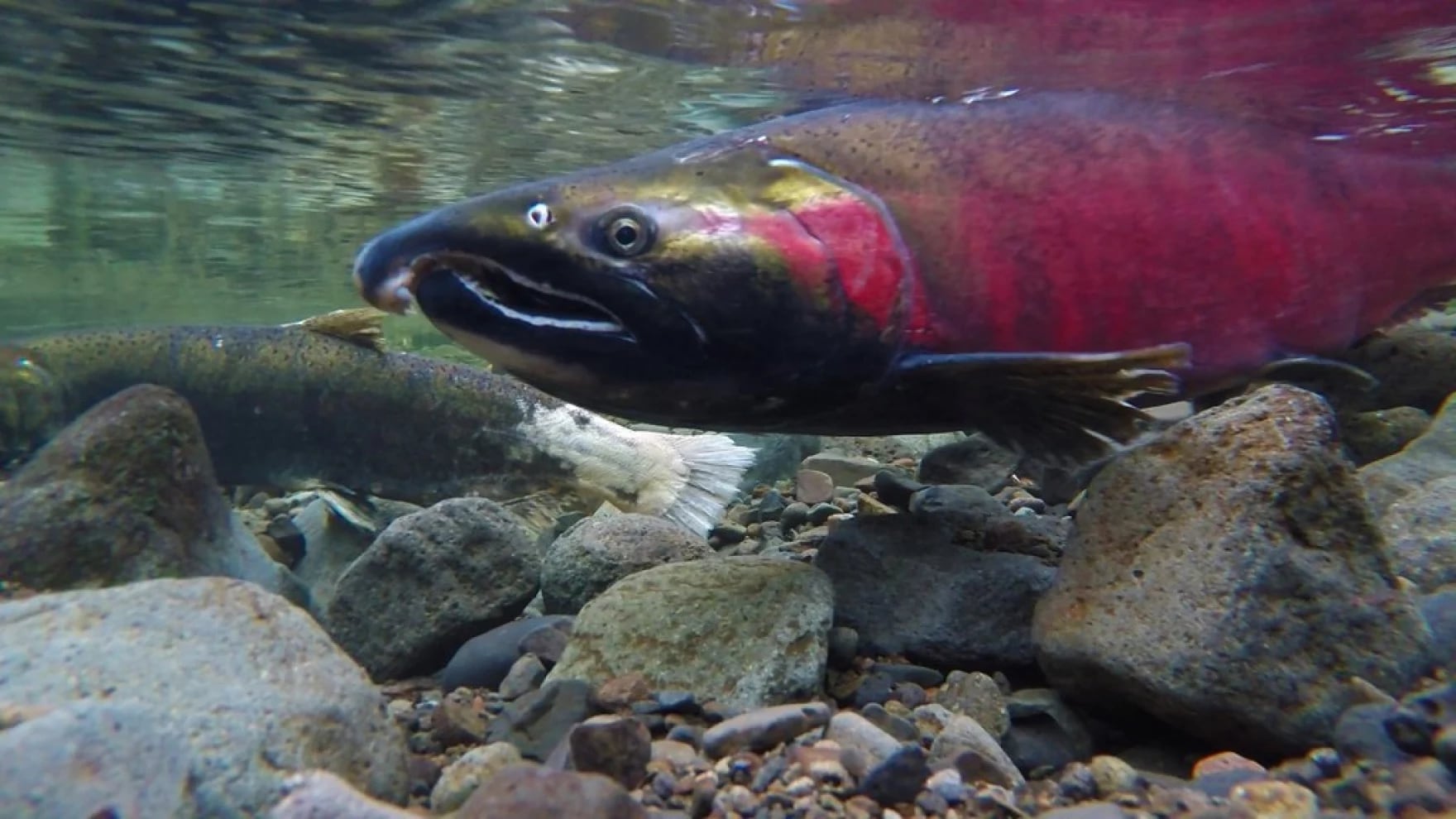
It’s a tough year for sockeye salmon in the Upper Columbia River. So few sockeye are returning to their spawning grounds that Washington isn’t allowing sockeye fishing from Priest Rapids Dam to Chief Joseph Dam. The season was supposed to open July 1.
It’s hard to predict just how many salmon will return in any given year, but fishery managers said they were shocked with how few sockeye reached Bonneville Dam.

They expected around 275,000 sockeye. Now, the forecast looks like fewer than 80,000 fish will return. That’s about 71% fewer sockeye.
These fish that migrate in the summer naturally have booms and busts. Recent low returns happened in 2011, 2018, 2019 and 2021. Some of the highest counts came in 2022 and 2024.
However, this few sockeye is troubling, said Chad Jackson, a fish biologist in north central Washington for the Washington Department of Fish and Wildlife.
“ The concern is what’s gonna get back to the spawning grounds and what kind of juveniles are they going to produce in the future that will result in a future adult run back,” he said.
He said biologists will keep an eye out for adult sockeye migration in about four years. That’s when the offspring of these salmon should return to their spawning grounds.
More than 95% of the Upper Columbia sockeye run to Lake Wenatchee or lakes in British Columbia to spawn, Jackson said.

“It seems that it has something to do in the freshwater environment from the spawning grounds through the Columbia River,” Jackson said.
Biologists will look at data from the fish that spawned four years ago – those are the parents of these sockeye. They’ll compare that with how many of their young fish migrated out to the ocean, he said. That could provide clues as to where things went bad for this run.
Salmon returns can sometimes cascade, Jackson said.
“There’s been some estimates of pretty poor survival to the spawning grounds, which results in fewer juveniles (and) then results in fewer smolts outmigrating,” he said.
In addition, Jackson said, a lot of adult fish survived in Lake Wenatchee in 2022, but that might not have been such a good thing.
“ There’s some evidence that maybe there was some competition between those juveniles in the water for aquatic food items, which reduced some of their survival in the lake and maybe numbers outmigrating,” he said.
At the same time, summer chinook in the Upper Columbia also are returning at lower numbers than expected. Spring chinook that head mostly to the Snake River Basin had low returns this year too.
So far this year, Washington has closed at least a couple of sockeye fisheries. It closed its recreational fishery on the Upper Columbia. The Hanford Reach sockeye fishery opened June 16 and closed early on June 20 because of low returns.
But fish can do odd things, Jackson said. If that happens, and more sockeye suddenly return, the state could reconsider opening some sockeye fisheries. That’s pretty unlikely, though, as sockeye tend to migrate in clusters.
“The run passing over Bonneville Dam is starting to end a little bit, where we’re just going to start getting hundreds of fish into trickles,” he said.
They’ll know more by the middle of July.
Now, it’s a waiting game as to how runs do later this year. Fall chinook and coho typically migrate in August.
“We’ll see whether they follow the same trends or whether they return as forecasted or stronger,” Jackson said.
Courtney Flatt is a reporter with Northwest Public Broadcasting. This story comes to you from the Northwest News Network, a collaboration between public media organizations in Oregon and Washington.
It is part of OPB’s broader effort to ensure that everyone in our region has access to quality journalism that informs, entertains and enriches their lives. To learn more, visit our journalism partnerships page.
News Source : https://www.opb.org/article/2026/07/09/upper-columbia-river-sockeye-fewer-returning-washington-closes-fishery/
Other Related News
07/09/2026
Pete Hegseths pastor is doubling down on his opposition to womens voting rights

07/09/2026
Through July 12 military commissaries worldwide are offering reduced prices to mark United...
07/09/2026
Read this story in English Oregon again sues feds over Trump homelessness funding limits t...
07/09/2026
The man accused of killing conservative activist Charlie Kirk later expressed regret over ...
07/09/2026
The HBO crime drama Task is officially set in the same universe as another beloved series

Follow

Download Our App


Copyright 2022 © EPUERTO. All Rights Reserved