

Published on: 12/10/2025
This news was posted by Oregon Today News


Description

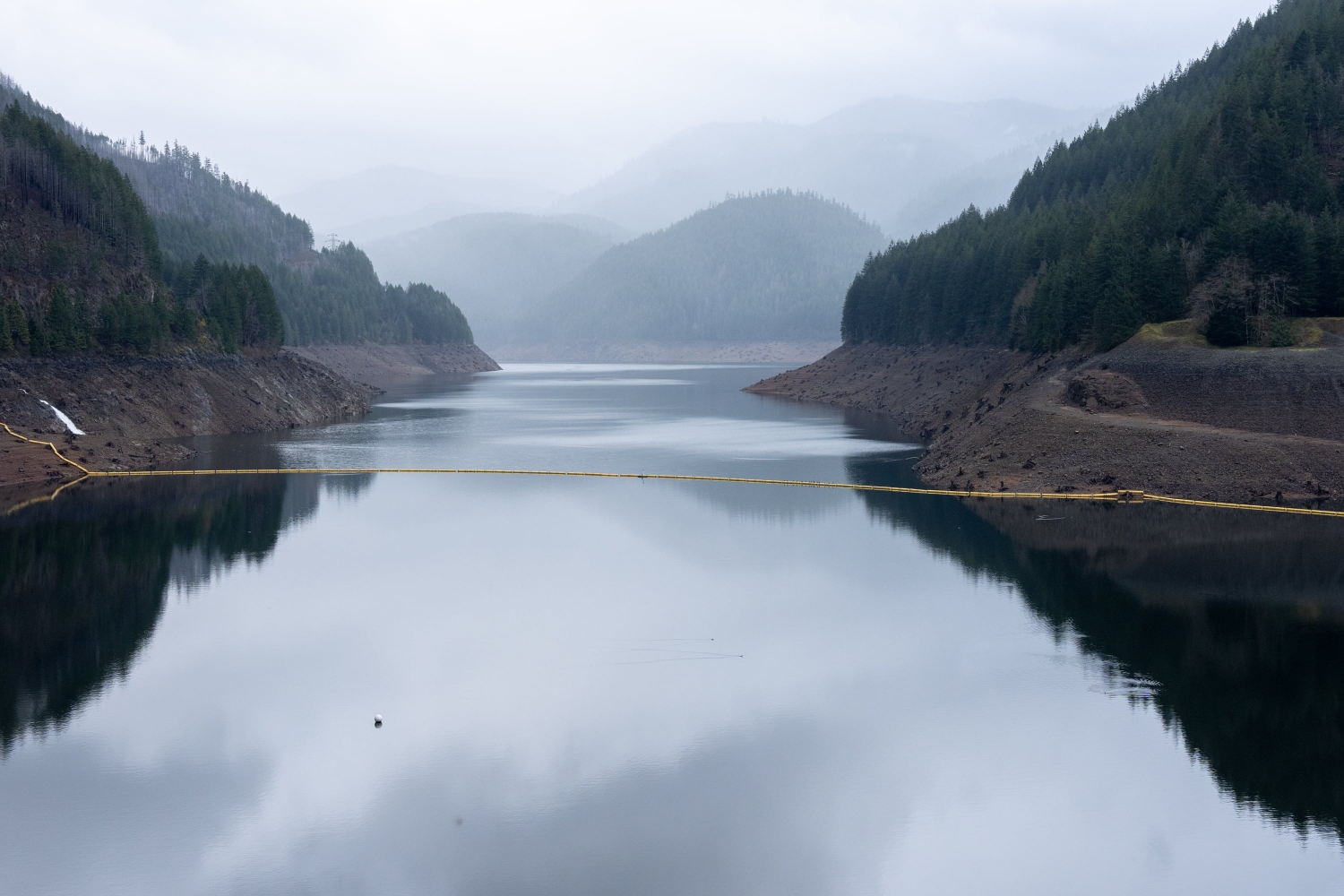
The U.S. Army Corps of Engineers is considering lowering Detroit Lake to its lowest levels ever, starting in the fall of 2026.
It’s part of an effort to help threatened Chinook salmon move downstream. But some local residents and surrounding communities argue such a significant drawdown could create dirtier water and damage the sportfishing industry in Detroit.
Greg Taylor, a supervisory fisheries biologist with the Army Corps, said the lower level makes it easier for the imperiled salmon to pass through Detroit Dam and survive downstream.
“The biggest challenge that you always have is helping the juvenile fish that are produced find their way out safely from the dam,” Taylor said. “(A drawdown) does allow them to actually find a safe passage.”
Detroit Lake typically reaches its lowest levels during the winter and begins to refill in February.

The planned drawdown would lower lake levels by a total of 55 additional feet. The move would likely have an economic impact on Detroit, which is still recovering from the devastating 2020 wildfire that destroyed much of the town. The lake, and the fish it contains, are a big draw — especially outside of the winter months — for a town that still has very few new businesses.
The fish that many locals and sportfishing enthusiasts are concerned about is a different type of salmon. Kokanee are a freshwater salmon that swim in Detroit Lake, but aren’t native to it. The fish were added to lakes, such as Detroit, in part to compensate for declining native salmon populations, like Chinook, which had been decimated by the construction and operation of dams.
A couple dozen people gathered at Detroit City Hall on Dec. 6 to learn more about the proposed drawdown and discuss their concerns.
Among them was Benjamin Morris of Albany, who also owns property in Detroit. Fishing for kokanee salmon initially drew him to Detroit, and now he’s concerned that the kokanee could disappear from the reservoir almost entirely.
“It definitely will have an impact, because for me personally, that’s a very large portion of my reason for me being here,” Morris said. “Everyone’s just initially concerned.”
Dean O’Donnell has lived in Detroit, where he used to run the local grocery store, for more than 25 years. He lost his home in the wildfire, which he eventually rebuilt. O’Donnell said the town can handle the drawdown if it refills completely during the summer.
“If they can’t fill the lake, we’re in trouble,” O’Donnell said. “We are that dependent on the lake as far as our economy goes.”
Taylor said the Army Corps’ modeling shows the lake will likely refill as normal, despite the lower water levels.
Much of the local concern stems from a similar drawdown at nearby Green Peter Lake in 2023. The sudden reduction led to increased turbidity, which strained local water systems and led to many kokanee salmon leaving Green Peter entirely.
Anticipating a similar impact, the City of Salem declared a state of emergency in July. That freed up additional funds to prepare their water system for additional turbidity. Salem’s utility planning manager, Jason Pulley, said there’s no danger of consumers drinking unhealthy water.
But more turbid water could significantly impact their water treatment plants.

“That’s where you could start to see real damage occurring to your treatment facility,” Pulley said.
The city has invested around $8 million in new water infrastructure, including developing new groundwater wells. Previously, the city relied entirely on Detroit Lake for its water supply.
Taylor said the Corps will likely adopt a more gradual approach with the Detroit drawdown than it did for Green Peter. Instead of drawing down the full 55 feet all at once, the level would gradually lower year-over-year until the target is reached.
He said it’s important that the Army Corps handles any drawdown carefully, because of the potential impacts to water quality.
“The idea there is that if we bring it down little by little, we’ll generate a little bit of turbidity, but not enough to impact the drinking water systems,” Taylor said. “It may take us a number of years to ultimately get to that target elevation.”
Taylor said the exact plan for the drawdown is not set in stone — a finalized decision will come sometime in the spring.

News Source : https://www.opb.org/article/2025/12/10/detroit-lake-lowest-levels-chinook-salmon-locals-concerned/
Other Related News

12/10/2025
Detectives are investigating after Corbett High School administrators discovered that some...

12/10/2025
English Premier League club Arsenal face off against Belgian side Club Brugge in this afte...

12/10/2025
Oregon State football has a new leader in head coach JaMarcus Shephard and he is signed to...

12/10/2025
French Champions Paris Saint-Germain do battle with Spanish side Athletic Club-Bilbao in t...
12/10/2025
The Secure Rural Schools act has provided crucial federal funding for rural schools and co...

Follow

Download Our App


Copyright 2022 © EPUERTO. All Rights Reserved