

Published on: 10/15/2026
This news was posted by Oregon Today News


Description
On a sunny fall day on Washington’s Puget Sound last October at what appeared to be a typical dock, Luan Roberts lay down on her belly, positioned her head over the edge, and peered down.
Nearby, a fishing boat puttered, a ferry shuttled passengers and cars, and seagulls cawed. As a family passed Luan’s prone body, the mother muttered, “People are so weird.”
Luan had heard variations of this before.
“It definitely looks a bit goofy,” she admitted. “But that’s just because people don’t know what you’re doing.”
What the passing family couldn’t see is what Luan saw just below the surface of the water.
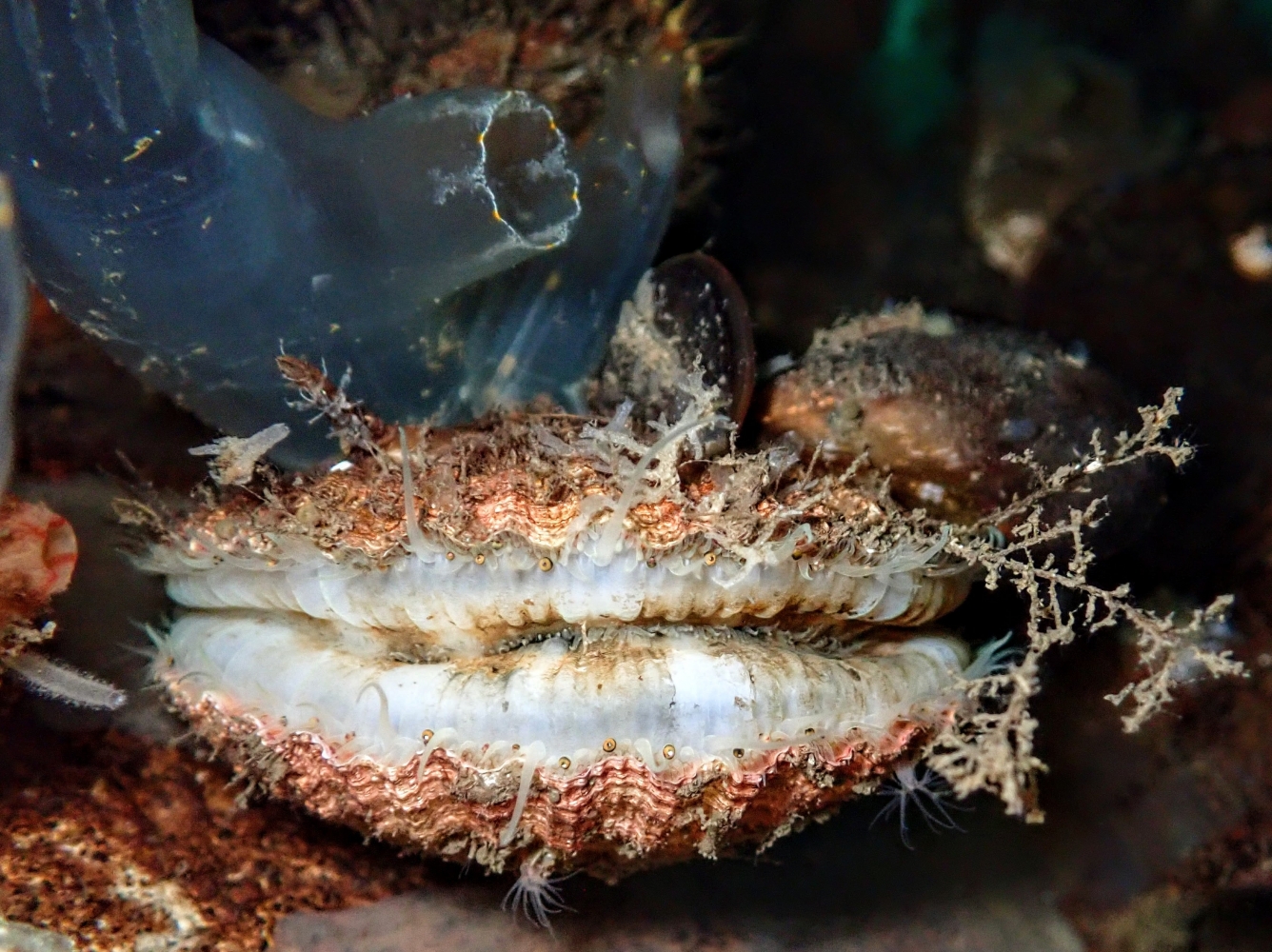
Clinging to the dock’s pilings were layers of sea life swaying with the rhythm of the current, including skeleton shrimp, mussels, anemones, tube worms, barnacles and sea stars.
“The side of a dock is basically a living reef,” Luan said. From her perspective, docks offer a window into an “untapped niche in the ecosystem” that few people know about.
Her mission is to get more folks involved in the emerging citizen science known as “dock fouling” with Dock of the Month Club meetups around Puget Sound.
This month, she’s inviting everyone to join the Doctober global bioblitz to document wildlife living under docks worldwide.
‘Like birding, but more punk rock’
The term “dock fouling” traditionally describes the common state of marine life growing on and “fouling” the human-made parts of a marina such as pilings, boat hulls, and even ropes and floats. But it has also become the name for the activity of observing those communities in a way that’s similar to tide pooling but at docks instead of ocean shores.
Unlike tide pooling, with dock fouling there is no need to consult a tide table and wait for a minus tide. A floating dock rises and falls with the water, bringing its underwater community along with it.
As far as pastimes go, “it’s definitely a bit out there still,” Luan said. “You have this funky name for it, ‘dock fouling,’ which sounds like something you might get in trouble for with your landlord.”
Or, as Luan described: “It’s like birding, but more punk rock.”

Luan likes to stop after work or head to a dock on a day off. She has her favorite spots, but she might drive several hours just to check out a marina she hasn’t visited before.
Each dock is different, and the same dock can be different from week to week and season to season, she said.
Luan has spent years exploring the hidden life beneath docks, photographing what she finds and recording observations on iNaturalist, the online platform where professional scientists and amateurs document plants and animals. Luan contributes hundreds of observations every month.
She even wrote a how-to book, “Dock Fouling Adventures: A Guide to Exploring Marine Life on Public Docks.”

The rise of Docktober
Every October, Luan encourages people to get involved in a monthlong event she calls “Docktober.”
She describes the idea as a “bioblitz”: an invitation for people to visit a dock, look underneath it, photograph the organisms they find and upload those observations for others to see and identify.
The idea gained momentum during the COVID-19 pandemic. The community that developed around dock fouling allowed for a kind of “asynchronous socializing,” she said. People could visit the same places without necessarily visiting them together.
Conversations and friendships developed online. Eventually, some began meeting “in the wild,” as Luan calls it. The community has continued to grow.
This year, Luan launched the Dock of the Month Club, which attracted more than 150 members to meet up at least once a month at a different dock.
During Docktober, the schedule gets busier, with multiple meetups planned at docks around Puget Sound.
With Luan’s efforts, the popularity of Docktober has gone far beyond Puget Sound. Last Docktober, Luan counted roughly 32 participants contributing nearly 1,000 observations of about 180 species from as distant as Scotland and South Korea. Already in the first week of Doctober this year, there have been 3,237 observations of 312 species, Luan said.
“It’s super exciting that we’ve gone international with the project,” Luan said.

‘You’re actually contributing to science’
For Luan, the accumulated observations create a useful baseline of data. Thousands of observations, accumulated over years and locations, can begin to reveal patterns in what species are living where, and how many. Over enough years, the data points tell even more important stories, when a species appears in a location — or vanishes.
“A few years ago there were very few people doing this kind of thing, and now there is a whole network of us that are contributing to the scientific record,” Luan said.
This has changed the way she thinks about her favorite pastime.
“You’re not just doing something for yourself,” she said. “You’re actually contributing to science.”
With every peek under a dock, there seems to be something waiting to be discovered.
“And that just pushes you further to keep on going and seeing what else is there,” she said.
So this October, if you find yourself walking down a dock, take a moment and peek over the edge. Passersby may think you look a little strange, but you might be amazed by the underwater world hiding in plain sight.
News Source : https://www.opb.org/article/2026/10/15/docktober-washington-oregon-animals-wildlife-science-fouling/
Other Related News

10/15/2026
Daylight saving time is about to end Are you ready
10/15/2026
You know that Pringles tagline Once you pop you cant stop The iconic chips brand is now of...

10/15/2026
William Catlett Cameron Scoggins and Devin Kessler preview Crystal Lake the prequel TV ser...
10/15/2026
Dear Miss Manners Could you please provide me with a kind way to respond when someone I am...
10/15/2026
I spent 20 years in the Oregon Legislature as a Democrat and I learned something that does...

Follow

Download Our App


Copyright 2022 © EPUERTO. All Rights Reserved