

Published on: 03/22/2026
This news was posted by Oregon Today News


Description

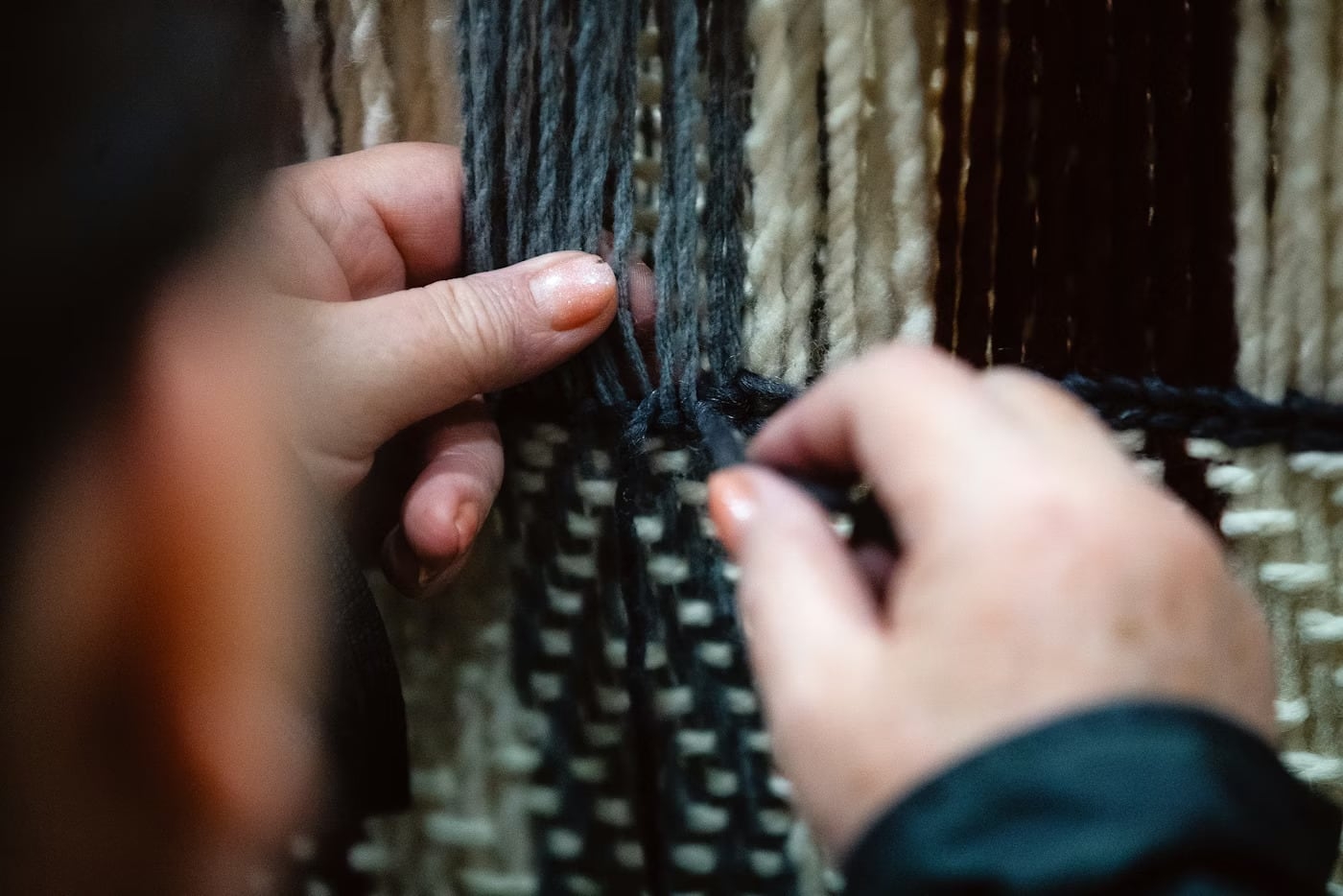
Wool weaving nearly went the way of the woolly dog, a breed that once thrived in the Coast Salish communities but went extinct in the wake of colonialism. Today, an exhibition at Seattle’s Burke Museum showcases both ancestral and contemporary works, thanks in part to a local instructor who is helping its revival and teaching the next generation of weavers.
On a recent Saturday morning at the Tulalip Tribes Youth Center, Sue Dixon (Lakota) was arranging skeins of colorful yarn on her table, the products of a yearlong weaving program that started with gathering raw materials in the field.
“This was dandelion fluff,” Dixon said, pointing to the tiny strands embedded in the fibers.

The skeins are mostly sheep’s wool. Some have been spun with plant fibers.
“Our ancestors, they added different things to get their wool better, more wearable,” Dixon explained.
She showed skeins that have been dyed with Oregon grape, elderberry, or marigold.

Nearby, 24 year-old student Syrille Jones (Tulalip) was finishing up a speaker sash woven in black, white, and yellow diagonal lines. He recalled working with raw wool on the first day of class and learning the different parts of the sheep.
“You could tell this was the front because there’s lots of bushes where they rub, and then there’s the back because there’s a lot of poop back there,” he chuckled.
Jones said after it’s washed in soap and water, the wool is ready to be spun, dyed, and finally, woven.

Jones and his generation are embracing cultural traditions that were once banned under federal law in the late 19th century. The rise of Native American activism changed that.
Tayna Joseph-Greene, a member of the Tulalip Tribes, said these cultural connections have become part of their daily lives.
“I think that’s why they’re excited,” Joseph-Green said, “because they’re allowed to be proud of their culture now instead of my grandparents’ generation, out of boarding school, that maybe was trying to hide it.”
Susan Pavel has been helping to revive Salish wool weaving. She is Executive Director of the Coast Salish Wool Weaving Center, an organization she co-founded with Marilyn Wandrey (Suquamish), Tillie Jones (Tulalip), Michelle Cohen (non-Native), and Tahnee Miller (Skokomish). The center aims to preserve and promote wool weaving traditions of the Coast Salish tribes.
“When I started this journey in the summer of 1996, I am clear I had no idea what I was getting into,” Pavel said.

This class, hosted by the Tulalip Tribe, in collaboration with the Coast Salish Wool Weaving Center, is a credited program through the Evergreen State College.
Pavel is Filipina by birth. She married into the Skokomish tribe. It was her husband’s uncle, Bruce Miller, a master weaver who taught and mentored her.
Miller was on the younger end of 14 children. His older siblings lived through the era when Native traditions were stigmatized. He, on the other hand, embraced those practices and became a catalyst for bringing them back.
“We would live with him in the summers, and his doors were always being knocked upon, his phone was always ringing,” Pavel recalled. “People were coming and going and coming and going because they were learning basketry, they were learning medicinal plants, they were learning language.”
Pavel said it inspired her and others to share these teachings. She admitted it’s unusual that an outsider like her would carry on the tradition. She said there were times when she felt doubt and wanted to walk away from the endeavor.
“It was really my weaving sisters that lifted me up and very directly would, all of them say in their way, shape and form, that Uncle chose you for a reason,” she said. “And who are you to question why he chose you to do this work?”
Pavel said one of the teachings of the craft is to gift your first weaving to someone in your circle, an act of community.
Tayna Joseph-Greene already had someone in mind.
“This is going to be a pendant for my partner who’s taking care of our kids this whole year while I’ve done the class on the weekends,” Joseph-Greene said. “I really appreciate him.”

She was determined to give more than her weaving works. She’s now the matriarch of her family and plans to pass those traditions on to her daughters.
The exhibit “Woven in Wool: Resilience in Coast Salish Weaving” is showing at the Burke Museum through August.
This article has been updated to clarify the yearlong weaving program is a credited program through the Evergreen State College.
Ruby de Luna is a reporter with KUOW. This story comes to you from the Northwest News Network, a collaboration between public media organizations in Oregon and Washington.
It is part of OPB’s broader effort to ensure that everyone in our region has access to quality journalism that informs, entertains and enriches their lives. To learn more, visit our journalism partnerships page.
News Source : https://www.opb.org/article/2026/03/22/coast-salish-wool-weaving-renaissance-washington/
Other Related News

03/22/2026
On the top floor of a Spanish immersion elementary school in St Paul Minn a classroom of f...
03/22/2026
At least 64 people were killed including at least 13 children in a strike on a hospital in...
03/22/2026
Cubas power grid collapsed Saturday leaving the country without electricity for a third ti...
03/22/2026
An aspiring physician who welcomed twins during school found out on Match Day that he woul...

03/22/2026
Todays second-round slate features the No 7 seed Miami Hurricanes taking on the No 2 Purdu...

Follow

Download Our App


Copyright 2022 © EPUERTO. All Rights Reserved