

Published on: 03/15/2026
This news was posted by Oregon Today News


Description
Shortly after the Sept. 11 attacks, the Federal Aviation Administration ordered U.S. airspace cleared. Within about three hours, all nonmilitary aircraft were grounded, an unprecedented move in both scale and speed.
But what happened to the passengers on those planes who landed in unexpected places? And how did their sudden arrival affect the airports and communities where they landed?
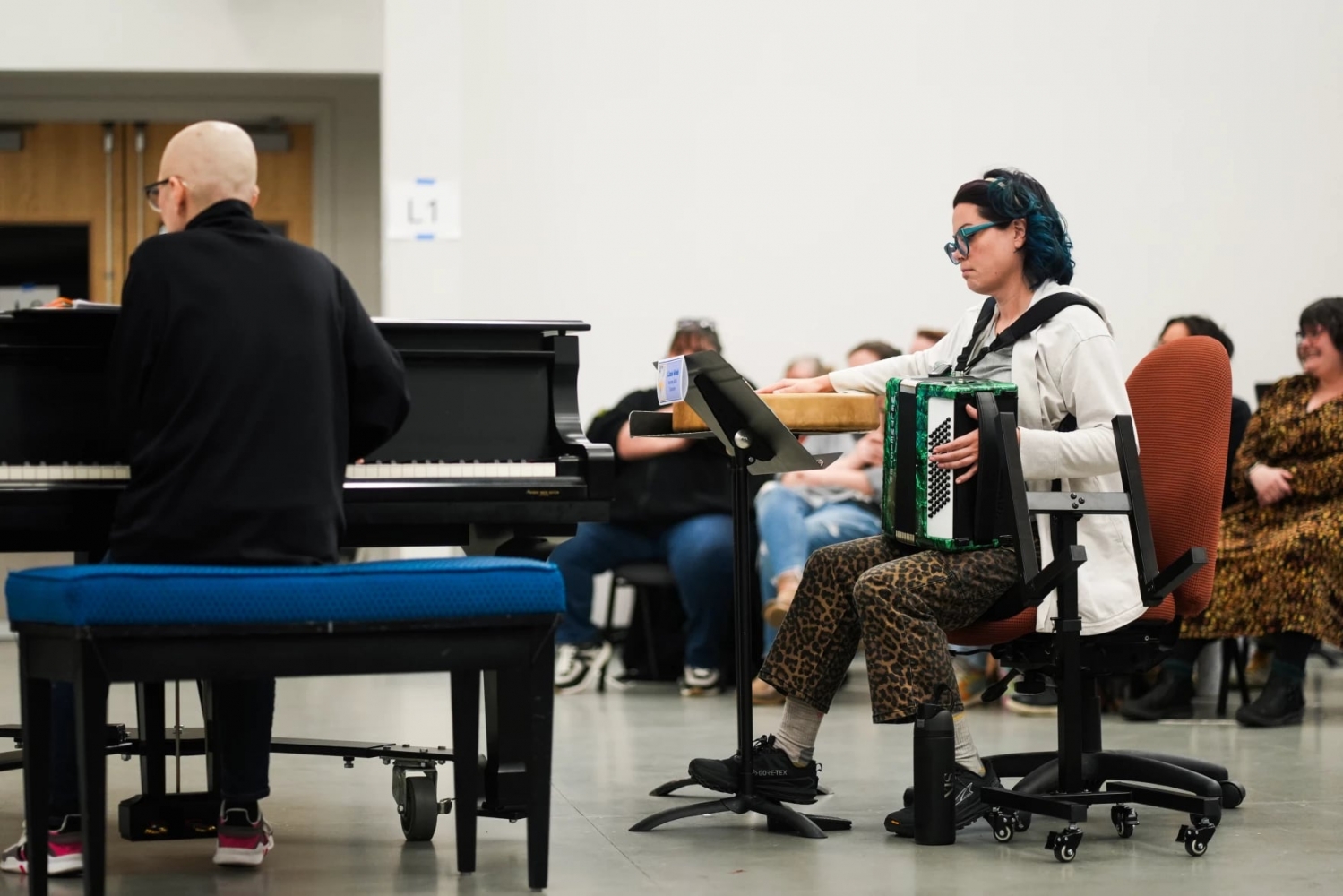
Those questions are at the heart of the award-winning musical “Come from Away,” which runs March 14 through Oct. 24 at the Oregon Shakespeare Festival in Ashland, Oregon’s Angus Bowmer Theatre.

A ‘9/12 story’
Although many people associate the musical with the events of Sept. 11 itself, “Come from Away” focuses on the days that followed.
“The people of Newfoundland — specifically Gander and some of the surrounding areas — opened their arms, their community, their homes to more than 7,000 people who were displaced in 38 planes," director Laurie Woolery said.
The large airport and coastal location in Gander, a small town in Canada’s Newfoundland and Labrador province, made it a natural place for diverted flights. For decades, aircraft often stopped there to refuel on transatlantic routes.
But the sudden influx of passengers more than doubled the area’s population overnight.
“It’s an incredibly moving story about being a good neighbor,” Woolery said, “about not allowing fear to get in the way of assisting your fellow humans.”
For Woolery, the musical reminds audiences that compassion can emerge even in moments of crisis.
Seeing humanity in neighbors, and even strangers
Woolery said she was drawn to directing the show at the Oregon Shakespeare Festival because of the community’s own experiences with crisis and resilience.
“I think about, whenever I take on a project, why tell the story now?” she said.
Having worked with the festival for years, Woolery said she sees parallels between Gander’s response and how Ashland residents supported one another during local challenges, including the COVID-19 pandemic and the Almeda Fire.
“This is a community of resilience, of people coming together to help one another,” Woolery said.
She recalled how the Oregon Shakespeare Festival opened its facilities as a place for donations and community aid during the wildfire disaster.
Woolery said she hopes the show serves both as a tribute and as a reflection of the community around the theater.
“I wanted this play to be a love letter and a thank-you letter to this community,” she said. “How do you keep people safe but not let that close you off to helping others?”

Turning thousands of real stories into a musical
The show’s creators, David Hein and Irene Sankoff, based the script and songs on their interviews with passengers and Newfoundland residents who experienced those days firsthand.
Some lines in the musical come directly from those conversations.
One of the real people portrayed in the show is Beverly Bass, a pilot with American Airlines whose plane was diverted to Gander. Bass has spoken about attending a performance and sobbing as she heard her own words spoken onstage.
With only about a dozen performers, actors frequently shift between multiple roles to portray the wide range of people involved.
That structure reflects what the creators once described as the central challenge of the show: how to tell “16,000 stories in a 110-minute musical.”
Through composite characters and carefully chosen moments, the production captures the emotional arc of those days — from confusion and fear to connection and gratitude.
Building movement from everyday actions
While “Come from Away” is a musical, its choreography differs from the large dance numbers common in many Broadway productions.
Instead, choreographer Kelly Devine said the movement grows out of everyday actions and the rhythms of the story.
“Our shared goal was how to find a movement language together with this incredible company of actors that feels lived in for them,” she said.
Because each performer plays multiple roles, physical details help distinguish characters.
“How they differentiate in terms of posture or their gait — how they carry themselves — becomes really important,” Devine said.
Even simple stage elements take on multiple meanings. Chairs become airplane seats, bus benches or restaurant tables depending on how actors arrange them.
Devine said those transitions are carefully designed to maintain the story’s momentum.
“The music never stops,” she said. “There’s underscoring underneath all the transitions, so even how we move from one moment to another — the story keeps going.”
Movement also conveys the emotional state of the characters. Passengers sitting on grounded planes for hours gradually show fatigue and stress through body language.
“If they’re sitting on a plane on the tarmac for 28 hours, how does their body language shift over that time?” Devine said.
The production also draws inspiration from Celtic musical traditions that reflect the region’s cultural roots.
“There’s something about the influence of Celtic music that feels vibrant and communal,” Devine said. “It invites participation.”
Vanessa Finney is a reporter with Jefferson Public Radio. This story comes to you from the Northwest News Network, a collaboration between public media organizations in Oregon and Washington.
It is part of OPB’s broader effort to ensure that everyone in our region has access to quality journalism that informs, entertains and enriches their lives. To learn more, visit our journalism partnerships page.
News Source : https://www.opb.org/article/2026/03/15/oregon-shakespeare-festival-come-from-away/
Other Related News
04/14/2026
The pilot showed inside his 1940s seaplane and recited what happened just before the emerg...

04/14/2026
A Portland man died after his car crossed the center line and hit a commercial truck on Hi...
04/14/2026
PENDLETON More than 1300 children recently participated in Read for the Record at the Blu...
04/14/2026
The PeaceHealth executive placed on administrative leave last week has now been ordered by...
04/14/2026
Check your tickets for Oregon daily lottery draw games here

Follow

Download Our App


Copyright 2022 © EPUERTO. All Rights Reserved