

Published on: 06/21/2026
This news was posted by Oregon Today News


Description

Talking about money can bring up a lot of emotions — stress, guilt, shame. Many people are struggling financially due things outside their control: the rising cost of living, high fuel prices, and stagnant wages.
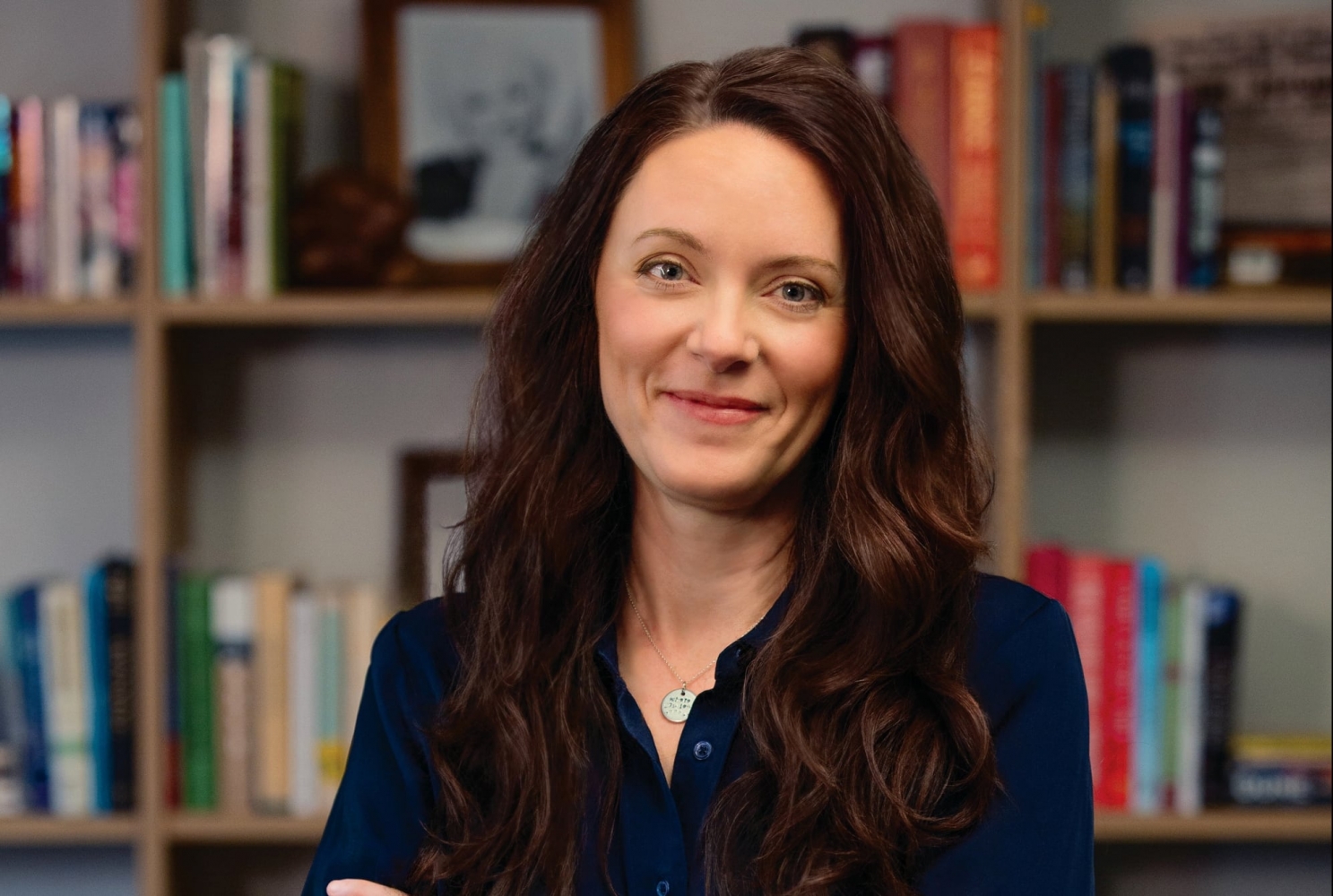
Portlander Carrie Joy Grimes’ new book, The Joy of Money, looks at the relationship people have with money and why financial habits can be so hard to change. Grimes is the founder and CEO of WorkMoney, a nonprofit focused on negotiating for lower costs and helping Americans build economic security.
Grimes spoke with OPB “Weekend Edition” host Lillian Karabaic about her new book.
This transcript has been edited for clarity and length.
Lillian Karabaic: One of the things you write about is how shame, not lack of information, is often the biggest obstacle in improving our finances. You talked about your own story with your dad’s church-based views on money. Can you tell me that story and how that changed your own relationship with money?
Carrie Joy Grimes: My dad really believed that men were responsible for money and women were responsible for doing what they were told to do with their money by the men and also that it was not appropriate to talk about money. I was out of my house at a very young age.
I was a teenager and I didn’t know how to handle money. I was bad at money and I just assumed there was an inherent thing about me that said, “I, Carrie Joy, am not supposed to be good at money.”
I spent way too many years thinking that all my money problems were because I was somehow fundamentally broken and unable to do any better. It was very “shame, shame, shame, shame.”
There was a moment in my life when I had a real change — I did something good with money. I was able to pay back a debt that I’d made and I paid it back and I was like, wait a minute, that was like good money behavior. “Wait, what if I’m actually good at money?”
I took that one little victory and I had this mental remodeling and I just decided to tell myself a different money story. I just rejected my money background and I was like, “You know what? I am good at money.” And I just said to myself every day for a long time, I can be good at money. And it fundamentally changed how I behave with money and frankly how much money I ended up having.
Karabaic: You talked about how so much financial education is based on the idea that people are making bad choices. What do you think is missing from this idea that it’s all on individuals’ choices?
Grimes: Everybody gets dealt a hand of cards and you got to play the hand that you’re dealt. So there’s not like a whole pass out of being responsible for the stuff that you buy and the way you manage your money or don’t. I mean, everybody’s got to deal with the cards they’ve got, but let’s be really honest with each other, we’re not all getting the same cards all the time.
Some people get billions of great cards and some of us start with not that many good ones. And I think that taking the hand you’re dealt and doing what you can with it is fundamental. It’s floor level. You got to learn the basics.
But believing that if it’s hard for you, it’s because you did something wrong, that is really limiting behavior. And I think that the answer to that is a bunch of us getting together and using like the size of a group to bargain for cheaper stuff and to think about how we change the rules that create the kind of cards you’re dealt.
Karabaic: You spent years as a union organizer before you moved to this personal finance education space. How did you think about organizing when you also started working on personal finance? How did that inform your work now?
Grimes: Oh, this is such a banger in my life because I was stinking up money. I had felt like I was bad at it for so long and every time I made a bad decision, it just like self-reinforced that I was bad. So I would go to the store and use swipe my debit card and it wouldn’t go through and I was like, “Ah, more proof.”
But I began to organize a bunch of workers. I mean, thousands of conversations, mostly I started out in the Midwest, Kentucky, Ohio, West Virginia and I realized that individual people, not just me, were having the same kinds of money problems.
At the time when I was like beginning to claw myself out of my own debt, I got to see working middle-class people building power in their work sites, in nursing homes and hospitals and Head Start agencies and childcare facilities coming together and figuring out how they could use their strength and numbers to get higher wages.
And in every conversation I would have with them, they were in the same kind of personal bucket that I was in, but I watched people like me and some of the workers I was organizing, our members figure out how to get better at their money individually. But I really saw how when they could bargain for better, they got a lot more. And so I often say like, “You got to do the individual work.”
I don’t actually believe in beans and rice and latte celibacy as the way to good personal finance. The behavioral science on this stuff is really clear: do some things that feel good, otherwise you won’t follow your budget. Obviously, people got to do the best they can with what they’ve got, but the real money comes, the real better comes, when we work together to bargain for more.
Karabaic: You were talking about how we’re not all dealt with the same hand while we’ve also gotten the recent news that the world has our first trillionaire and it’s at the exact same time that Americans are more anxious about money than they’ve ever been.
Collectively, even people that are employed and paying their bills, everybody kind of says, “I don’t feel good about the way the economy is going.” And even if the numbers always don’t have as bad of a tale, the vibes are off generally.
Grimes: The vibes are off. I mean, if you saw the recent news come out of the Fed, inflation is higher than wages. We are going backwards.
Karabaic: For the first time!
Grimes: This is not good news. So if people feel like they’re stuck or they’re going back, they’re not wrong. People have the common sense of everyday folks about how the economy is doing is pretty on point. It is harder.
Not to mention that historically, I don’t have to tell anybody who’s listened to this. If you live and you are alive now, you know that cost of education is way higher. The cost of healthcare is way higher. Groceries are obviously up. Energy prices — I mean, don’t even get me started!
I think that’s part of why I always say we got to do the work to do the individual work that we can do, but that’s not a sufficient-enough solution.
Karabaic: There is a ton of financial advice out there right now. Do you see any really big misconceptions that are circulating, especially like TikTok I find is kind of a hotbed for financial misinformation.
Is there anything that you see yourself constantly pushing back about or trying to redirect course around personal finance advice?
Grimes: I’ll say this. Money is not that complicated. It just isn’t. It’s not. Most of us in this country, it’s having a budget. It’s figuring out how to maximize any retirement advantage with your employer, but the tax advantage retirement accounts are what we should be investing in.
If you have not maxed out your tax advantaged retirement accounts, that’s an IRA, it’s a 401(k), it’s a 403(b), it’s a SEP IRA if you’re self-employed. Do that before you do anything else. My skin crawls at the meme stock nonsense and the polymarket, cryptocurrency, fast track.
But I understand why those things are so popular. It’s because it’s so hard out there. It’s because if you’re a young person or even an older person who’s trying to figure out how to get to retirement, it feels like an impossible journey. And so people are taking risks or looking for answers that individual answers because of the difficult system that I think a lot of us are in.
So the one thing I would say, the thing that it’s like the most delightfully boring thing. It’s like most of us, the answer is just get your budget, get out of high-interest debt and then max out your tax-advantaged retirement accounts.
Karabaic: All right. Words to end on.
Carrie Joy Grimes’s new book, "The Joy of Money," is available now. Grimes is speaking and signing books at Powell’s Books in Portland on June 22.
News Source : https://www.opb.org/article/2026/06/21/carrie-joy-grimes-personal-finance-book/
Other Related News

06/21/2026
Attendance at Portlands major performing arts venues never fully rebounded from the pandem...

06/21/2026
The Polymarket invite code OREGON has gone live this Summer Solstice morning timed to one ...
06/21/2026
As a former county commissioner I championed practical solutions that strengthen families ...

06/21/2026
Oregon is home to dozens of covered bridges many of which have stood for more than a centu...

Follow

Download Our App


Copyright 2022 © EPUERTO. All Rights Reserved