

Published on: 05/28/2026
This news was posted by Oregon Today News


Description
This story is a special collaboration with the Southern Oregon University Laboratory of Anthropology and the Oregon Historical Society, with support from Roundhouse Foundation.
The Kam Wah Chung and Company (金華昌) building has been a constant in the town of John Day for more than 150 years, where it has served as a home, store, medical practice, religious and community center, and — most recently — a museum.
Under the ownership of Ing Hay (伍于念) and Lung On (梁光榮), both immigrants from southern China, the business quickly became an anchor in the community.
It continues to serve as a key economic driver to this day as tourists flock to the site in what now is a popular state park.
Image courtesy of the Oregon Historical Society.
Even though only one building out of the dozens that once stood in the John Day Chinatown remains, “You think about all of the communities where the apothecaries, the businesses, the stores are no longer standing,” said historian Tamara Venit Shelton.
The loss of these physical remnants of Chinatowns and Chinese businesses highlights how vulnerable this part of Oregon history has been, and how much has been erased.
The life and legacy of ‘Doc Hay’
The John Day Chinatown grew up along the banks of Canyon Creek in the 1860s, where its residents mined for gold near the confluence of the creek with the John Day River. By the 1870s, over 80% of the miners in Grant County were of Chinese descent, and John Day was one of the many communities that sprung up to provide goods and services to this growing population.
The Kam Wah Chung and Co. sold sturdy shovels, specialized picks and a variety of snacks to hard working miners but evolved over decades to fill other gaps in the market and serve the larger community of the region.
While the merchandise store was the backbone of the company’s operation, Ing Hay’s medical practice was, in many ways, the heart. Accounts differ as to where Ing received his medical training, but none question his skill in the medical arts.

While Ing’s fame as a doctor is notable, he was actually just one of many serving the region in the 19th century: Grant County had three Chinese American doctors listed in the 1870 Census and five in 1880 along with at least three non-Chinese physicians. However, unlike many of his colleagues, Ing stayed and served generations of patients well into the 20th century.
Thanks to the favorable environmental conditions, archaeologists and historians not only have unprecedented information about Ing’s life and practice through his recipes, documents and patient oral histories, but also through the survival of his robust apothecary of traditional Chinese medicines (TCM) — believed to be one of the best-known such collections in the world.
Shelton noted that “Pieces of different apothecaries exist in Boise, in Los Angeles” but the Kam Wah Chung and Co. “is like Tutankhamun’s tomb.” Shelves and boxes of herbs, roots, minerals and other ingredients survive, along with bottles, vials, mortars and pestles that allowed Ing to practice his craft, making it “even better than a tomb, because someone lived here.”

While securing ingredients relied on complex global networks — which is especially impressive in a town like John Day that never saw the railroad — Ing got creative in the way he would fill gaps in his rural market. He incorporated local ingredients where he could and repurposed empty soda, beer and booze bottles to deliver his medications into the homes of his patients.
An oral history with former patient George Benson recalled, “There were three doses in one of those quarts. You poured it out in a cup and warmed it up before you drank it.”
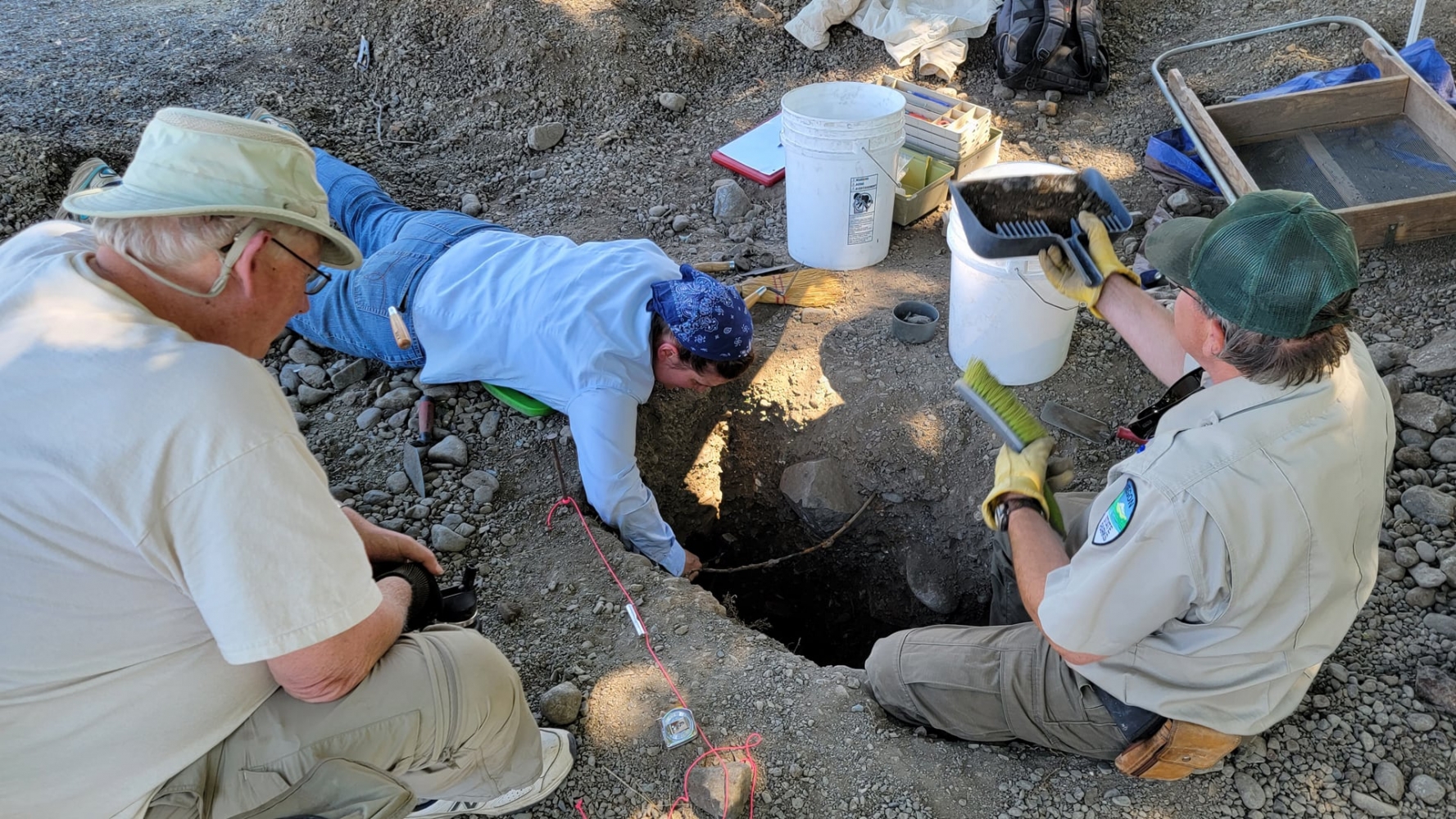
Archaeological investigations by the Oregon Chinese Diaspora Project (OCDP) uncovered hundreds of glass bottle fragments potentially slated to be used for medicinal preparations, along with bottles containing commercial medicines sold in China and the United States.
Honoring Eastern Oregon’s most famous family doctor
Now a State Heritage Site, the Kam Wah Chung and Company Museum has dozens of letters and oral history accounts describing the ways in which “Doc Hay” treated the residents of the region and beyond.
He saw patients in person, made house calls and sometimes diagnosed and treated some ailments through the mail. Even now, when working at the site, museum visitors often have personal tales of family members that were patients of Ing Hay.
He treated blood poisoning for local ranchers, healed sick children and offered women access to healthcare in a way they never had before.
A letter preserved in the museum from a woman in Burns, Oregon, asks Ing for a herbal remedy to help shrink a tumor on her neck, “Because otherwise, I have to go see the doctor. And I have such a dread of the knife.”
The discretion, herbal remedies and noninvasive treatment such as pulse diagnosis appealed to the many women who had bad experiences or were distrustful of Western medicine.
This patient demographic was not only cultivated through word of mouth, but also through targeted advertising to the women of the region. Over the course of his career, Ing Hay built trusting relationships with his patients and forged an influential role in his community long after the John Day Chinatown was abandoned.
Serving as a family doctor in a small community is what Shelton describes as an intimate economy, “You know a lot about them, about their bodies, but also about the environment in which they live. So, he was a sort of extended part of a lot of people’s families.”
This story was written and reported by Chelsea Rose, edited by Arya Surowidjojo, and digitally produced by Winston Szeto. The short documentary was filmed and edited by Christie Goshe.

- Learn more from Tamara Venit Shelton’s work about Ing Hay and other Chinese doctors:
- “Herbs and Roots: A History of Chinese in the America Medical Marketplace”
- The Oregon Historical Quarterly article “Curiosity or Cure: Chinese Medicine and American Orientalism in Progressive Era California and Oregon”
- Researchers find Western scientific data on the Interstitium, a complex circulatory system that Eastern medicine has understood for centuries through practice of acupuncture.
News Source : https://www.opb.org/article/2026/05/28/kam-wah-chung-archaeology/
Other Related News

05/28/2026
Subscribe to OPBs First Look to receive Northwest news in your inbox six days a weekGood m...
05/28/2026
Oregons public universities and Amazon and its affiliates were also among those most liste...
05/28/2026
Stay up to date with our Up First newsletter sent every weekday morningPresident Trump has...
05/28/2026
One person is dead and another seriously injured in two unrelated crashes about eight hour...
05/28/2026
Many of the most important lessons we carry with us are passed down over time how to be ca...

Follow

Download Our App


Copyright 2022 © EPUERTO. All Rights Reserved