

Published on: 05/06/2026
This news was posted by Oregon Today News


Description
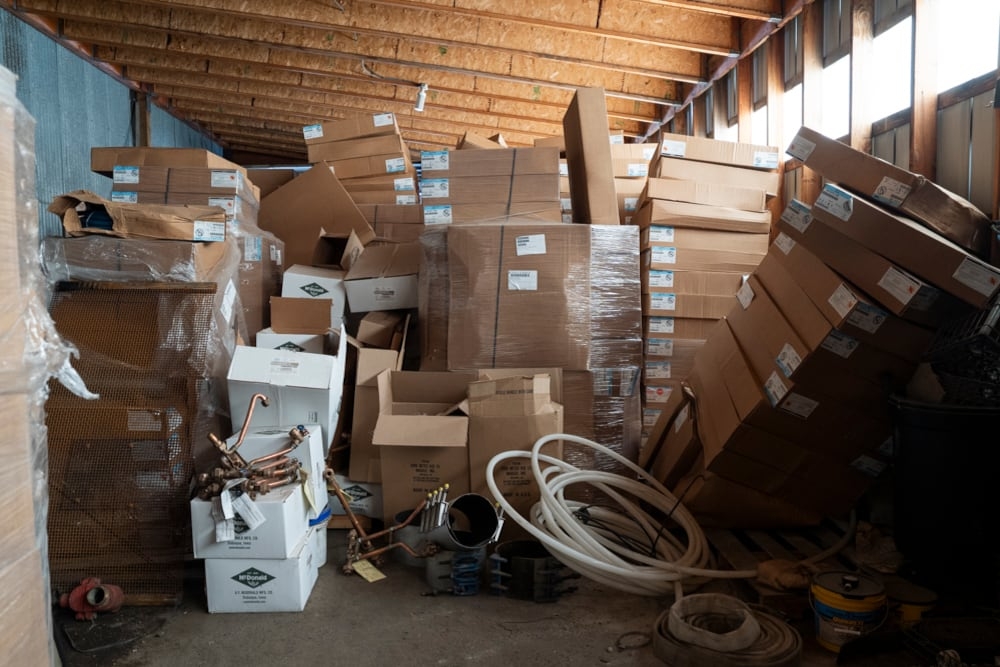
Teetering stacks of boxes are gathering dust in a cluttered public works shop in Lakeview, a small town that sits amid the sagebrush at the foot of the Warner Mountains.
The boxes contain more than $386,000 worth of pipes, valves and other hardware meant to connect homes with water meters that the town has no plans to use. It’s a glaring reminder of the excessive spending and unanswered questions that loom over the rural town of 2,400 as it navigates a staggering financial crisis years in the making.
“This is only a small portion of it. There’s more in another building,” said Pete Fortune, Lakeview’s public works boss, who hopes to sell the equipment. “I don’t understand how it got ordered this much.”
Like many former timber towns, Lakeview has struggled to rebound from the collapse of the logging mills that once powered its economy and helped the community survive in this isolated corner of Southern Oregon.

But in its desperate pursuit of growth and change, a series of cascading problems — bad bets, mismanagement and industry failures — pushed the town’s government into millions of dollars of debt it can’t pay off, according to current and former town officials and records reviewed by OPB. The crisis dominated conversations when OPB visited in December.
“We didn’t have a process. We didn’t have governance. We didn’t have a structure,” Marc O’Brien, a rancher who has since become the town’s mayor, said during a finance committee meeting. “What we had was a lot of manipulation from people that were influential and (stuff) got passed. And I think that stuff’s got to stop.”
Lakeview’s story is an extreme example of the pitfalls facing governments across Oregon’s tight-knit rural communities, where departments face high turnover, scant oversight and meager resources. As residents work to keep their town alive, what happened here shows what’s stacked against many former logging communities that could be just one misstep away from financial disaster.
“This is a major mess of our own creation,” said Stan Foster, who has served as Lakeview’s interim town manager since July. “And it’s only one community that can get themselves out of that. And that’s us.”
‘Tallest town in Oregon’


Lakeview is the county seat of Lake County, and the region’s hub for shopping, medical care and public services. Giant cowboy statues in town pay homage to the elevation – about 4,800 feet above sea level — that inspired its nickname, the “Tallest Town in Oregon.”
Located about 100 miles from the nearest city, the town is surrounded by 2.5 million acres of sparsely populated high desert known as the Oregon Outback – a vast stretch of land larger than Yellowstone National Park. The area’s so removed from light pollution that it was designated in 2024 as the world’s largest dark sky sanctuary.
“Lakeview may not be in the middle of nowhere,” said Ray Sims, who served as town manager for a decade, “but we’re certainly on the road to it.”
In its push to fill in for the timber industry and create a higher standard of living for residents — cleaner water, new jobs, better infrastructure — Lakeview took on major projects and millions of dollars in loans that it cannot afford.
For example, it sought an economic boost by extending water and sewage systems to a highly-touted biomass refinery. The project failed, leaving behind a hulking industrial site. The town owes the state nearly $2 million in loans for the infrastructure.
Lakeview’s most expensive quandary, officials say, stems from a contract with a company called Sustainability Partners LLC, for an upgrade to “smart” meters that can remotely track residential water use. It requires the town to pay a monthly usage charge of about $40,000, which leaders say they can’t afford.
The town stopped making payments last July and the company filed a federal lawsuit last month seeking nearly $6.8 million in damages. Lakeview is trying to lower the contract’s price tag by arguing it wasn’t legally approved.

Town officials say they have not found evidence that former leaders solicited bids from other companies or approved the contract in a public meeting, which Sustainability Partners disputes. In a statement, Adam Cain, the company’s president, said the town’s “current financial challenges have nothing to do with the water project.”
“By Lakeview’s own public statements, its fiscal issues have been attributed to factors such as mismanagement, turnover of personnel, unpaid obligations, declining tax collections, and other pressures completely unrelated to the water project,” Cain said.
Consequences dog Lakeview
The consequences of the town’s financial woes are severe.
Since 2024, town government staffing has dropped from 34 people to nine. It lost its local 911 dispatch center, which consolidated with one in Klamath Falls. It saw rampant turnover in leadership, including the resignations in March of three councilors and the mayor. Drowning in debt, the town raised water bills, levied a public safety fee and annexed new properties.
Meanwhile, past Lakeview officials accused a former town manager of forging signatures and mismanaging its finances, prompting a state law enforcement investigation that did not result in criminal charges. And despite its well-documented water issues, many residents still use water that emerges from the tap discolored and smelling of rotten eggs.


To add to the strain, a natural gas pipeline that cut through Lake County, generating an average of more than $3.5 million in property tax revenue each year from 2017 to 2023, went bankrupt and was sold. Over the past three years, that annual revenue has plummeted to just over $383,000 – a blow to the county government, the library, firefighters and other taxing districts that serve Lakeview.
Lakeview succumbed to pressures gripping a growing number of rural Oregon communities: inflation, rising costs, dwindling revenue and aging infrastructure. The number of cities that were “less able” to meet their financial needs from one year to the next has risen from 10% in 2021 to 35% in 2025, according to a recent survey from the League of Oregon Cities.

“No local government is swimming in funds,” said Tyler Palmer, the public works director for Moscow, Idaho, who is the chair of the Small Cities/Rural Counties Committee of the American Public Works Association. “None of us are. From big cities down to small cities, it’s always operating on a razor’s edge margin. We don’t have excess funds, but it’s particularly acute with small communities.”
The perfect storm facing Lakeview symbolizes what’s at stake for many rural communities. Left unaddressed, officials warn, the town could become insolvent, potentially leaving a large swath of rural Oregon without critical services like first responders, public works, water treatment and more.
“This challenge is coming to rural Oregon quickly,” said state Rep. Mark Owens, who represents southeastern Oregon. “If your rural city or county doesn’t have a problem, it’s probably because they don’t want to share that it is already there.”
‘Insolvency is a black hole’
In December, OPB spent a week in Lakeview, interviewing dozens of people to understand what went wrong and what the town was doing to get by. Since then, reporters have pored over hundreds of records and conducted further interviews with state and local officials.
What emerged is a portrait of a town beloved by its residents, but whose future remains uncertain. Some people have floated the idea of disincorporating Lakeview. But state law prevents a city or town from disincorporating if it faces any debt or obligation, and doing so would also require voter approval.


“Insolvency is a black hole,” Foster said. “Essentially, we don’t know what that means.”
The full scope of Lakeview’s financial calamity is unclear, even to current leaders. Town officials searched through piles and boxes overflowing with documents but were unable to find records for many town purchases or other budget information.
“The fiscal challenges Lakeview has been facing are certainly top-of-mind for me,” Gov. Tina Kotek said in a statement to OPB. “I also know they aren’t the only community struggling financially right now.”
Lakeview town councilors, who are nonpartisan, each receive a $416.68 monthly stipend, while the mayor receives $533.84. OPB reached out to eight former town officials for interviews, including the former mayor, two town managers, town councilors and more, who either declined to comment or did not respond. Seven officials spoke to OPB on the record, but several have since stepped down under public pressure.
“I trusted information I was hearing, and now I’m questioning a lot more things,” said former Councilor Charley Tracy, a retired caseworker and manager at the Department of Human Services office in Lakeview. Tracy was appointed to the council in 2021 and resigned in March. “I should have done it in the past. I’ll take the blame for that.”
Such daunting issues could give residents of any community good reason to walk away. But the people of Lakeview refuse to let their town die.

Longtime residents have volunteered to help the town with everything from its finances to its water supply. Some raised money to run the swimming pool when the town couldn’t afford it. Others built a skatepark. One group even made national headlines by selling calendars with nearly naked photos of themselves.
“We have a civic duty to take care of our town,” said Georgia Getty, a lifelong resident who came out of retirement to help the town manage its finances. “This is our town. I don’t want to lose our town.”
‘Kick your boots off & stay awhile’
The median age of Lakeview residents is about 43 years old, according to census data, reflecting Oregon’s aging population that makes it one of the oldest states west of the Mississippi. Despite its struggles, the town has a hospital, a movie theater, a courthouse, a grocery store, a ski hill and a hotel with geothermal hot springs that sits near Oregon’s only geyser, “Old Perpetual.”
“We’ve got a lot of resources, a lot of things going for us,” said longtime resident Jerald Steward. “We really do. I think we stack up really well along any small Eastern Oregon community.”
On a December morning, Steward joined his friends and neighbors for their regular breakfast at a local diner, Downtown Cafe, flipping coins to decide who pays for coffee. Saddles rested on a platform overhead. The air smelled of bacon and pancakes. They shared Lakeview memories, but some wondered about its future.


“My hope is that we will be able to get some of the youth back,” Steward said. “That’s my thing. Seventeen grandchildren and not one of them is in Lakeview.”
Established in 1876, the town has faced catastrophe before. In 1900, a fire destroyed 64 buildings in Lakeview’s business district, much of which was built with wood. While nobody died, people could reportedly see the blaze’s glow from Klamath Falls, a nearly 100-mile drive away. The town was rebuilt with brick.
Over time, the agriculture industry and the government employed many of Lakeview’s people, but its seven logging mills fueled its economy. Then, in the 1980s, the industry began a decadeslong downturn. Lakeview’s economy buckled. Families moved away.
“We had dances,” said Getty, whose father was a millwright. “We had bowling. We had a theater. We had places to go and things to do and people to see. And now those fun things don’t exist anymore.”


Today, one mill remains. For sale signs hang in the windows of the empty red brick storefronts downtown. Other signs take on a more welcoming tone: “Kick your boots off & stay awhile.”
Lakeview’s population peaked in 1960 at around 3,200. That number slowly dipped over the decades, falling to about 2,400 in 2020. Many residents went to work in a nearby state prison, at the hospital and in the school district, which has more than 700 students. As of 2016, the town had paid police officers, firefighters and its own 911 dispatch center, said Sims, the former town manager.
“When I left the town, I think this ship was, as you would say, very steady,” said Sims, who retired in 2016.
In time, other large businesses were poised to provide a much-needed boost. That includes the Red Rock Biofuels power plant project, a proposed refinery on the south end of town to replace fossil fuels by converting biomass into jet fuel. The town borrowed money from the state to build infrastructure backing the project, and Lake County commissioners approved a long-term tax break.
“When you’re in a little place like Lakeview, as remote as we are, opportunities don’t come to you like that,” said Sims. “Everybody was hopeful, I guess, that Red Rock was going to be the economic engine that was going to begin to drive Lakeview again.”
But the project collapsed under hundreds of millions of dollars in debt, right around the time the Ruby Pipeline filed for bankruptcy and was sold to Tallgrass Energy Partners. Taken together, the financial challenges rocked local government coffers, forcing agencies like the county to lay off staff and leave law enforcement positions unfilled.


“It’s easy to say I’ve lost sleep over it,” Lake County Commissioner James Williams said of the county’s staffing cuts. “It’s affected my health, my life. But it’s not just about me. That’s nothing. I mean, we have deputies that are really struggling, too.”
As Lakeview approaches insolvency, it could seek help from the state or county government. But those agencies are also financially strapped and would be hard-pressed to bail out the town.
“The town of Lakeview must find their own way,” Williams said.
A rocky tenure
Against that backdrop, state and local officials place part of the blame for Lakeview’s financial situation on the town’s manager from 2019 to 2024, Michele Parry.
In interviews with law enforcement, former town officials accused her of mismanaging Lakeview’s finances and using town credit cards for personal purchases, which she denies doing. Under her leadership, they said the town’s budget reserves plummeted and it lost track of hundreds of thousands of dollars, according to investigative reports OPB obtained through a public records request.
Parry’s tenure reached an unexpected turning point in late 2023, when the town attempted to file reimbursement requests tied to a federally-funded water treatment plant project.

Scott Langum, who was hired to oversee the project, discovered his signature was on three reimbursement requests to the state of Oregon for the project, totaling more than $1 million. He said he soon realized the signatures had been electronically pasted on the documents.
“I have never at any point given anyone permission to use my signature for anything at any time,” Langum wrote to police.
Langum called Shiela Strubel, the town’s economic development director, who searched Parry’s computer and found a folder titled: “Signatures.” Parry was the only other person who signed the reimbursement requests.
A photo of the alleged file, which is contained in law enforcement reports obtained by OPB, appears to show his signature and those of other town officials, including the former mayor.
“What else has she signed my name to without me knowing?” Langum wrote. ”What has she used the other signatures for?”
Parry was placed on leave after Langum’s discovery, according to the town. In an interview with OPB, Parry denied all wrongdoing and blamed Lakeview’s financial situation on other leaders.
“It was really bad and none of what they said was true,” Parry said. “I think it was a witch hunt.”
Langum and Strubel both declined to comment for this story.
About our reporting
OPB reporters Joni Auden Land and Bryce Dole started hearing similar concerns about worrisome financial issues facing Lake County in fall 2025. After weeks of pre-reporting, Land, Dole and visual journalist Saskia Hatvany traveled to Lakeview in December for a weeklong reporting trip.
They interviewed dozens of residents and went to government offices, town meetings, a basketball game, a skate park, a hair salon, a diner, a hospital, a public works shop and more.
In the months since, they interviewed current and former town officials and reviewed hundreds of pages of budget documents, meeting minutes and agendas, financial reports, loans and police reports from a state law enforcement investigation to tell Lakeview’s story.
Parry, a California real estate agent who surrendered her license in 2007 over homeowner complaints, had little prior government experience. When she arrived in Lakeview in 2019, the town was already struggling from its vanishing timber industry and deteriorating infrastructure, particularly its water system.
In 2021, the town received a $15 million grant from the American Rescue Plan Act, the pandemic-era federal relief program, for a new water treatment plant. Leaders promised it would significantly improve water quality, according to a 2022 press release.
In interviews with police described in the investigative reports, former town employees said it became evident Parry didn’t have the skills to manage the budget for the grant, let alone that of a small town. Three former town officials said Lakeview’s budget reserves dropped from roughly $3 million to less than $1 million under Parry’s watch.
In an interview with OPB, Parry blamed the town’s lack of cash on her predecessors, adding, “That’s my opinion.”
The town placed Parry on administrative leave in January 2024. In April of that year, Oregon State Police launched an investigation. Police served a warrant at Lakeview Town Hall, seizing Parry’s computers, devices and various hard drives.
Two months later, Jeremy Green, Lakeview’s attorney at the time, filed a motion to prevent many of the records seized in the warrant from being used in a prosecution. Klamath County Circuit Court Judge Marci Adkisson granted the motion.
It’s still not clear why the town — the alleged victim in a potential case — would want so many records sealed and off limits to law enforcement. Town attorneys told the court that many of the records were subject to attorney-client privilege or contained sensitive personnel information, like disciplinary records.
But it’s clear the order was a roadblock for investigators. In an interview with state investigators, OSP Sgt. Michael Berland accused Green’s office of being “super obstructive.”
In an email to OPB, Green, who no longer works for the town, said he couldn’t discuss matters protected by attorney-client confidentiality.
“I can state unequivocally that the town and this office fully cooperated with the investigation,” Green wrote.
In its investigation of Parry, the Oregon Department of Justice conducted 22 interviews with eight witnesses, and it served 12 subpoenas for business records and financial institutions. But in January, prosecutors opted not to pursue charges.
Without additional evidence, Lake County District Attorney Paul Charas said it’s unlikely his office will pursue charges either, partly because it lacks the money to do so. Charas recently announced that he will resign in August, citing a chronic lack of funding that has made it difficult to prosecute cases.
Parry went on to become city manager in Shady Cove, just north of Medford. In October, she was also placed on leave in that city. She declined to comment, citing pending litigation.
New management
Stan Foster inherited this situation when he became interim town manager in July. A longtime government employee who later ran a community development consulting firm, he had experience pulling agencies out from financial disarray.
In retirement, he put his name on a League of Oregon Cities list for people willing to chip in as interim town managers, and noted he was open to working in Lakeview because he’d visited as a child.

For months, Foster commuted three hours every other week from his home in Bend to work in Lakeview. Tensions were high. The council had recently hiked water bills by an average of nearly $10 a month per household. It also levied a $14 fee per household to pay for local law enforcement. Foster tried to figure out the town’s budget, but couldn’t find invoices or financial statements.
“The first three months here, every time I was in town, I learned something else about the town that was not good,” said Foster.
Lakeview owed about $4 million in loans for the water and sewage systems for the failed power plant, and for geothermal wells that heat buildings and water. Foster sought short-term solutions to offload the debt. Recently, the town reached a deal with the power plant’s new owners, which plans to assume the debt for the water and sewage systems. The town also plans to sell a geothermal well to the hospital.
“I think that we’re making progress,” Foster said. “Am I going to say that we’re there? Probably we’re not there yet.”
The most pressing issue was the water meter contract with Sustainability Partners, Foster said. In reporting this story, OPB learned that Sustainability Partners is under investigation for its contracts with municipalities in Louisiana. State officials there say the company skirted public bidding laws and stuck small towns with deceptively expensive agreements, with interest rates that exceeded those of a typical loan.

“It does look a lot like predatory lending to us,” Louisiana State Treasurer John Fleming told OPB. “I can just tell you that financial stresses were made worse in a number of towns and entities.”
Company leaders “reject the suggestion that the contracts are ‘predatory,’” Cain, the company’s president, said in a statement to OPB. He said the cost of its meters “did not greatly exceed the market rate,” and that the project in Lakeview was “widely publicized, celebrated, and featured on the Town’s own home webpage.”
“Lakeview received infrastructure that allowed it to better track actual usage, bill more accurately, improve the performance of its water system, and protect the health of its residents,” Cain said. “We stand behind the lawfulness of our agreements and the value this project delivered to Lakeview.”
Foster’s contract with Lakeview ended March 31. For now, he is staying on to train his replacement.
“If the town matches the spirit and the attitude of its citizens, we’ll get out of this,” Foster said.
Residents fight for town

On a sunny December day near downtown Lakeview, children rode skateboards and scooters at a local park at the base of the mountains. A herd of deer approached a nearby fence; the children hardly noticed. The skate park sits beside a swimming pool, which almost closed when the town couldn’t afford to run it anymore.
“We went to the town and said, ‘Hey, we’d like to build a skatepark here. Will you let us?’” longtime resident and Rotary Club member Andrew Rucker said while standing beside the skate park. “And so they said, ‘Sure, as long as we don’t have to build it,’ because of funds at that time.”
Lakeview’s mounting challenges have prompted a series of efforts among residents who are striving to keep their community running. They raised nearly $170,000 in grants and donations to keep the swimming pool open. They sold the nearly-naked calendars, raising $43,000 for winter snow plowing. They volunteered at town hall and drove into the mountains to work on its water supply.

“I think it shows our character, that everybody really wants the town to survive,” Tracy, the longtime resident and former town councilor, said.
“I truly believe it will, and I think it will turn around, but it’s not going to happen overnight.”
Last year, residents raised more than $500,000 to convert a dilapidated tennis court into the skate park. They laid sod, dug up fencing and put up a new sign. After it opened, they didn’t have money to light it. So, during the summer, parents parked their cars beside the park, using their headlights so kids could skate in the dark.
Among those who helped build it was Angie Deiter, a local banker and member of the Rotary Club. Standing beside Rucker, she acknowledged Lakeview’s problems — its water issues, its deteriorating buildings, its financial struggles — have made it harder to attract young people.
But she said those problems alone are “not an accurate portrayal of what Lakeview has to offer.”
Looking out on the skate park, Rucker and Deiter spoke about their hopes for Lakeview. They’d created something – with civic grit, cash and pride – that provided a bit of hope that the tide could turn.
As they watched the kids skate back and forth, slanting light from the setting winter sun shone golden on the trees. Another day was ending, no turmoil in sight. For a moment, it seemed, the people of Lakeview weren’t ready to give up.

This story was written and reported by Bryce Dole and Joni Auden Land, edited by Andrew Theen, Jeff Thompson and Gillian Flaccus, and digitally produced by Sukhjot Sal with photos by Saskia Hatvany and visual editing by Kristyna Wentz-Graff.
This deep exploration of the financial issues facing Lakeview included a significant amount of staff resources and a weeklong trip to Lake County. None of OPB’s journalism happens without you, and thanks to our valued donors we are expanding our regional journalism, with new reporters in Southwest Washington and Eastern Oregon. Help us tell more stories like this one — and ensure stories like this reach as many people as possible — by joining as a Sustainer now.
Sign up for First Look to get stories like this one delivered to your inbox six days a week.
News Source : https://www.opb.org/article/2026/05/06/lakeview-southern-oregon-debt-insolvency-residents-help/
Other Related News

05/26/2026
Exposure to methyl methacrylate a highly flammable chemical used to make plastics can caus...

05/26/2026
Pizza Huts iconic red plastic cups checkered tablecloths vinyl booths and Tiffany-style la...

05/26/2026
DEAR MISS MANNERS I agree with the principle that thank-you letters should be sent when pr...

05/26/2026
Oregonians are a strange bunch sure But are we this strange

05/26/2026
Oregon softballs superstar outfielder just received national recognition after a highly pr...

Follow

Download Our App


Copyright 2022 © EPUERTO. All Rights Reserved