

Published on: 09/22/2026
This news was posted by Oregon Today News


Description
Lane Selman is a matchmaker of sorts. She connects plant breeders, farmers, chefs and food lovers. Officially, she’s a professor at Oregon State University’s College of Agricultural Sciences, bringing information from the research side of things out to the public. Unofficially, Lane is a hype woman for vegetables.
“For many years, there weren’t a lot of winter vegetable farmers’ markets,” said Selman.
Around 2010, Selman noticed that most people only shopped at local markets during the peak harvest seasons, during the spring and summer months.
“So farmers I was working with on main season crops kept requesting, ‘Let’s talk about what we can grow in the wintertime,’” she said.
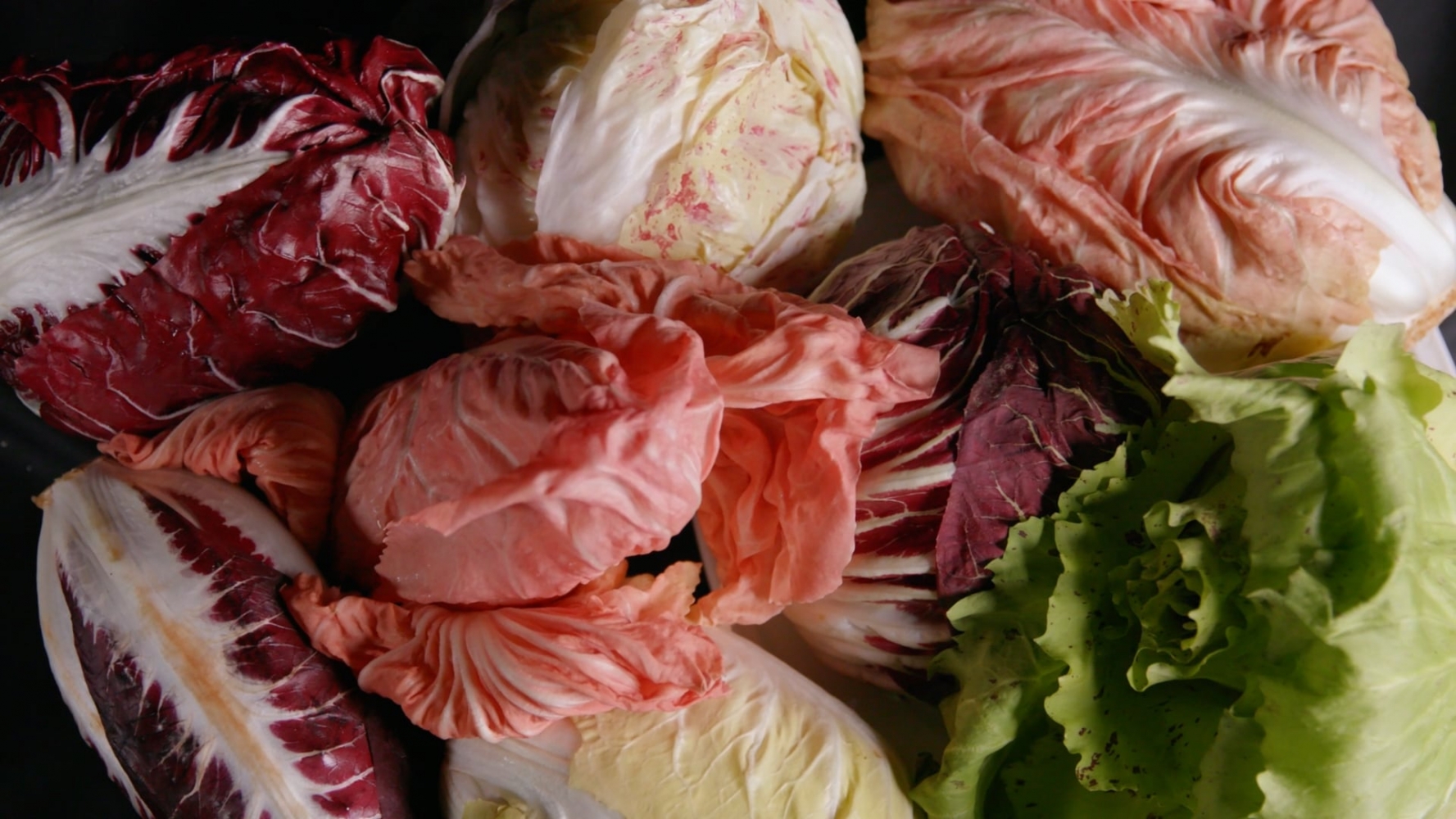
Selman’s solution: Oregon-grown radicchio.
Now the leafy, winter vegetable is the subject of a new cookbook co-authored by Selman and Margarett Waterbury.
“All Things Considered” host Crystal Ligori talked to the authors about their book “Radicchio: A Celebration of the Beloved Italian Vegetable”, which will be available September 29, 2026.

This conversation has been edited for length and clarity.
Crystal Ligori: I think compared to a lot of foods, radicchio is pretty niche. I’d love to hear how you guys got into it.
Lane Selman: I work for Oregon State University, and I work with a lot of farmers in this region. For many years, there weren’t a lot of winter vegetable farmers’ markets. So farmers I was working with on main season crops kept requesting, “Let’s talk about what we can grow in the wintertime. We have this mild climate here in the Pacific Northwest. There’s a lot of things that we could be growing.”
I worked with Alex Stone at Oregon State University, who is a vegetable specialist, and we started a campaign [called] “Eat Winter Vegetables.” So it really came from, “How do we support farmers in finding the things that grow really well in the wintertime here?” And creating a market for those things.
Ligori: And one of those things was radicchio.
Selman: One of those things was radicchio, and it’s risen to the top for sure.
Ligori: Margarett, what about you? How did you get into the ‘cult of radicchio’?
Margarett Waterbury: Lane and I met about 15 years ago working at the Portland Farmers Market. It was a time when it was harder to get good radicchio seed and American farmers just weren’t as familiar with radicchio, so it wasn’t always the most delicious. I have really vivid memories of bringing radicchio home and cooking it, and being like, “What am I doing wrong? Why does this taste the way it tastes?”
But as Lane continued to lead this work around building this market for radicchio, and helping high-quality seed come to the United States — and then all of this really beautiful radicchio started to appear in farmers markets — my experience cooking with radicchio radically changed.
Crystal Ligori: Your new book is far beyond a cook book; it also tells the history and agriculture of the vegetable too. Why was that important to include?
Selman: It needed to be a really well-rounded book, so that we understand the history of where it comes from in Italy. I have a lot of information that I’ve accumulated [about the] growing of it and the different types, so when the idea of the book came up, Margarett and I got together, and I was like, “We’re going to create this book, but there’s going to be a lot of deep research that needs to happen.”
Luckily we’ve got a friend who’s got the keys to a biblioteca in Italy. And luckily Margarett speaks and reads other languages. She was able to do this really deep dive, telling this beautiful history of this crop.

Crystal Ligori: You traveled to Italy multiple times for the book and a lot of the recipes came from those trips. Can you talk a little bit about sourcing those recipes, and creating the ones that maybe weren’t from a nonna in Italy?
Waterbury: All of the recipes in this book are attributed, so each recipe has an originator, or a creator that’s named with the recipe. In Italy, we did do a lot of documentary-style information gathering with home cooks like nonnas — but also farmers our age, people who own gelateria, professional chefs — just people who were interested in sharing recipes with us.
It was both a fun and challenging process because it was often in Italian. And just like here [in the United States], people in Italy don’t always measure when they cook. So there was a lot of recording, photography [and] video to try to capture what was actually happening in the kitchen. Then once we got back, it was deciphering what that was, and then figuring out how to present that in a way that American home cooks could replicate.
Ligori: For folks who are radicchio-curious, what do you think a good entry point is?
Selman: I think there’s great recipes for salads in there, as well as a grid that kind of lets you think on your own about what kind of components you would put in there, because radicchio is a strong flavor. There’s other strong flavors that it pairs well with, like blue cheese or anchovy. Or you could go the other way and put something sweet in there, like persimmon or apple.
There’s a tort in there that is kind of presented like a galette. That’s a pretty easy one to make, but tastes really fantastic. There’s a couple of dry pasta ones that are quite easy. There’s fresh pasta that you make at home yourself. There’s spaghetti that is really wonderful.
Waterbury: I’ll take a different approach. I think that there are some varieties of radicchio that might be more accessible if you’re not sure if you like radicchio, or you’re not really into bitter stuff. Castelfranco is one that we can get here pretty regularly. It’s not red — it’s kind of a green color, and it’s got little pinkish dots all over it. It has a little bit of a milder flavor, and you can use it in ways that are more like traditional lettuce.
Another one that I’m seeing more here is called Lusia, which almost looks like an iceberg lettuce. It’s a light green to white and it’ll sometimes have red streaking or red dots of various intensities. That one also tends to be quite mild.
Ligori: I can see that this book is a true labor of love with the amount of time and energy you both spent with it. What do you hope that people take away from it?
Selman: For me, it’s the appreciation of winter vegetables — I’m always coming back to that. [Radicchio] is something that’s fantastic to eat locally in the wintertime and the recipes we put in also include a lot of other winter vegetables. So everybody in the winter vegetable category gets a little more love.

News Source : https://www.opb.org/article/2026/09/22/radicchio-food-cook-book-oregon-selman-waterbury/
Other Related News

09/22/2026
Cindy Crawford is reportedly inconsolable following the death of her only son Presley Gerb...

09/22/2026
UMass Dartmouth football player Marvins Antoine died Saturday after he was stabbed while w...

09/22/2026
Starting next week Whoopi Goldberg will be taking a two-week leave from The View to shoot ...

09/22/2026
The I-5 shutdown as predicted has caused a lot of stress for a lot of people Interstate 5 ...

09/22/2026
After nearly 18 years in the US Senate and almost three decades in elected office Jeff Mer...

Follow

Download Our App


Copyright 2022 © EPUERTO. All Rights Reserved