

Published on: 10/12/2026
This news was posted by Oregon Today News


Description

Sign up for the Planet Money newsletter. The world is confusing. Economics can help
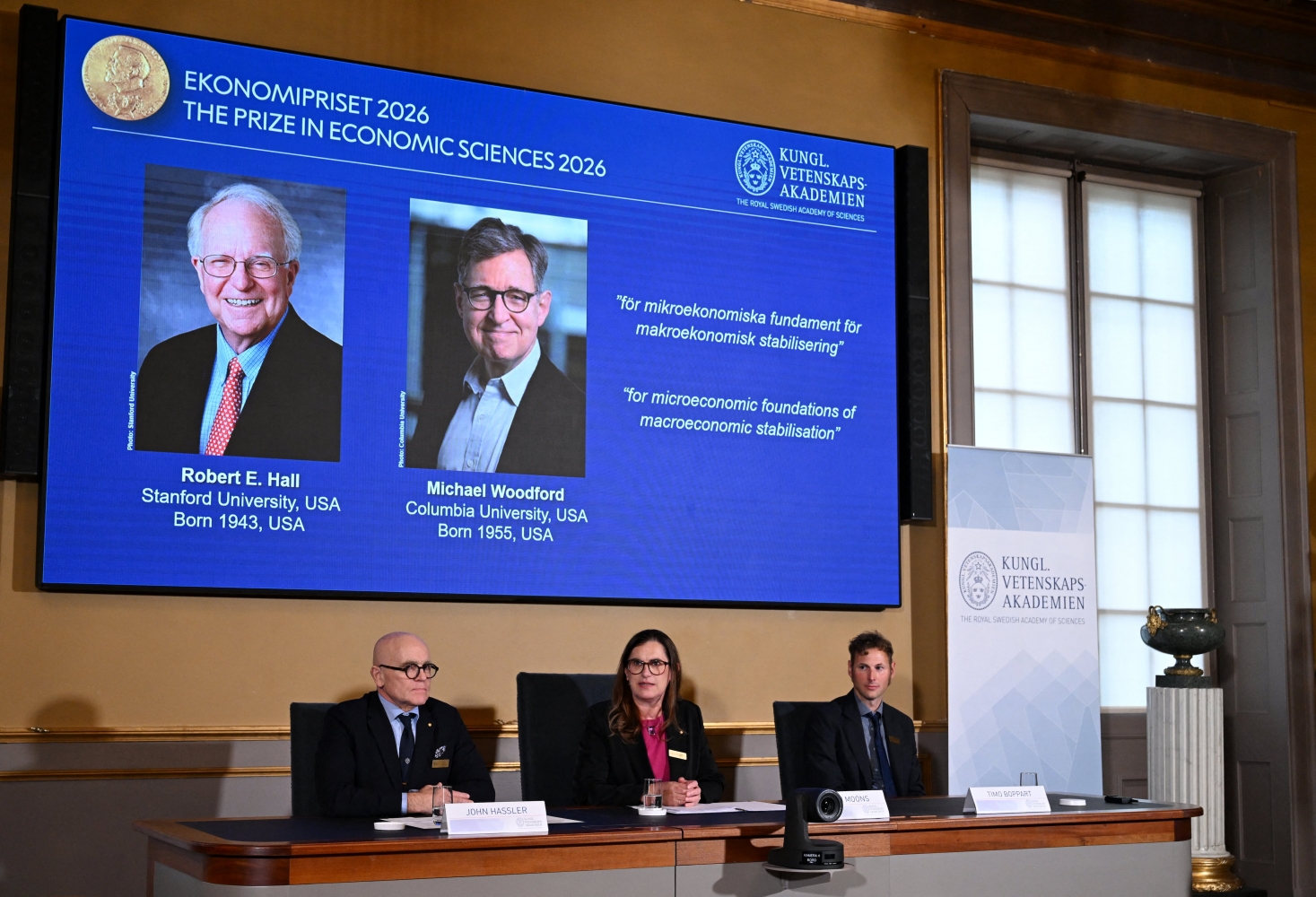
Two Americans have won the Nobel Memorial Prize in Economic Sciences for their work on how to smooth boom-and-bust cycles to limit inflation and unemployment.
Robert Hall of Stanford University and Michael Woodford of Columbia University were honored for their focus on how individual households and businesses make decisions on purchases and pricing — work that became the foundation of the “New Keynesian” approach to economics.
The importance of that work has been underscored in recent years by the pandemic, which pushed millions of people out of work, and the supply shocks that followed, driving up the cost of living.
“Regardless of the causes, an important goal for governments and central banks is to reduce the amplitude of these swings and limit the risk that the economy gets stuck in a situation with high unemployment or loses control over inflation,” said John Hassler, the chairman of the economic prize committee. This award is not one of the original five, but a “memorial” prize that honors Alfred Nobel.
After the Great Depression, John Maynard Keynes persuaded policymakers that government sometimes needed to stimulate demand during downturns to curb unemployment, or tamp down demand during boom times to limit inflation.
“This is the Keynesian recipe, and it worked well until it didn’t,” said Tim Boppart, a member of the prize committee. In the 1970s, the economy was hit by rising unemployment and inflation simultaneously.
“The Keynesian recipe was shattered,” Boppart says. Hall and Woodford added some necessary ingredients, focusing on the individual households and businesses that help shape the larger economy.
Hall concentrated on demand and how households make purchasing decisions, guided not only by current purchasing power but what they expect their incomes will be in the future.
“If consumers see dark clouds on the horizon, they cut back on consumption already today,” Boppart says.
Woodford focused on the supply side and how businesses set prices. Here again, expectations are key. Historically, it was costly to change prices, so businesses try to think ahead and set prices that would cover costs for an extended period.
Because both households and businesses are forward-looking, the Nobel laureates argued, policymakers should communicate their plans clearly to the public.
“One of the themes in my work is that government authorities shouldn’t view stabilization of the economy as an exercise that is simply conducted by people pulling levers to control the economy, independent of what people in the economy understand,” Woodford told reporters after the prize was announced.
Woodford says tools intended to smooth out boom-and-bust cycles work better when people know what the government is trying to accomplish, and he urged policymakers to talk directly to the public about “why the things that are being done are being done.”
News Source : https://www.opb.org/article/2026/10/12/nobel-prize-in-economics-goes-to-hall-woodford-for-work-on-boom-bust-cycles/
Other Related News

10/12/2026
Current standing TSA policy dictates that some TSA officers are no longer allowed to sit w...
10/12/2026
Veterans getting disability benefits from the Department of Veterans Affairs will receive ...
10/12/2026
On Indigenous Peoples Day we recognize that Native Americans have been here since time imm...
10/12/2026
A former college professor in Minnesota is facing criminal charges after authorities say a...

Follow

Download Our App


Copyright 2022 © EPUERTO. All Rights Reserved